

Why is Soulton hall a cube?
There is more than one reason, but one reason can be unlocked with a closer look at the finials on the roof…
Soulton Hall boasts a wealth of architectural details, some grand and readily visible, others more subtle and waiting to be discovered.
Today, we’re taking a closer look at a unique feature that often goes unnoticed: the four oil lamp finials that grace the corners of the building.
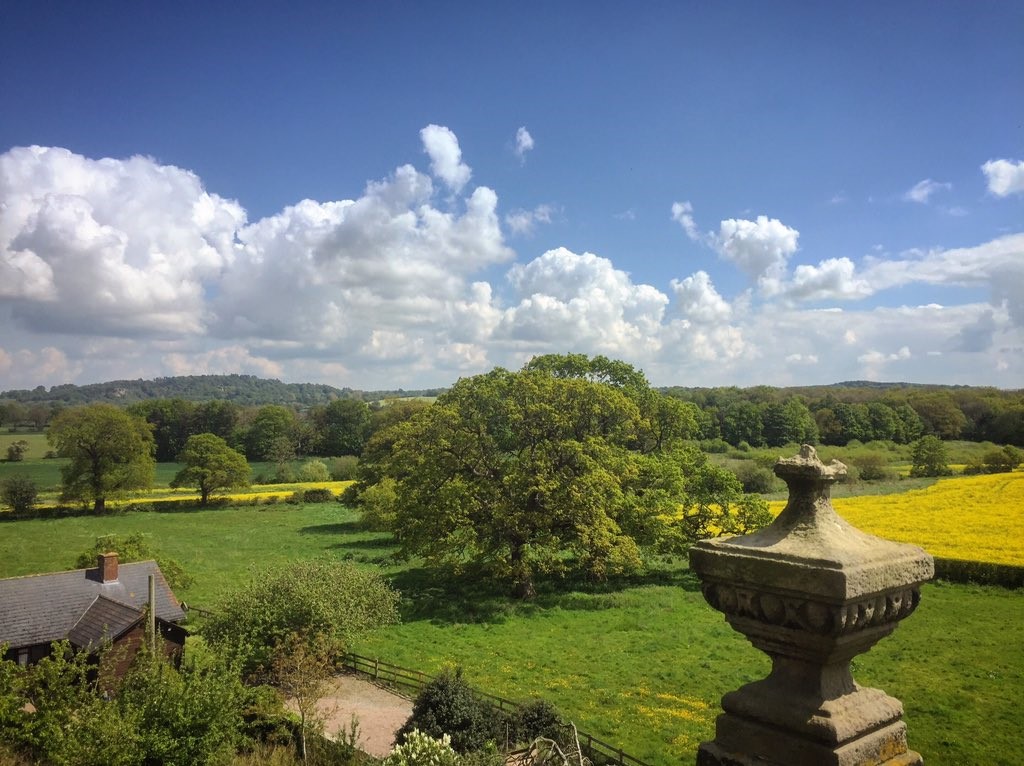
These finials, crafted during the 1660s renovations, are typically out of sight for the public. But we need to let more people see them more closely: and do so now.
Each finial takes the form of an oil lamp, which is important.
Interestingly, the finials are adorned with a distinct nine-grid pattern formed by the repetition of egg and dart motif.
Their placement on the corners of the building suggests they also held a symbolic significance — which they do.
As evidenced by historical records and Soulton Hall itself, we know Sir Rowland Hill and his heirs possessed a deep and enduring interest in mathematics. This fascination is particularly evident in their interst in the the rhombic dodecahedron.
The ongoing research of James D. Wenn explores this interest in geometry shown at Soulton. He examines how this research debunks and clarifies the long-standing question of what the Holy Almandal is concerned with, making it less susceptible to confusion and unhealthy ideas. It is likely a lecture prop for demonstrating mathematical/geometric outputs.
This have been explored in lectures such as this one:
********
These animations may also be helpful:
********
This post was updated in June 2024.
