

A Cipher in Every Step: The Enigmatic Staircase of Sir Rowland Hill
It is well known that Soulton Hall, the work of Sir Rowland Hill, was a new corps de logis, a prestigious accommodation block for his most honored guests. This new corps de logis, was added to the existing high medieval complex he had received from the Lodge family.
While enduring periods of disfavor, Hill used Soulton Hall as his base for statecraft. As our consultants Byrga Geniht have helped us explain, the building itself was constructed using an elaborate system of codes.
A glorious survivor from the era is Sir Rowland Hill’s staircase.

The Sir Rowland Hill Staircase, from the single phase of construction pre 1560This seemingly mundane utility, however, hides a testament to the man’s brilliance. As befits a polymath, Hill embedded codes within its design.
Look at the balusters. Notice how they are arranged in a specific sequence: eight in total on the rise, (five, and then three). Now, turn your attention to the dancing pavement…

The Soulton Dancing Pavement, showing The Dance, which features in AS YOU LIKE IT
The balusters also invite a knowing person to unlock another reference.
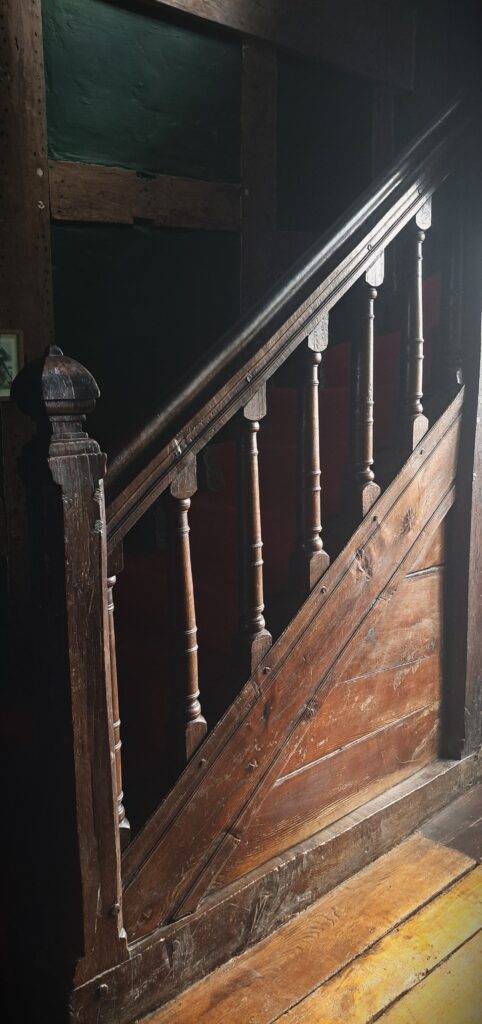
A closer view of the balusters and newel post of the 1550s Sir Rowland Hill Stairs at Soulton Hall

Eleusinian Enigma on the Rowland Hill Staircase: Look closely at the eight balusters on this upper gallery. Each features a design reminiscent of Eleusinian canisters, hinting at Sir Rowland Hill’s fascination with the ancient mysteries.
Look at the collars on the shaft, which divide it into canister forms. These features, for those familiar with the code, might hold a hidden message… look at the Eleusinian cannisters (and the number of petals on the flowers) in this surviving entablaturedecoration from Eleusis…

Decoration at the Telesterion (ca. 435 – 421 B.C.), a sacred hall at Eleusis used for the annual initiation ceremonies for the cult of Demeter and Persephone known as the Eleusinian Mysteries. By
Haris Christodoulou. CC
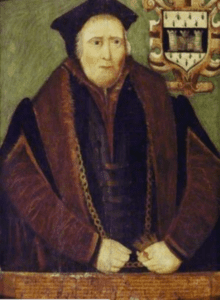
Sir Rowland Hill – Museam of London Image
Finally, compare the cap on the newel post with the one depicted in this portrait of Sir Rowland Hill. Traditionally, this distinctive cap has been identified as a Geneva cap, aligning with Sir Rowland Hill’s known mercantile activities in Geneva and his involvement in the Geneva Bible project.
