

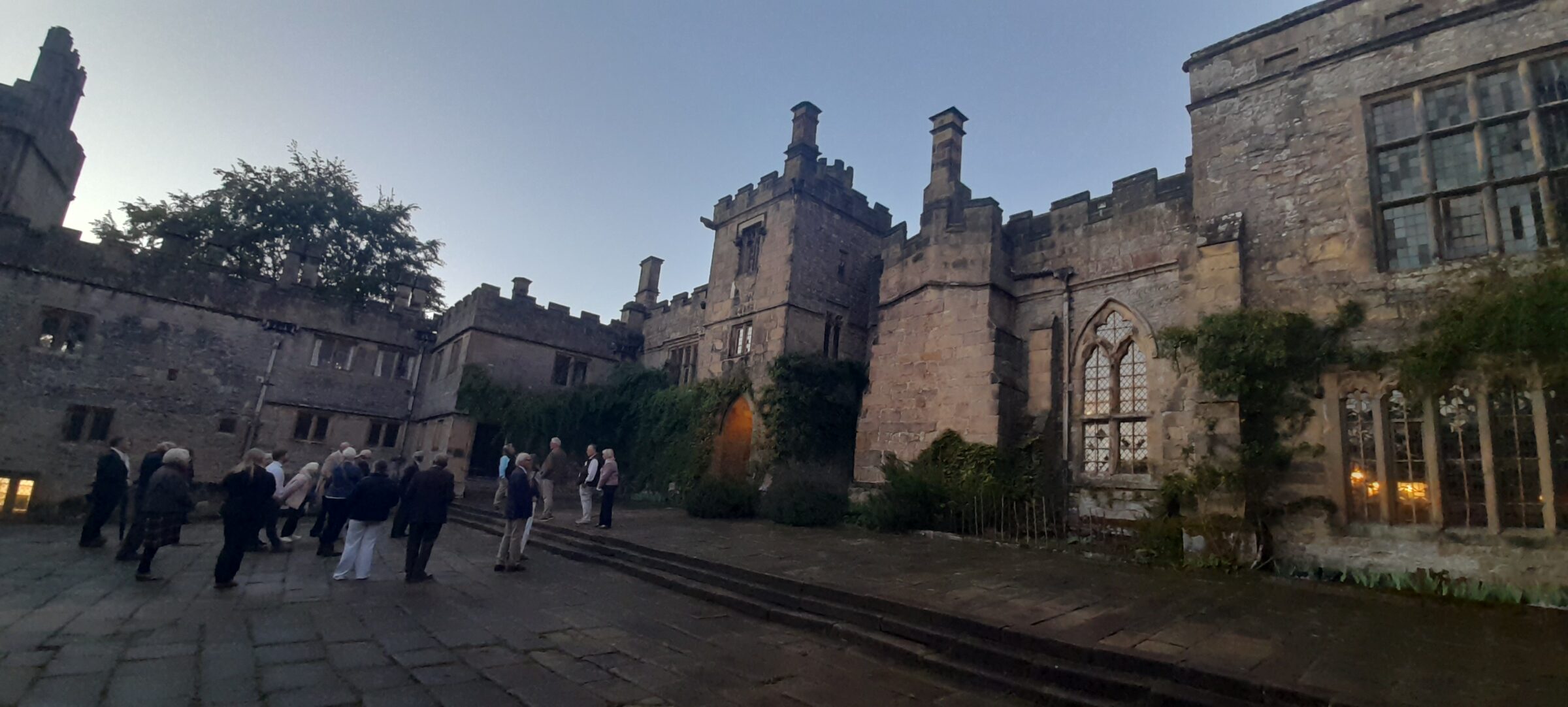
Yesterday brought a wonderful opportunity to attend an event hosted by the CLA, held by kind invitation of Lord Edward Manners and Lady Manners at Haddon Hall.
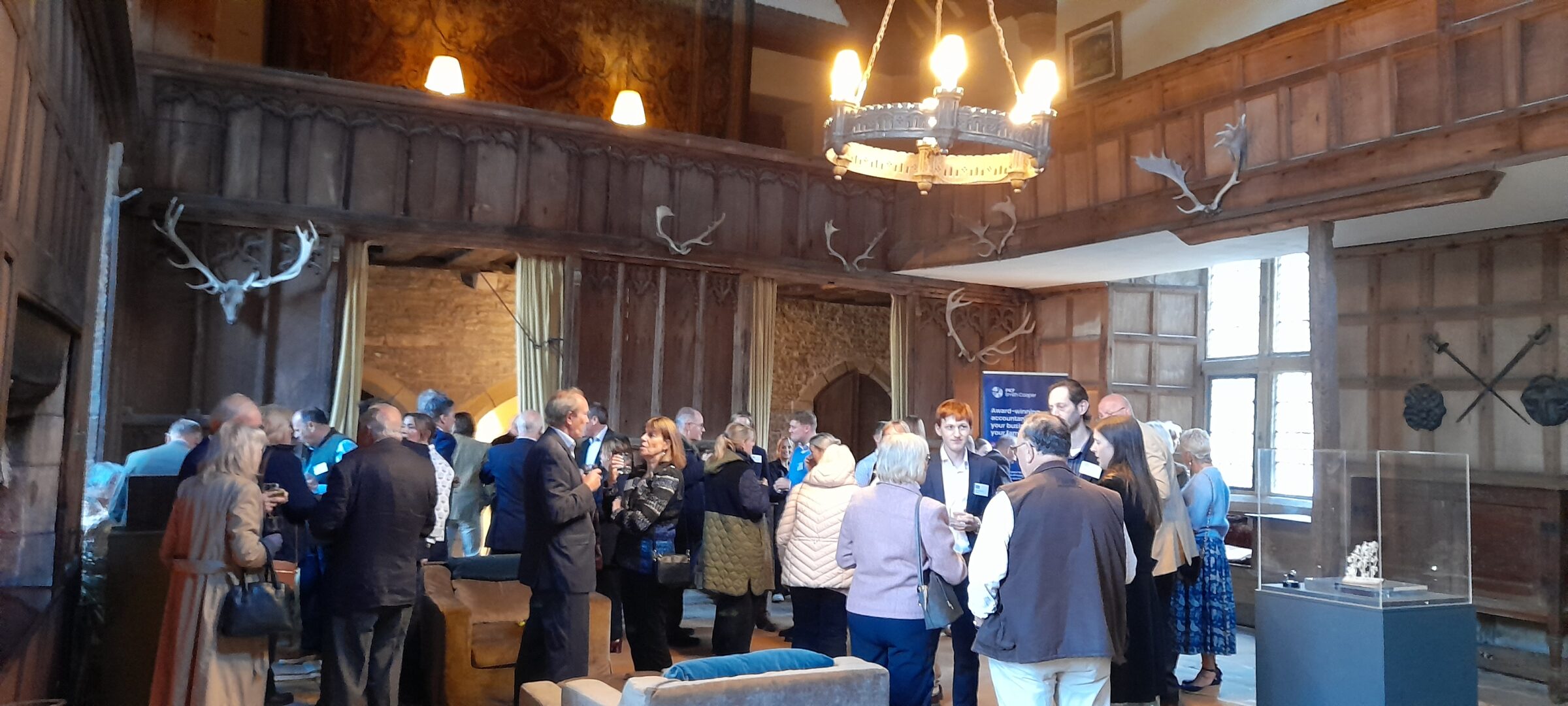
CLA Event in the Ancient Great Hall of Haddon Hall
The gathering aimed to bring together land-based businesses and heritage interests to examine best practice.
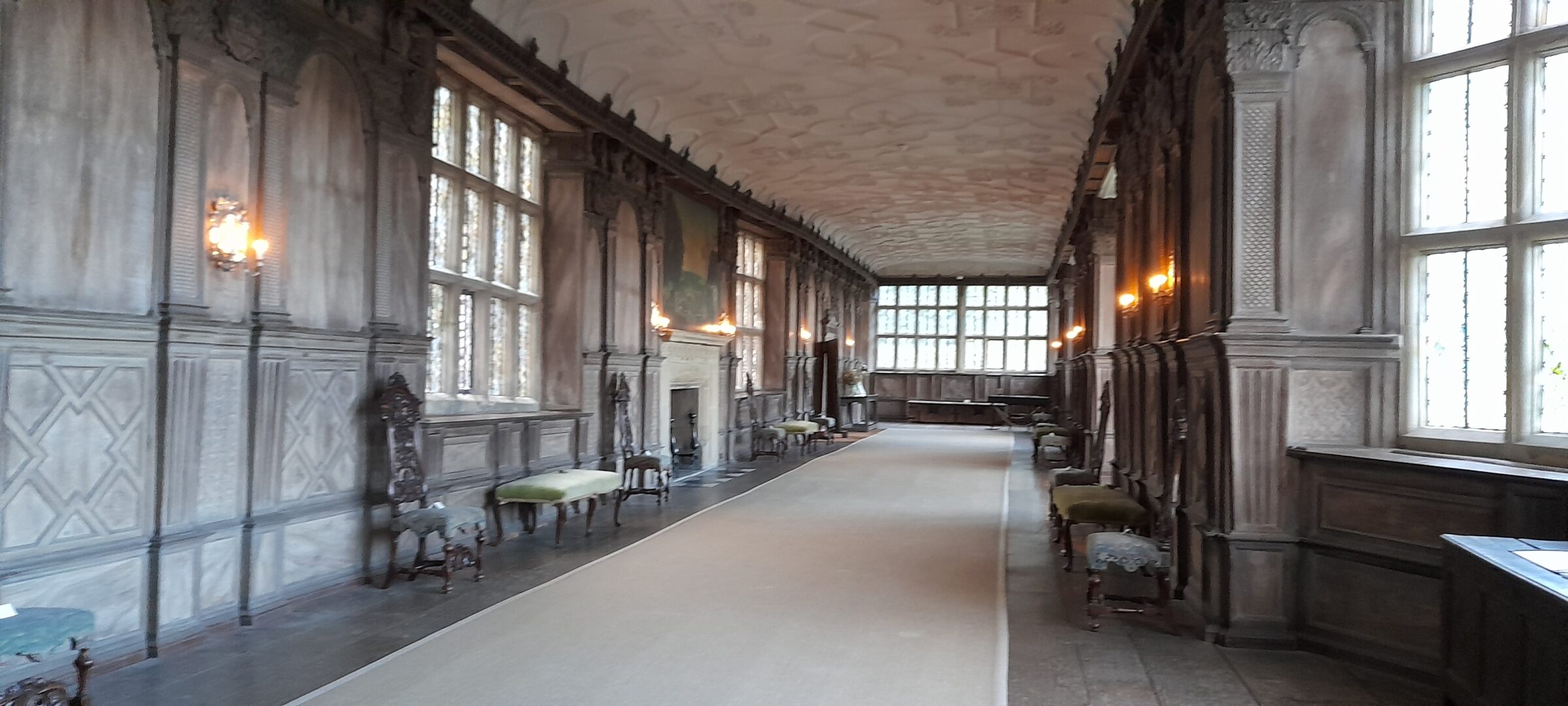
Haddon Hall’s famous and beautful Long Gallery: 10ft long; Soulton has 2 galleries of 55ft…
Returning to a place last visited twenty years ago proved to be a great pleasure.
-
- Clever geometric glazing at Haddon Hall
-
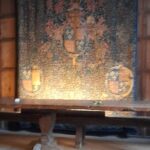
- Haddon Hall is famous for its magnificent 15th-century French Millefleurs (thousand flowers) tapestry hanging in the Banqueting Hall, which was reputedly presented to Sir Henry Vernon by King Henry VIII
-

- A classic country house interior at Haddon Hall
The experience included an exclusive after-hours tour.
This was led by excellent and knowledgeable guides.
We explored the long gallery—familiar to many from the filming of Wolf Hall—alongside the ancient Norman chapel, which may possess Saxon origins, and several other remarkable rooms.
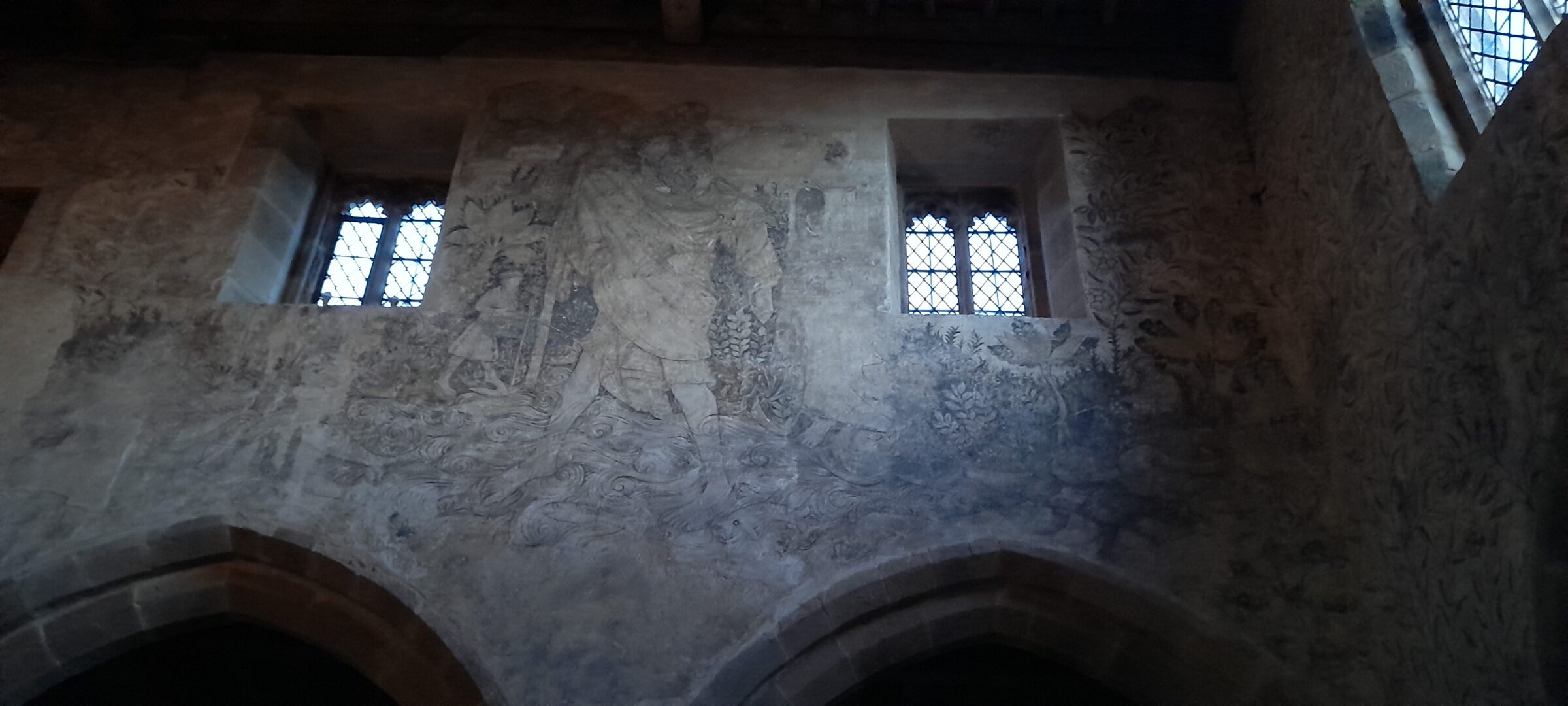
St Christopher in an exquisite wall painting in the Haddon Hall Chapel
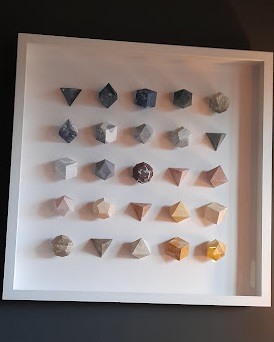
Louisa Boyd (on show at the hall) engages with some themes of Platonic solids and sacred geometry through paper sculptures built from existing prints. Plato assigned the forms to the five elements of heaven, earth, air, fire, water, and ether.
Our eyes were also caught by an exhibition within the house featuring work by Louisa Boyd.
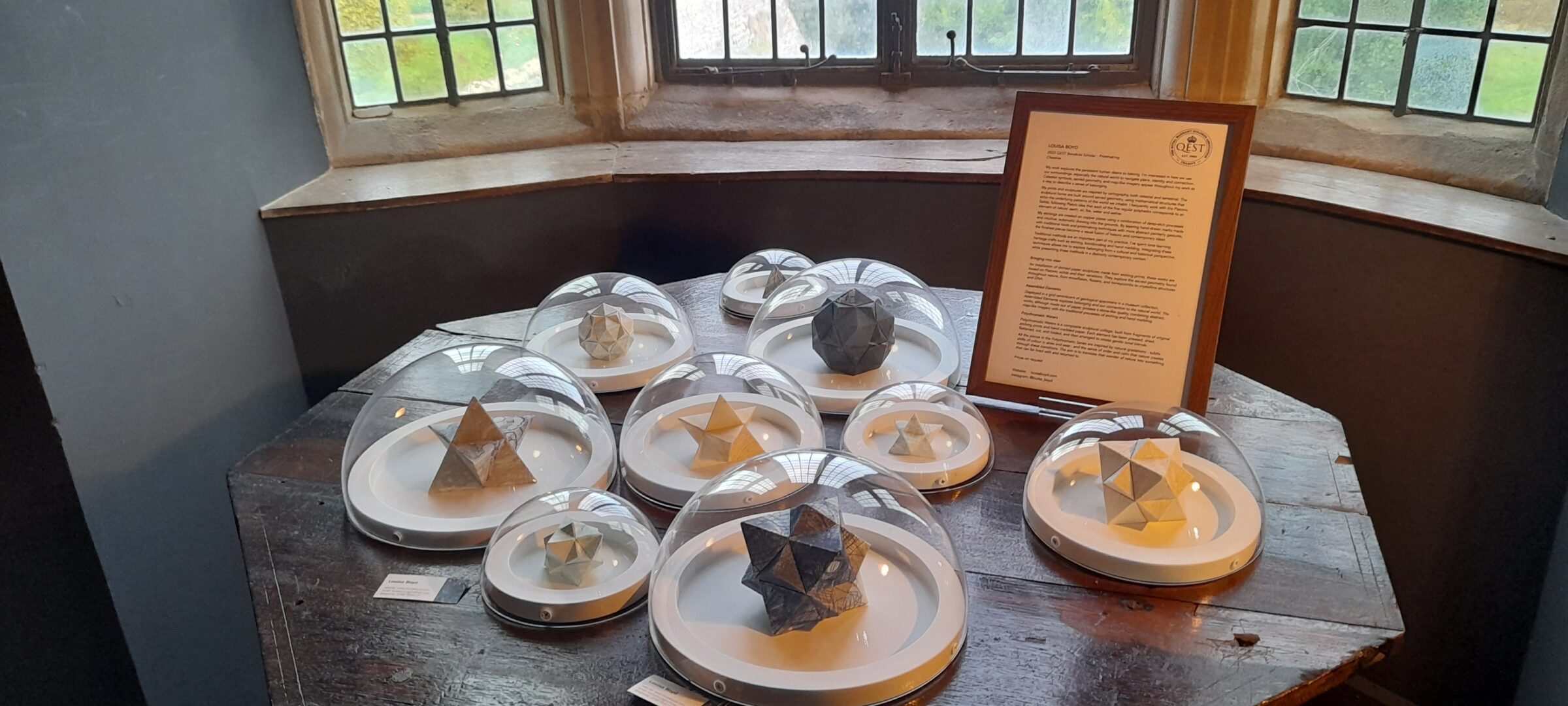
The display features paper sculptures by Louisa Boyd involving stellation, wherein the faces or edges of regular polyhedra are extended outward to form star-like geometric shapes.
She was a 2023 QEST Quilter & Co Scholar and printmaker, and comes from nearby Cheshire.
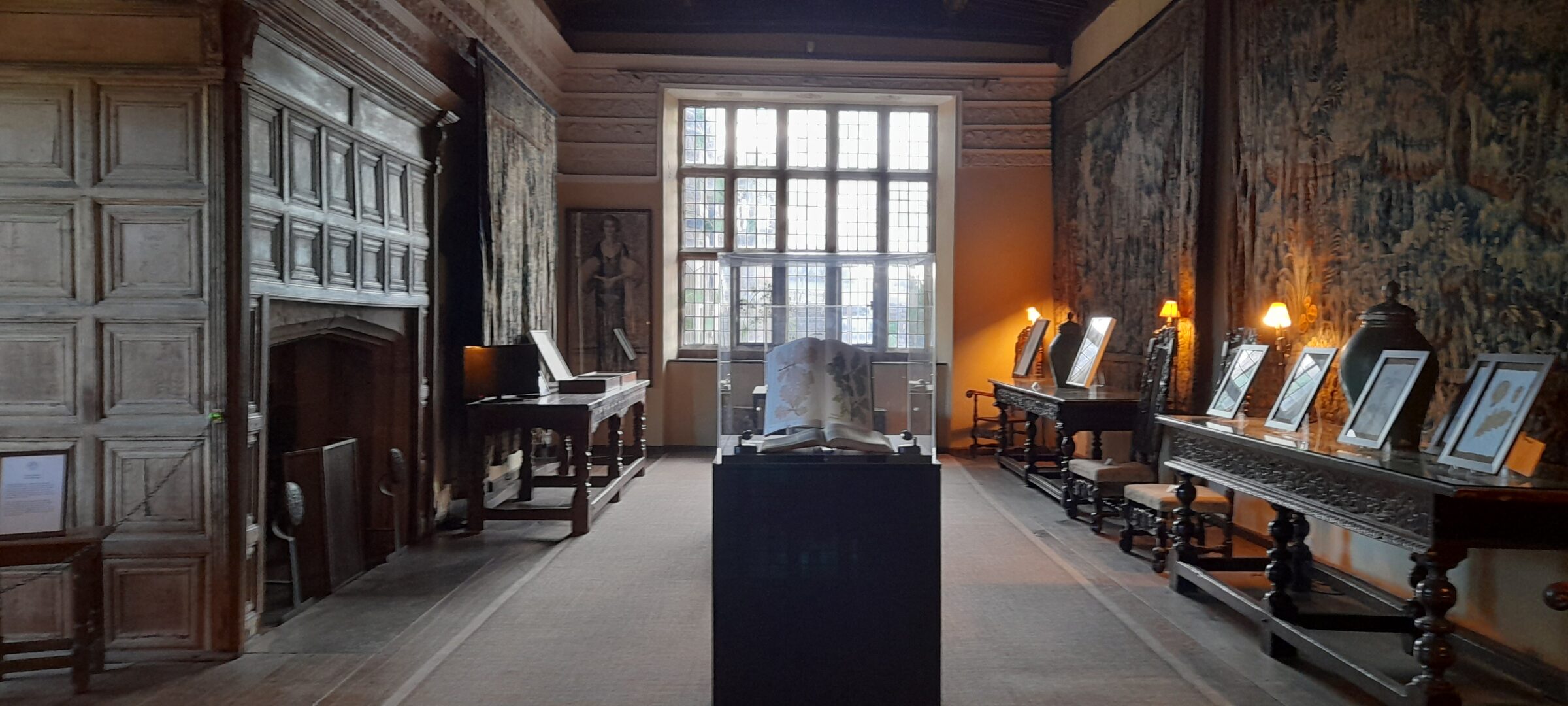
A beautiful chamber at Haddon Hall
Her installations—incorporating the Platonic solids following Plato’s idea that each of the five regular polyhedra corresponds to an element of heaven, earth, air, fire, water, and ether—brought a smile of recognition regarding a persistnat interest shared by Haddon and Soulton.
It also bought to mind last year’s show by Byrga Geniht on The Fith Element in Colchester, Essex.
The Vernons of Haddon held notable interests in Shropshire, particularly at Tong Castle (now lost), as well as continuing legacies visible in the church monuments and at Hodnet Hall. These connections matter deeply to Soulton in a very direct way.
-

- Tong Church
-

- An 8-fold symetry stone carving in chantry chapel of Tong Church – a Vernon family monument
-

- Lines from the Tong Monument linked to Shakespare
-
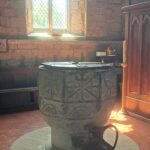
- Romanesque font in Hodnet Church, said to be C17th
George Vernon of Hodnet Hall was a companion to Old Sir Rowland Hill, while Elizabeth Vernon married the 3rd Earl of Southampton.
That marriage establishes a link to Shakespearean patronage and connects to the circle of Sir Rowland Hill through her parents’ and grandparents’ generations.

Elizabeth Vernon, Countess of Southampton attributed to Marcus Gheeraerts the Younger. Her family were from Shropshire, and some link her to Shakespeare’s works as a muse.
Elizabeth Vernon is considered by some to be partly the muse of the sonnets. Furthermore, the scandalous nature of her marriage to Southampton has frequently been cited as part of the context from which Romeo and Juliet came to be written.

Romeo and Juliet being performed at Soulton Hall
During the tour, it was mentioned in passing that the Vernons also married into the Stanleys, another family who are obviously well known as Shakespearean patrons.
Discussions with the castle team also touched upon other intellectual and broad engagement reasons linking elements of Haddon with Soulton, including insights via Byrga Geniht.
Ultimately, visiting Haddon Hall was a renewal of a continuity that was alive and well between these historic houses in the sixteenth century.
