

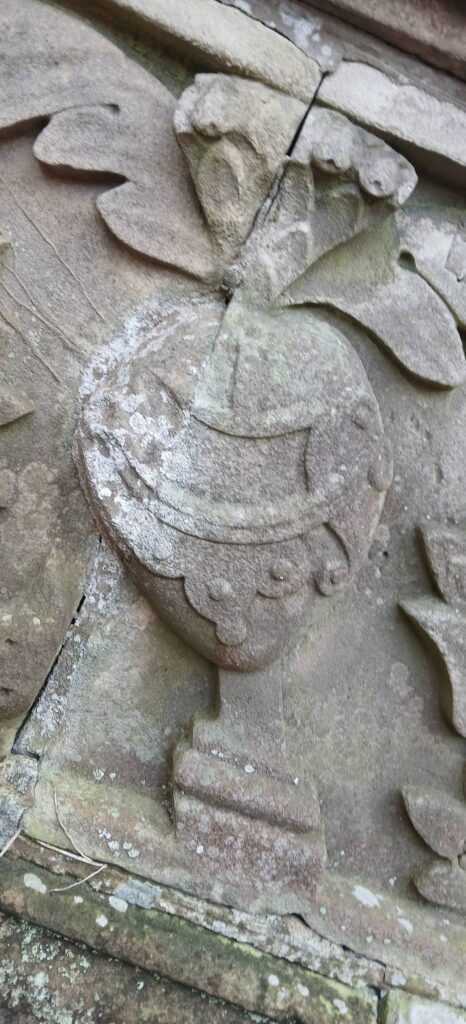
On this Valentine’s Day, we are looking at a remarkable piece of history carved into the Wren steps of 1688.
Two hearts, bound by decorative bands and united by a rainbow, sit permanently etched in stone.

A heart of stone, bound in protective bands and held within a sacred covenant, enshrining a promise that has remained “locked” since 1688.
While they may appear “caged” to the modern eye, they actually represent a deep, ancient tradition of honoring the very essence of a person.
 The Heroic Tradition: Hearts of Kings and Saints
The treatment of the hearts at Soulton draws on the medieval practice of heart-burial, where the heart was interred apart from the body. This was an act of supreme devotion, reserved for the highest echelons of society, saints, and heroes.
-
Robert the Bruce (d. 1329): Perhaps the most famous “caged” heart in history, the Scottish King requested his heart be taken to the Holy Land. It was carried in a silver casket—a literal metal cage of protection—worn around the neck of Sir James Douglas as he went into battle.
-
Prince Arthur (d. 1502): The elder brother of Henry VIII also followed this tradition; while his body rests in Worcester Cathedral, his heart was buried separately at Ludlow, close to Soulton, enshrining his memory in our local landscape.
-
Richard the Lionheart (d. 1199): Known as the “Lionheart,” his heart was preserved in a casket and placed in Rouen Cathedral as a permanent token of his spirit.
In these cases, the “cage” or casket was not a prison, but a reliquary—a sacred vessel designed to protect and display something of immense value.
Soulton’s Marriage: A Living Reliquary
The 1688 carvings at Soulton Hall take this heroic treatment and applies it to a marriage.
By placing the hearts within these decorative bands under a rainbow, the architect was signaling that this union was a sacred covenant.
In the 17th century, the rainbow was a powerful symbol of a divine promise. Just as a saint’s heart was protected in a gold filigree cage to keep it eternal, the hearts on the Wren steps are “locked” into the stone to ensure the love they represent never fades.

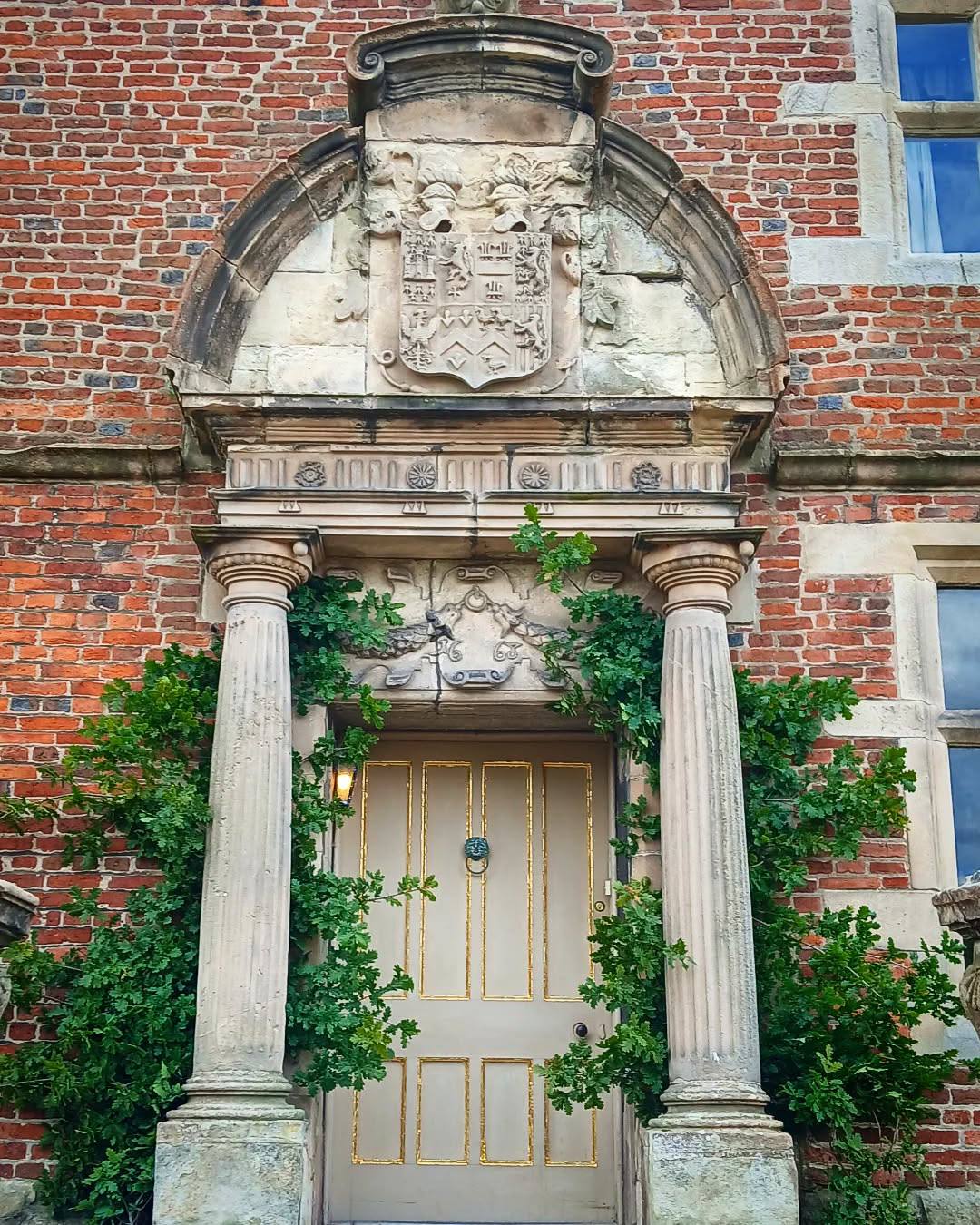
The striking 1668 stone tabernacle doorcase of Soulton Hall
The Modern Echo: Love Locks
This ancient impulse to physically “lock” a sentiment to a place hasn’t disappeared; it has simply evolved. Today, we see this same poetic instinct on bridges from Paris to London, where couples attach Love Locks to railings and throw the key into the water.
Both the Soulton stone-carver and the modern tourist seek to “materialize a bond” in a public space. While a padlock on a bridge is a modern gesture of “unbreakable” love, it is the descendant of the silver caskets of Robert the Bruce and the stone-bound hearts of Soulton Hall.
This Valentine’s Day, we celebrate the fact that some hearts aren’t meant to be “free”—they are meant to be home.
