

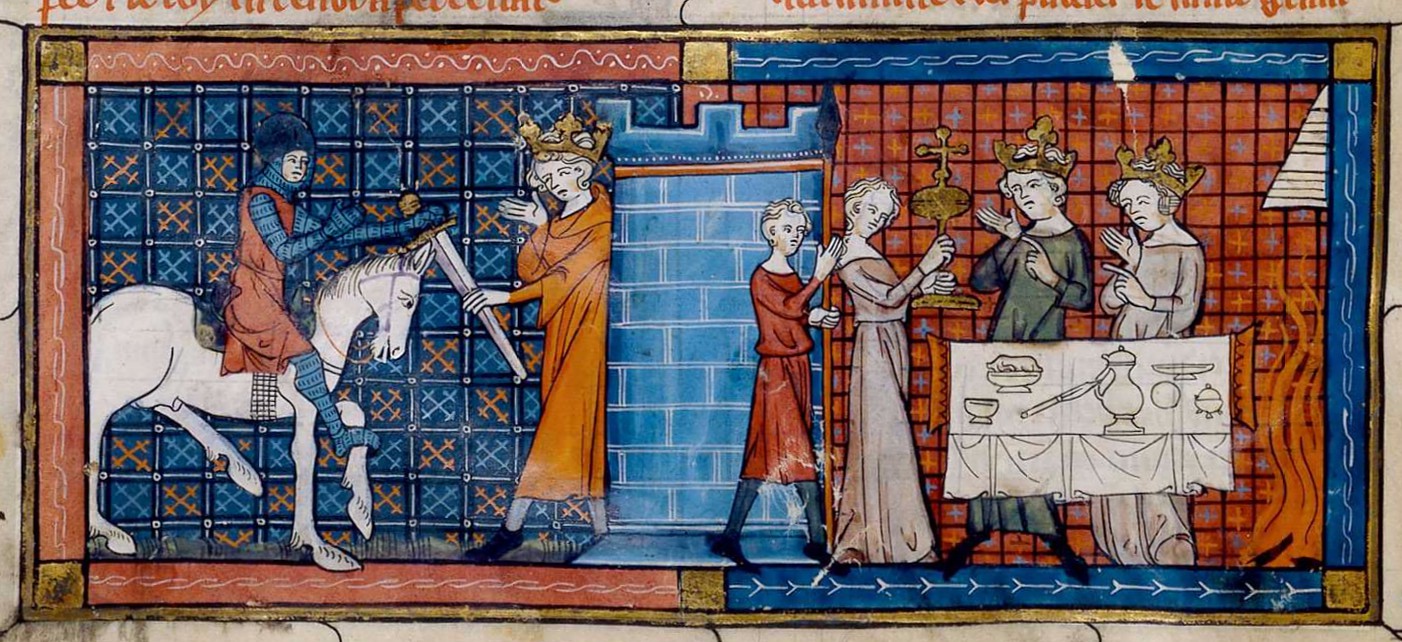
As the sun sets on the old year, we find ourselves caught between two worlds: the “Waste Land” of things left undone and the hope of a fertile spring. In the Shropshire Marches, this threshold atmosphere was intentionally woven into our literary and cultural heritage, and, at New Year, it is a natural time to think of the myths of the Fisher King.
The Grail Castle and the Fisher King
He is an allegorical figure of Arthurian legend who represents stakeholdership, the experience of being trapped, and the legitimacy of all who have a stake in the social reproduction of a culture.
He is the wounded guardian, the protector of a coherent internal world, and the keeper of the “White Castle”…
…but he is also a captive, a person who must wait on others to act.
The Stakeholder on Hold
The Fisher King is the guardian of the Grail.
Paralyzed by a wound, his health is tied to his realm; because he is “stuck,” the kingdom is on hold.
He cannot hunt.
He can only fish in the dark waters of his castle’s moat.
He is a stakeholder who has kept the flame alive through a long winter, waiting for the key to unlock the next cycle of life.
In our lives, we often feel like this King. We carry the wounds of the past year—fatigue, loss, or stagnation. Yet, the myth reminds us that being “damaged” does not disqualify us. We are, if we answer the call, the guardians of the essential “social software” of our community. We are not just waiting; we are holding the space until the vitality of the new year is ready to be released and others join us to help.
Facing the Jailer: Sir Tarquin
In Shropshire’s blended engagement with this tale, to reach the King, we must first face the Jailer.

Rowland Hill Monument, Hawkstone Park
At Hawkstone Park, the rugged sandstone cliffs and caves are tied to the legend of Sir Tarquin.
Here, a giant and a cruel knight, Tarquin was the antithesis of a good steward.
He didn’t protect; he imprisoned.
In the specific “landscape” of Shropshire, and the way it was designed at Hawkstone, these figures are linked by the geography of the “Quest.”
When you walk Hawkstone, you navigate a narrative where you must bypass the ego-driven energy of the Red Castle to reach the hidden Grotto. The treasure found there—symbolized by physical cups as a concession to the literal-minded—is actually an attainment of clarity and inner alignment.
Legend says Tarquin held dozens of the Round Table’s best knights captive until Lancelot defeated him.
On New Year’s Day, Tarquin might represent the internal locks—the parts of our psyche that keep our potential shut away.
The Fisher King and the imprisoned knights are two sides of the same coin: the King is the paralyzed spirit holding the treasure, while the knights are the active energy waiting to be freed.
For the land to bloom, the locks must be picked and the knights released to serve the future.
The Shropshire Grail Legends: Allegories of Identity
Rather than a simple walk, we are looking at a map of identity. These sites hold the stories we seek to pass on, ensuring the “social reproduction” of the Marches continues.
1. Whittington: Dispossession and the Right to Belong
Our understanding of Whittington as a mythic site comes from the 13th-century romance Fouke le Fitz Waryn. This “Matter of England” epic reflects a landscape that was simultaneously English and Welsh—a borderland where identity was something fought for and claimed.
The romance follows themes of outlawry and dispossession. Fulk III FitzWarin wasn’t just fighting for a castle; he was fighting for his legitimate right to belong to the social fabric.
-
The Allegory: Standing at Whittington, we recognize that our “stake” in our culture isn’t a matter of biological inheritance, but a stewardship of the heart. We are the guardians of the threshold, ensuring that the right to belong and the stories of our resistance are passed to the next generation.
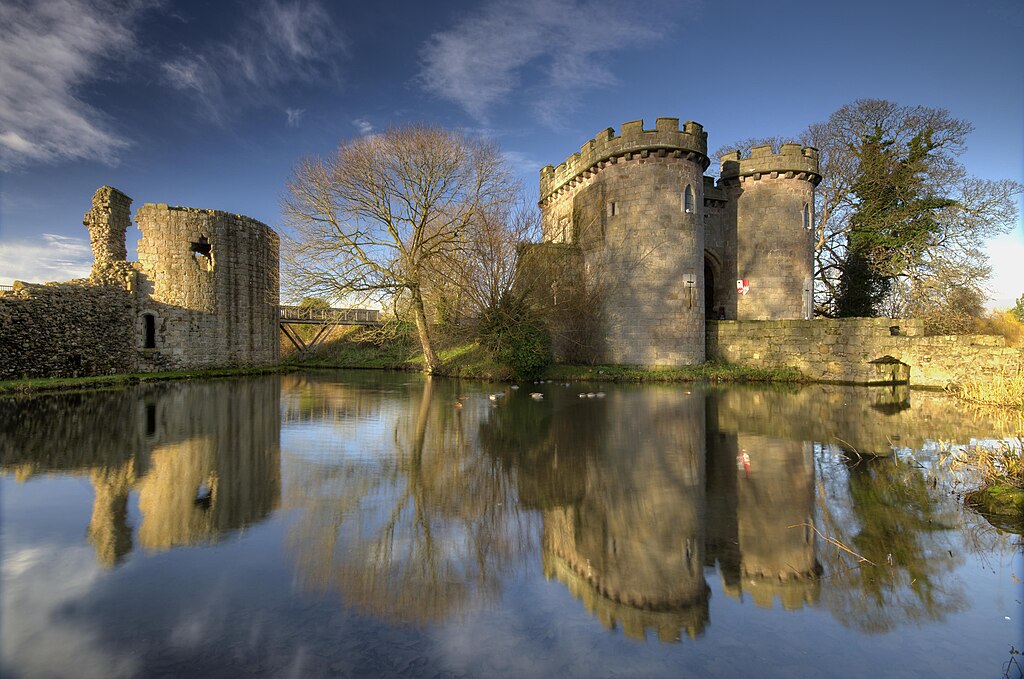
Whittington Castle
2. Hawkstone: The Quest for the Small Cup
The cliffs of Hawkstone represent the struggle to liberate the vitality trapped by Sir Tarquin. But the prize at the end of the caves is not a golden trophy.
-
The Allegory: Historically, local lore points to a small Roman alabaster cup found in the Grotto. This represents a vital lesson in cultural identity: while those fixated on material scale might miss it, the ‘Grail’ we seek to pass on is often small, fragile, and easily overlooked. It is a quiet commitment to community and local truth. Unlocking this legend ensures that we don’t confuse external ‘greatness’ with internal ‘importance.
3. Baschurch: The Reservoir of Potential
At The Berth in Baschurch, we find the King by the water. These ancient earthworks are a reservoir of what is hidden.
-
The Allegory: In the local telling, this is a place of deep, quiet waiting. It represents the “hidden history” of the Marches that remains under the surface. Our task is to “fish” these stories out—to bring the quiet wisdom of our local heritage back into the light so it can nourish the new year.
The Question That Unlocks the Year
The tragedy of the Fisher King is that he remains trapped because the seeker stays silent.
In the legend, the land is only healed when the visitor stops being a passive observer and finally speaks. The myth teaches that curiosity and engagement are moral imperatives: the “Waste Land” of culture is unlocked the moment we break that silence with a question:
“Whom does the Grail serve?”
This is the mythic precursor to John F. Kennedy’s famous call to action: “Ask not what your country can do for you—ask what you can do for your country.”
Both the medieval romance and the modern speech demand a fundamental shift in perspective.
To move past the “Waste Land,” we must stop asking what the year can do for us—what it can give us, or how it can satisfy us—and instead ask what stories we are guarding, and whom that legacy benefits.
When you ask the “Right Question,” you aren’t just making a resolution; you are turning the key in the lock.
You are moving from being a bystander to being a stakeholder. The land and the King are one. When we take up this responsibility, the stagnation breaks: the prisoners are released from Hawkstone, the waters begin to flow from the Berth, and the White Castle opens its gates to spring.
