


The announcement this week that the new Archbishop of Canterbury, Sarah Mullally, will walk 140km to her installation is a striking gesture.
It suggests a leadership rooted in the slow, deliberate act of being present on the road, moving among people at a human pace.
In many ways, it revives a much older, almost Saxon shape of ministry. This is the kind practiced by St Chad, who famously chose to travel only on foot, or St Erkenwald, with his simple walking and his cart.
-

- LOST: Old St Pauls
-
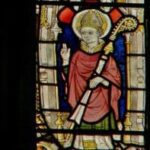
- St Erkenwald, C7th Prince of the East Saxons, Bishop of London, Saint.
-
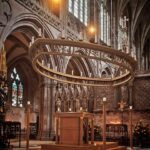
- Chad remembered in Lichfield
-
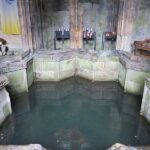
- Winifred’s Well
-
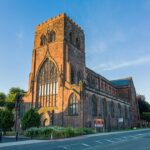
- Shrewsbury Abbey – translation site of St Winifred
-
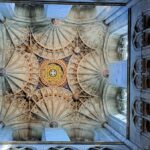
- The new Archbishops destination: Canterbury Cathedral
It feels like a return to that Saxon simplicity and an eye-level engagement on the open road.
This movement also touches on a deeply secular literary tradition. It recalls the spirit of Shakespeare’s As You Like It and the Forest of Arden—a landscape where the characters escape the rigid constraints of the court to find a space for renewal and discovery.
In the forest, the rules of the status quo are suspended. It is a place of porousness where people meet as equals, finding a clarity that was impossible within the walls of power.
However, as we reflect on this resurgence of walking, it is worth acknowledging that the freedom of the path has historically been a contested space.
In 1536, the First Royal Injunctions sought to redirect the focus of the people. It suggested they “shall please God more by the true exercising of their bodily labour” at home, rather than by traveling on long journeys.
This era saw a profound debate regarding the location of the sacred.
On one hand was the ancient tradition of “sacred geography”—the belief that certain journeys to specific places held unique spiritual value.
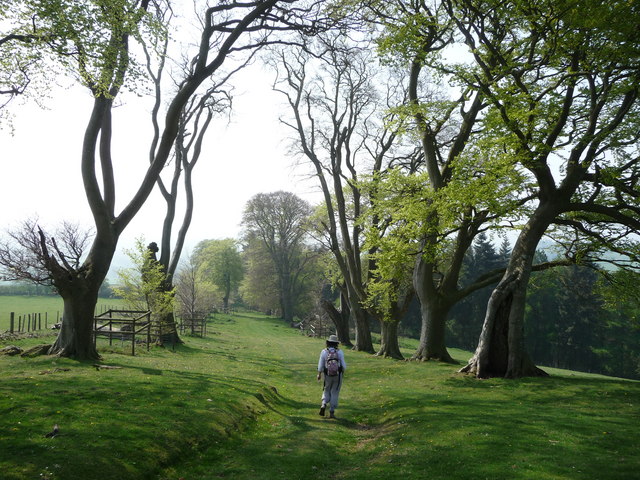
A man walks along an old avenue of trees in shropshire
On the other was a rising conviction that faith was best expressed through the “plain” and the “local.” From this perspective, the home and the neighbor were the primary sites of duty.
Long journeys were seen by some not just as an economic burden on the poor, but as a potential distraction from the honest, daily service of one’s own community.
While these 16th-century tensions regarding the nature of duty are long in the past, the question of who feels welcome on the path remains a live one.
Recent instances of targeted abuse toward groups such as Muslim Hikers remind us that the sense of belonging in the British countryside can still feel fragile.
Whether we look at the historical concerns of the 1530s or modern voices questioning a traveler’s presence, the history of the path is often one of negotiation regarding identity and access.
It is an observable fact that while these practices were disrupted in England, they remained a continuity in other parts of Europe.

The stone avenue leading to the SAnctuary that looks oveR to West Kennet Long Barrow from Avebury
Today, we are seeing a resurgence in England that appears to consciously pull from the 7th-century work of the undivided church.
In the North East and in the Diocese of Lichfield, modern undertakings are explicitly drawing on the legacy of that era.
This was the time that built England as a polis. It is perhaps only in such humility and simplicity—being open to others while walking—that we might find the coherence and cohesion so often eroded by modern technology and division.
These impulses toward movement and gathering seem to be deeply persistent in human culture.
Long before the Saxon era, the Neolithic landscapes of Stonehenge and the Orkney Islands served as focal points for vast, organized journeys across the island.
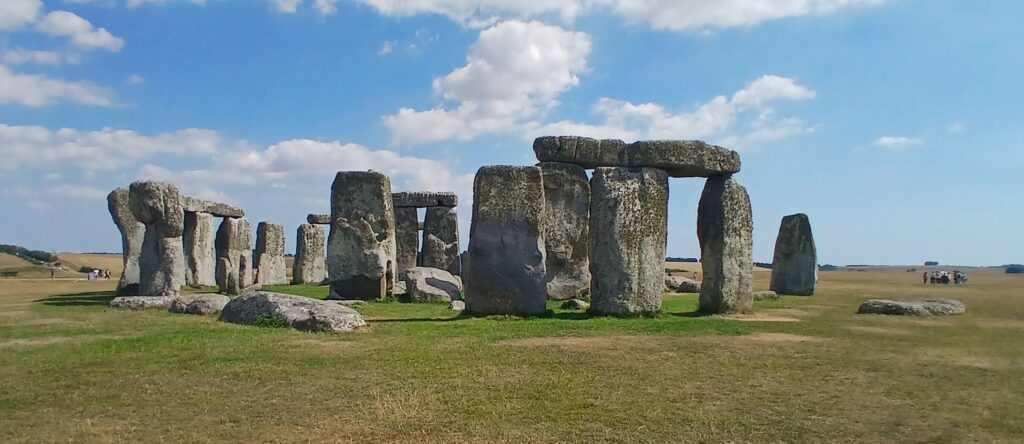
Visiting Stonehenge, 2025
The desire to mark life’s transitions by physically traversing the land appears to be a fundamental human constant, stretching from the prehistoric past into our digital present.
At Soulton Hall, we are mindful of our place within these stories. The estate has a long-standing call on this secular tradition of escape and renewal, acting as its own kind of “Arden” for those seeking a different perspective.

Soulton Wood in bluebell time- inspiration to Thomas Lodge and William Shakespeare
While the nation watches the new Archbishop walk toward Canterbury, we remember our own Bishop of Shrewsbury, Sarah Bullock, leading the 70-mile St Winefride Trail in 2022.
As she moved through the ancient corridors of the Welsh border and across the Roman road that passes through the Soulton estate, she was part of a long tradition of people who have found value in simply being on the way.
Soulton Hall sits on the historic St Winefride’s route, a corridor that has served travelers for centuries.

The Lost Avenue for Soulton Hall: part of the Sir Rowland Hill concept it adressed the rising Easter sun, began at a well of
catharsis and came to and end at a gate into the Soulton presinct closed up in the 1780s.
On the grounds, a spring presented by Rowland Hill as a “well of catharsis” stands as a piece of intellectual theatre. Yet, it is likely this site was once a holy well in a much earlier era.
This association with the human interior is reflected in the history of the site. The name Soulton is understood in the best views to be a reference to “souls”—a designation given to the place in Saxon times.
Whether viewed as a spiritual reality or a linguistic record of how our ancestors understood their own psychology, the name marks this landscape as a place for reflection.
Just as Chad and Erkenwald moved with humility to find common ground, these modern journeys remind us of the simple dignity of the road and the ancient, quiet spaces that continue to offer a place for the mind to rest.
