

The Death of Kings and the Birth of Harmony: Connecting Gwrych and Soulton
We recently had the pleasure of welcoming a representative from the Gwrych Castle team to Soulton Hall, a meeting that felt less like a first introduction and more like a long-overdue reunion of two significant sites on the Anglo-Welsh border which both engage with the stories Shakespeare told in his plays.
Specifically, Soulton stands as the birthplace of As You Like It, while Gwrych stands near the coastal site of Richard II’s fateful surrender. These two plays, alongside the contexts of Richard III and Henry IV, Part 1, form a localized map of England’s most turbulent history. While the coast witnessed the tragic beginning of a king’s fall, the Shropshire interior became the stage for the subsequent crises that included the Battle of Shrewsbury and the arrest of Buckingham. It was within this long cycle of instability—extending into the religious volatility of the Reformation—that the Shropshire interior emerged as a space for the recovery of harmony under Old Sir Rowland Hill, whose work at Soulton served as a vital intellectual and civic bridge toward the peace of the Elizabethan era.
While the wider public may currently more readily know the striking, sprawling silhouette of Gwrych as the home of the UK filming of I’m a Celebrity… Get Me Out of Here! a few years ago, its modern fame belies a much deeper, more ancient resonance.
Gwrych is not merely a picturesque landmark; it is a monumental sentinel standing guard over the landscape where the medieval order collapsed—the site where Richard II was ambushed and captured in 1399. Shakespeare immortalized this moment of coastal betrayal in Richard II, but he obscured the geography for the stage in a way it is worth looking at.
In Act 3, Scene 2, he has the King ask:
“Barkloughly Castle call they this at hand?”
This fictionalized name is a fascinating linguistic ghost; it is widely seen by scholars as a theatrical echo of Berkeley Castle, the site where Richard’s great-grandfather, Edward II, met his infamously gruesome end. By invoking the “vibe” of Berkeley—and later introducing the fictional assassin Sir Piers Exton, whose name hauntingly mirrors Edward II’s doomed favorite, Piers Gaveston—Shakespeare was performing a conscious folding together of these two tragic kings.
He was signaling to his audience that Richard was walking into a historical trap of deposition and death that functioned as a chilling ancestral echo. Shakespeare presents this connection as a haunting “double-exposure” within the play itself, drawing directly on the cultural impact of Christopher Marlowe’s earlier play, Edward II.
The King’s presence on that treacherous coastal pass was the result of a fatal strategic error. In 1399, Richard II had crossed to Ireland to suppress a rebellion, taking with him his treasury and his most loyal knights. While he was distracted across the sea, his exiled cousin, Henry Bolingbroke, landed in the north to reclaim his seized inheritance. By the time Richard returned to the Welsh coast, his army had vanished—a collapse fueled by what historians still debate as a period of fatal dithering; had he acted with more urgency, he might have consolidated his remaining loyalists in the West.
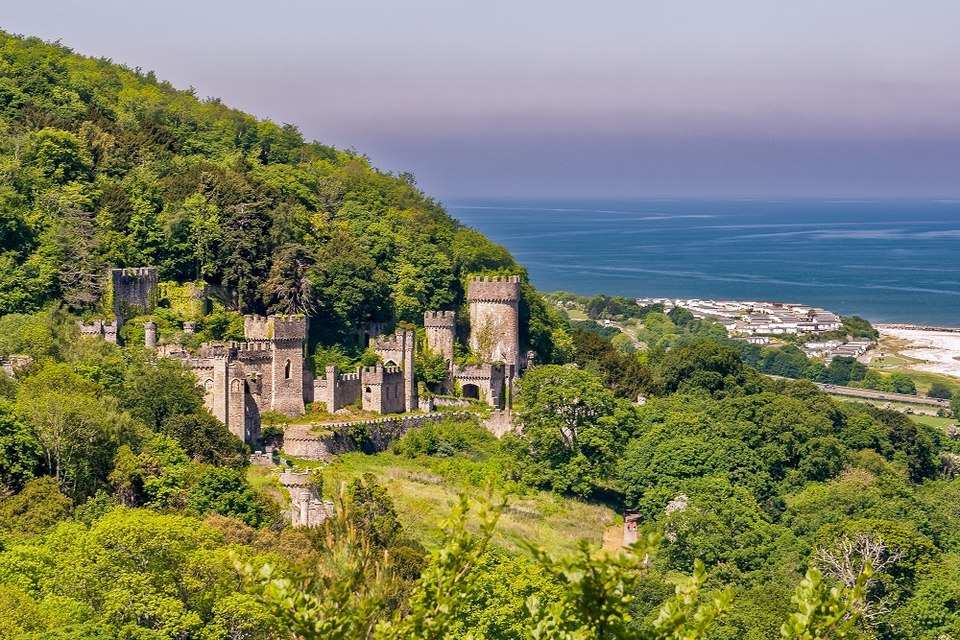
Gwrych Castle
Instead, he was ambushed at Penmaen Head, in the shadow of the very cliffs the Gwrych estate overlooks. It was here, in this narrow and treacherous coastal pass, that the “theatrical” and “historical” Richard collided. Under the watchful eyes of the heights that define the Gwrych landscape, the King realized his reign was over.
This visceral realization leads directly to the most iconic moment of theatrical fragility in the play, where Richard calls for a mirror only to shatter it, crying:
“A brittle glory shineth in this face: As brittle as the glory is the face!”
But before the mirror breaks, it is here—trapped between the Welsh mountains and the sea—that Richard delivers his haunting meditation on the mortality of power:
“Let’s choose executors and talk of wills…
For God’s sake, let us sit upon the ground
And tell sad stories of the death of kings—
How some have been deposed, some slain in war,
Some haunted by the ghosts they have deposed…
…For within the hollow crown
That rounds the mortal temples of a king
Keeps Death his court, and there the antic sits,
Scoffing his state and grinning at his pomp.”
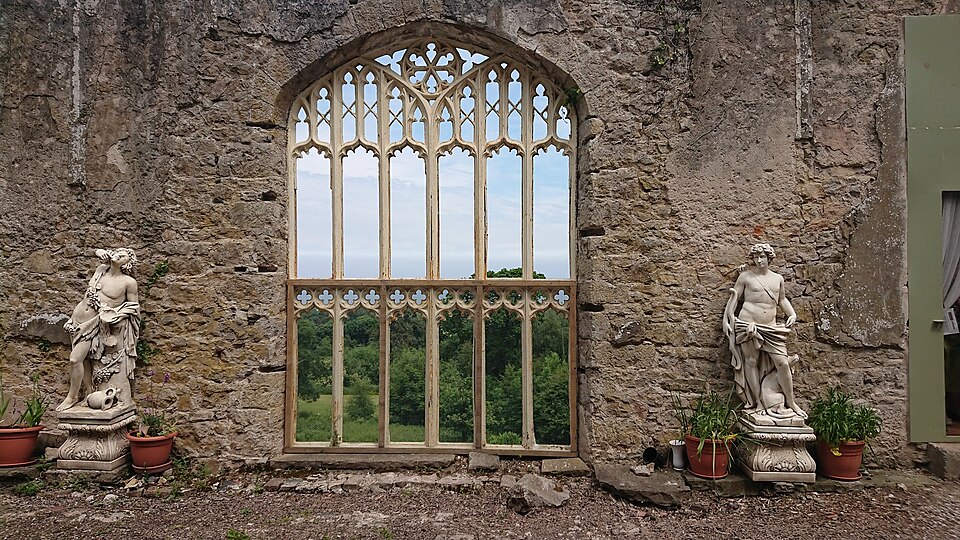
Gwrych Castle Windoiw
The moment of surrender at the Gwrych coast led directly to the carnage of the interior over later decades.
The “Original Sin” of the 1399 ambush created the instability that Shakespeare would later dramatize in Henry IV, Part 1, because the road of humiliation that began at Penmaen Head eventually led to the Battle of Shrewsbury in 1403.
This visit from our friends at Gwrych therefore served to bridge the physical and historical gap between that coastal point of ambush and the Shropshire interior, where the fallout of that King’s downfall was lived and recorded.
It is an important and overlooked Shropshire component of the history represented in the play that the entire arc of Richard II’s downfall was actually set in motion during the “Revenge Parliament” that met in Shrewsbury in 1398.
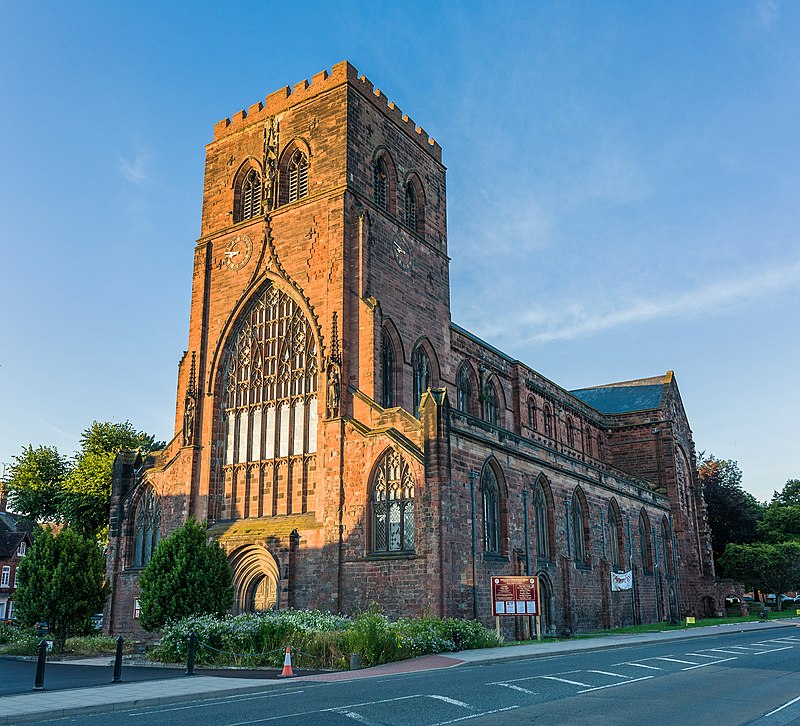
In 1398, Richard II summoned the “Great Parliament” to Shrewsbury Abbey—the “Revenge Parliament” that sowed the seeds of his downfall. Shakespeare dramatized the fallout in Richard II, but he moved the scene to Windsor. By showing Bolingbroke and Mowbray squabbling in the royal court, the play masks the reality that their fracture began here in the West, where Richard’s command to “forget and forgive” failed to contain a crisis already spiraling out of control.
The explosive conflict between Mowbray and Bolingbroke that opens the play was ignited by the journeys linked to that Parliament.
In the play, Richard calls them to settle their dispute with the command:
“Be ready, as your lives shall answer it, At Coventry, upon Saint Lambert’s day”
This tension was rooted in journeying through the Shropshire and the Marches, but the play’s shift to Windsor masks the high-stakes reality of 1398.
In that year, Richard II summoned the “Great Parliament” to Shrewsbury Abbey. While he publicly proclaimed the move an act of “affection” for the people of Shropshire, it was in truth a calculated retreat to his partisan heartland. This “Revenge Parliament” marked a fatal turning point; by proroguing the session from Westminster to the West, Richard was signaling that he no longer trusted the traditional centers of power, choosing instead to settle scores from a friendlier or more maliable turf.
This telling does not fully explore the contours of what was happening in Shrewsbury, where the national drama played out against a backdrop of local grievances and internal power struggles. Richard felt safe here because he had cultivated a fierce, localized loyalty, surrounding himself with his “White Hart” archers—a private army drawn from the Cheshire and Shropshire borders. However, this blatant favoritism and the presence of his “Cheshire guards” deeply alienated the wider nobility.
The seeds of his downfall were sowed in this very landscape: by attempting to turn the Shropshire interior into an impregnable royal bastion, Richard transformed the rest of his kingdom into a coordinated enemy.
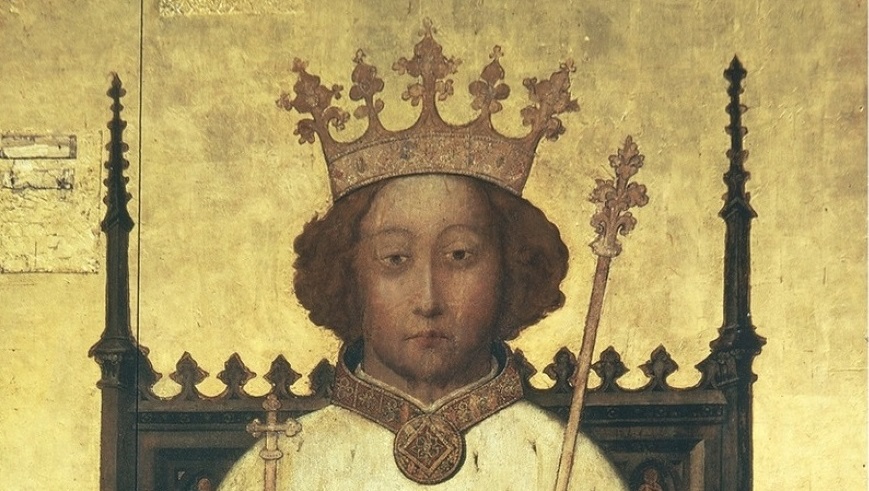
Portrait of Richard II ‘The Westminster Portrait’, 1390s (oil on panel)
The connection between our two sites is further rooted in the grueling, public humiliation of a captured king—a spectacle Shakespeare’s play condenses into a mere scene change. In the theatrical version, the King is whisked from Wales to London, but the historical reality was a grueling, public march of humiliation through the Marches.
As recorded in the contemporary Chronique de la Traïson et Mort de Richart Deux d’Engleterre, Richard was paraded as a prisoner from the shadows of the North Wales coast back through Shrewsbury—passing the very town where he had recently sat in absolute power.
On this journey, he moved through a landscape of wary loyalists and secret dissenters, many of whom still wore the badge of his private “White Hart” army. This route likely brought the captive King directly through Soulton as he traveled the Via Devana, the ancient Roman road that served as the spine of the Marches. This means the very ground we walk today at Soulton once likely saw the weight of that tragic procession, serving as a silent witness to the King’s public shaming as he was led back to the site of his former Parliament and on to worse.
This march was the beginning of a long, dark era.
The “Original Sin” of the ambush at Gwrych created a power vacuum that turned the Welsh Marches into a bloodbath for nearly a century, bookended by events in Shropshire which Shakespeare dramatizes.
On one side, only four years after the coastal arrest, we have the Battle of Shrewsbury in 1403, the bloody climax of Henry IV, Part 1. Shakespeare sets the stage for this slaughter in the play’s very first lines, filled with an anguished foreboding that seems to prophesy the specific horror of the Shropshire field. He has the King imagine the earth of the realm as a victim:
So shaken as we are, so wan with care,
Find we a time for frighted peace to pant,
And breathe short-winded accents of new broils
To be commenced in strands afar remote.5
No more the thirsty entrance of this soil
Shall daub her lips with her own children’s blood;
Nor more shall trenching war channel her fields,
Nor bruise her flowerets with the armed hoofs
Of hostile paces
This cycle of violence reached its desperate conclusion in the events Shakespeare dramatizes in Richard III.
The failed rebellion of the Duke of Buckingham in 1483—a pivotal moment in the play—was a visceral reality played out right here on the Lacon/Soulton border.
Trapped by the “Great Water” of the flooding Severn and betrayed for a bounty, Buckingham was arrested in a dtich bordering Soulton.
In the play, his march to the block is a theatrical beat; in our landscape, it was the final, gasping breath of a century of Marches instability.
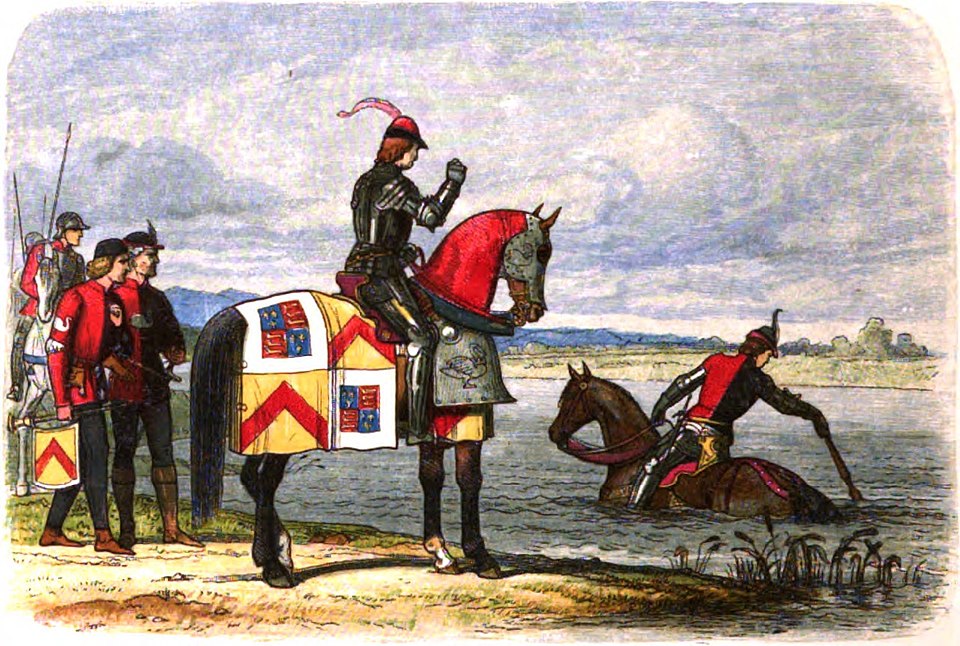
In Richard III, Shakespeare attributes the collapse of the 1483 rebellion to the “fall of waters,” but the local reality was the visceral humiliation of the Duke of Buckingham, who, trapped by the swollen Severn, fled to Lacon where he was captured disguised as a peasant digging a ditch on the Soulton border.
If the century following Richard II’s fall was a long, festering infection of the realm, then the arrival of Henry Tudor in 1485 was presented as the surgical lancing of that wound.
This was a deliberate project of pageantry and the confecting of legitimacy—a project Shakespeare actively built parts of via the plays we have discussed and others.
By landing in Wales and marching through Shrewsbury, Henry was consciously retracing, relitigating, and reclaiming the map of the Marches.
He retraced the paths in a new harness, transforming a path of Plantagenet humiliation into a road of Tudor restoration. He used this landscape to paint over a hundred years of slaughter with a new narrative of national union. This was not a fleeting military necessity, but the start of a deep, recurring relationship; Henry VII returned frequently, notably in 1490 with Queen Elizabeth of York and Prince Arthur to celebrate the Feast of St. George.
The route to public engagement with this political recasting in the early modern period was taken through the “thinking theology” of drama and its capacity to be used for social reproduction.
Having held in what we just said as a powerful tool, it is worth saying it was understood to be powerful and capable of having deadly outcomes if used in an unauthorized way to a point of disapproval—a territory which again takes us into Shropshire connections. The early modern stakes for the political danger of this play cannot be overstated; it was the very work that the Earl of Essex sought to stage in 1601 as a precursor to his own rebellion, an act of “drama as propaganda” that ultimately led to his execution. This high-stakes connection to Shrewsbury is deepened by the legacy of Thomas Ashton (who may have been in hiding for the Marian persecutions with Matthew Parker under the guardianship of Sir Rowland Hill at Soulton), the first headmaster of Shrewsbury School. Ashton eventually left the school to work privately for the Earl of Essex’s father as a tutor, but his “thumbprint” remained firmly on the man, likely instilling in him the understanding of drama as a tool for political power.
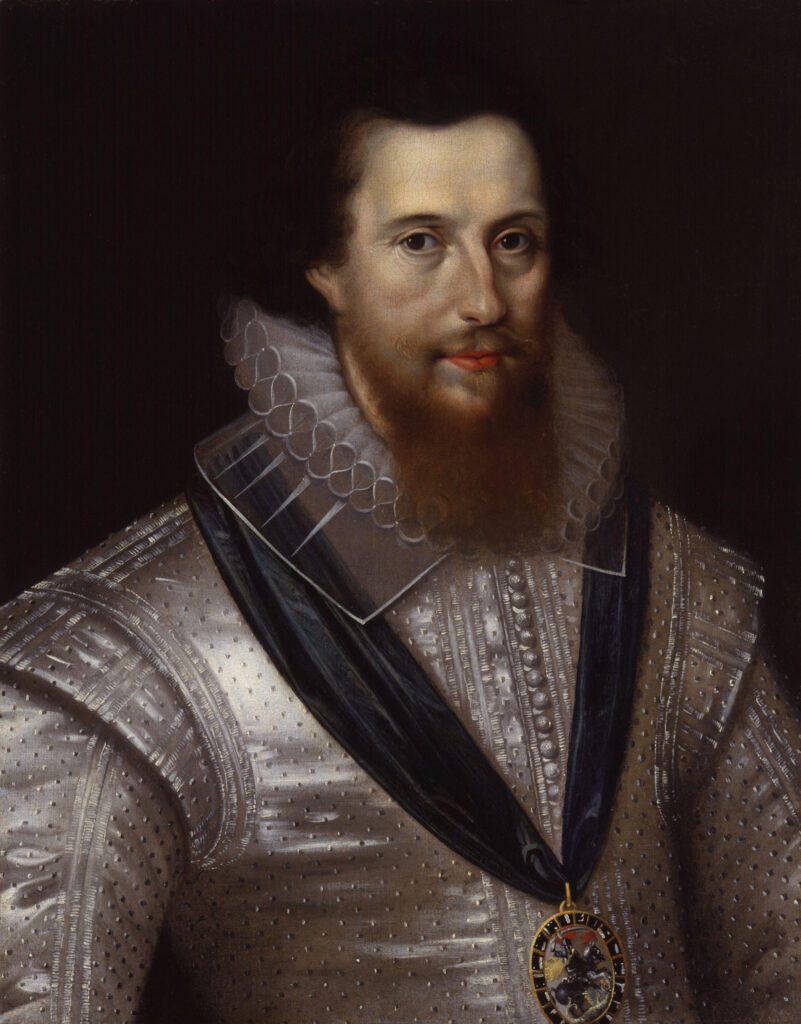
Robert Devereux, 2nd Earl of Essex,
If the century following Richard II’s fall was a long, festering infection of the realm, then the arrival of Henry Tudor in 1485 was presented as the surgical lancing of that wound. This was a deliberate project of pageantry and the confecting of legitimacy—a project Shakespeare actively built parts of via the plays we have discussed and others.
By landing in Wales and marching through Shrewsbury, Henry was consciously retracing, relitigating, and reclaiming the map of the Marches. He retraced the paths in a new harness, transforming a path of Plantagenet humiliation into a road of Tudor restoration. He used this landscape to paint over a hundred years of slaughter with a new narrative of national union. This was not a fleeting military necessity, but the start of a deep, recurring relationship; Henry VII returned frequently, notably in 1490 with Queen Elizabeth of York and Prince Arthur to celebrate the Feast of St. George.
The route to public engagement with this political recasting in the early modern period was taken through the “thinking theology” of drama and its capacity to be used for social reproduction. Having held in what we just said as a powerful tool, it is worth saying it was understood to be powerful and capable of having deadly outcomes if used in an unauthorized way to a point of disapproval—a territory which again takes us into Shropshire connections.
The early modern stakes for the political danger of this play cannot be overstated; it was the very work that the Earl of Essex sought to stage in 1601 as a precursor to his own rebellion, an act of “drama as propaganda” that ultimately led to his execution. This high-stakes connection to Shrewsbury is deepened by the legacy of Thomas Ashton (who may have been in hiding for the Marian persecutions with Matthew Parker under the guardianship of Sir Rowland Hill at Soulton), the first headmaster of Shrewsbury School. Ashton eventually left the school to work privately for the Earl of Essex’s father as a tutor, but his “thumbprint” remained firmly on the man, likely instilling in him the understanding of drama as a tool for political power.
This underscores the vital partnership between Shakespeare’s History plays and his Pastoral comedies. If the Histories serve as a grim warning of what happens when the political order collapses into “carnage of the interior,” then As You Like It acts as the prescription for recovery, providing the specific remedy for the trauma of the Histories by moving from the “bad” of a usurping court to the “good” of the forest.

The famous Soulton Dancing Pavement
In this green world, philosophy and love are attended to as serious political work to heal the kingdom, a direction of travel that stands as the direct opposite of King Lear. Where Lear shows the court infecting the countryside with its madness, As You Like It allows the countryside to infect the urban world with harmony, setting aside the “argument of arms” that fueled Richard II and Henry IV Part 1 to focus instead on the restoration of order in the wake of collapse.
This makes the link between Castle Gwrych and Soulton Hall particularly resonant; the coast witnessed the tragic beginning of the fall, the Shropshire interior saw the fallout but ultimately became a space for intellectual and architectural reconstruction.
At Soulton, we explored how the “hidden” codes in our Renaissance structure and the geometry of our dancing pavement—with its deep links to the world of As You Like It—echo the same deep history that the Gwrych estate has watched over for centuries. This visit from the Castle Gwrych team reminds us that the “celebrity” of our borderland sites is nothing new. Long before the television cameras arrived, these locations were the high-definition stages for the most dangerous political dramas—and the most profound efforts toward harmony—in British history.
