

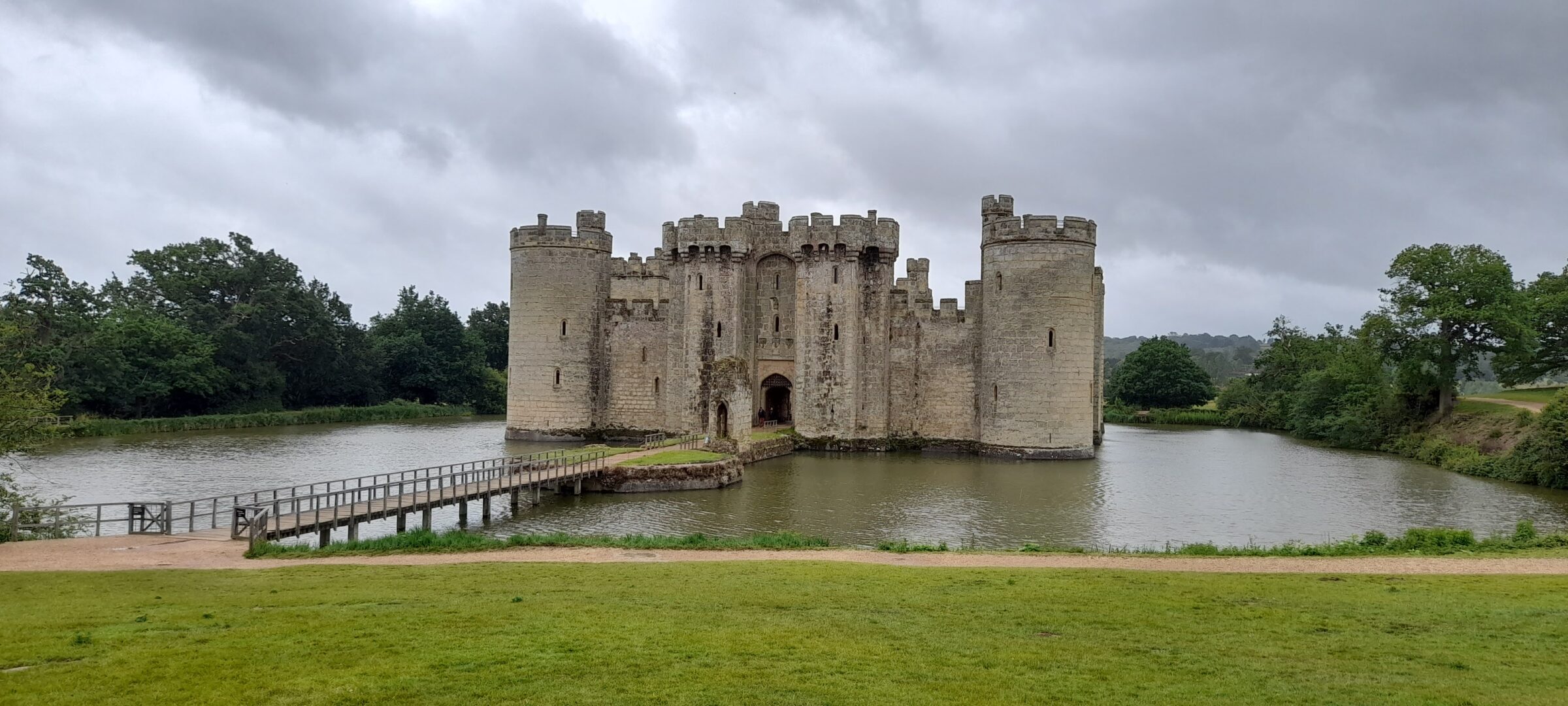
Returning to this region, following visits last autumn and the one before, we again explored two landmarks whose names are evocative in the English story: Bodiam Castle and Hastings. The purpose of the visit was attendance at a wedding where the venue offered us a breathtaking view across the water to the towering walls of the castle.

Bodiam Castle is a masterclass in geometric design that served not merely as a military fortress, but as a sophisticated stage for training and cultivating a unified cadre of knights.
The moat of Bodiam Castle reflects a unique facet of the national character. It appears the ultimate fortress to the casual observer, yet walking the perimeter reveals deeper truths. This was a place for teaching. It reminds us that soldiering lives as much in the head as in fists and swords. Training and forging a unified group is not merely a question of brawn. It is crude to dismiss such a castle as purely an exercise in vanity or status; it is, in fact, remarkably clever.
As explained in the video below from our consultants, Byrga Geniht, it served as a sophisticated environment to cultivate a cadre of knights, proving that power is built through discipline and shared purpose as much as the geometric brilliance behind its medieval facade.
A short drive away, Hastings is where history and legend tangle.
We link the town to 1066, yet the reality is nuanced. The name lives on, but scholars confirm the clash between the Normans and the Saxons occurred miles inland at Battle. The invasion fleet actually made landfall roughly 6 miles west of Hastings at Pevensey Bay, near modern-day Normans Bay, on September 28, 1066.
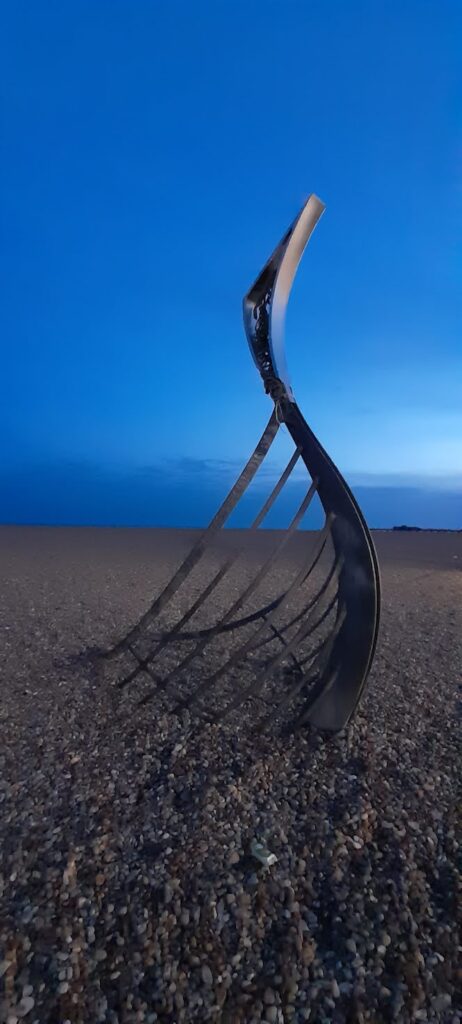
The sharp, upward sweep of the steel prow sculpture on the seafront stands as a bold, modern reminder of the vessels that once cut through these waters to reshape the course of our history.
Standing on the seafront, watching waves hit the shingle, we are reminded that our identity is shaped by the many different people who have come here to make this land their home and integrate into our shared story.
Both sites offer more than a glimpse into the past; they force us to confront how we construct our own history. Whether it is a brilliant, multifaceted fortress or a misunderstood landing site, these locations tell us that the story of England is found in the spaces between the truth and the legend.
Whether we are tracing the shadows of 1066 or uncovering the geometric brilliance behind a medieval facade, these journeys offer a vital connection to the landscape. Embracing tourism within our own borders is an enriching endeavor for residents and visitors from all over the world. It invites us to look past the postcards, engage with the complexities of our collective past, and find a deeper understanding of the places we call home. Every mile traveled, and every story rediscovered, strengthens the threads that bind us to this land and to each other.
