

In the quiet libraries of the late 16th century, scholars and courtiers didn’t just study the stars—they played with them. Long before modern strategy games, there was Ouranomachia, or “The Astrologers’ Game.” Championed by Robert Burton in his Anatomy of Melancholy as a cure for gloom and a rigorous workout for the mathematical mind, this “Battle of the Heavens” offers a glimpse into how our ancestors viewed the intersection of science, strategy, and the divine.
While many are familiar with Chess or Backgammon, Ouranomachia belonged to a specialized class of educational war games, much like Rithmomachy, the celebrated “Philosophers’ Game.” Its roots stretch back to the medieval university system, where it served as a practical tool for the Quadrivium—the four pillars of a liberal arts education consisting of Arithmetic, Geometry, Music, and Astronomy. The game was a sophisticated evolution of earlier traditions, including significant Arabic influences that had trickled into Europe over centuries.
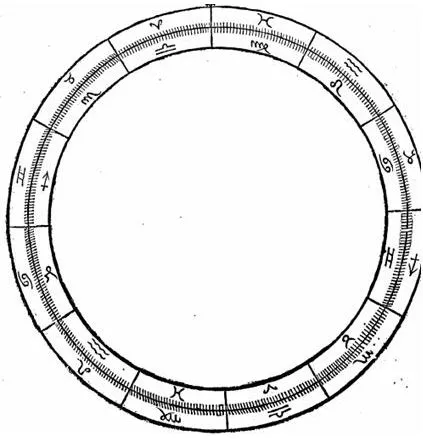
Board for Ouranomachia – The Astrologers’ Game
When William Fulke codified the rules in the 1570s, he even presented a board to Queen Elizabeth I, framing the game as a pastime that combined scholarly rigor with “noble relaxation.” Unlike traditional games where every piece moves in a standard fashion, Ouranomachia acts as a cosmic simulation. Two players each command a set of seven planets, moving them across a board composed of two overlapping zodiac circles.
The movement follows the principles of Ptolemaic motion; pieces do not move in simple squares but follow the laws of ancient astronomy. The Sun creeps forward one degree at a time, while the Moon leaps across the signs in rapid cycles. Conflict in this arena is not about jumping over a piece, but rather about astrological strength. When two planets meet, a “battle” ensues based on their dignity—a complex calculation of their position, power, and relationship to other celestial bodies.
For the Renaissance mind, Ouranomachia was far more than a hobby. It was a way to internalize the order of the universe, and by mastering the game, a player was essentially mastering the mechanics of the cosmos itself.
