

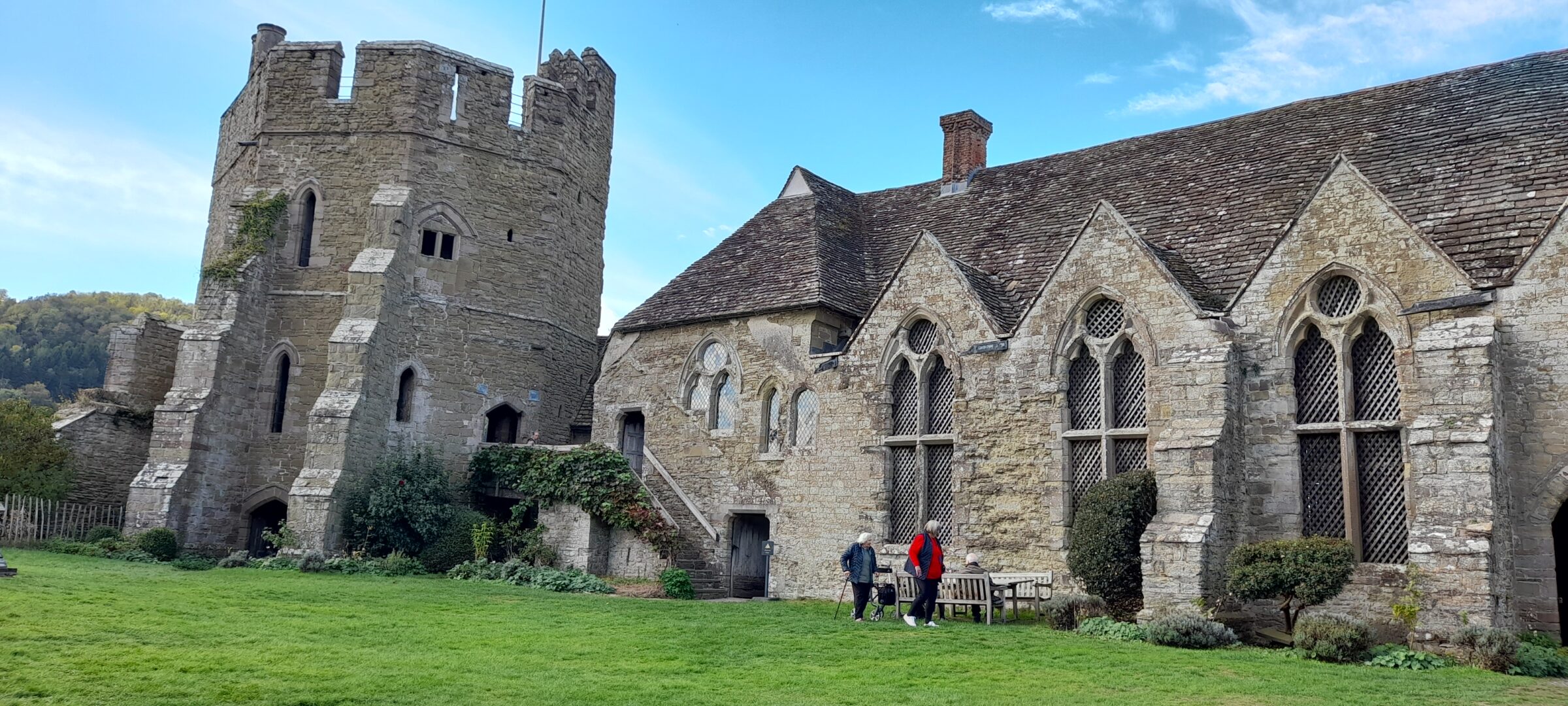
A trip to Hereford afforded the chance to return to Stokesay Castle, where the Great Hall remains remarkably fine and unchanged.
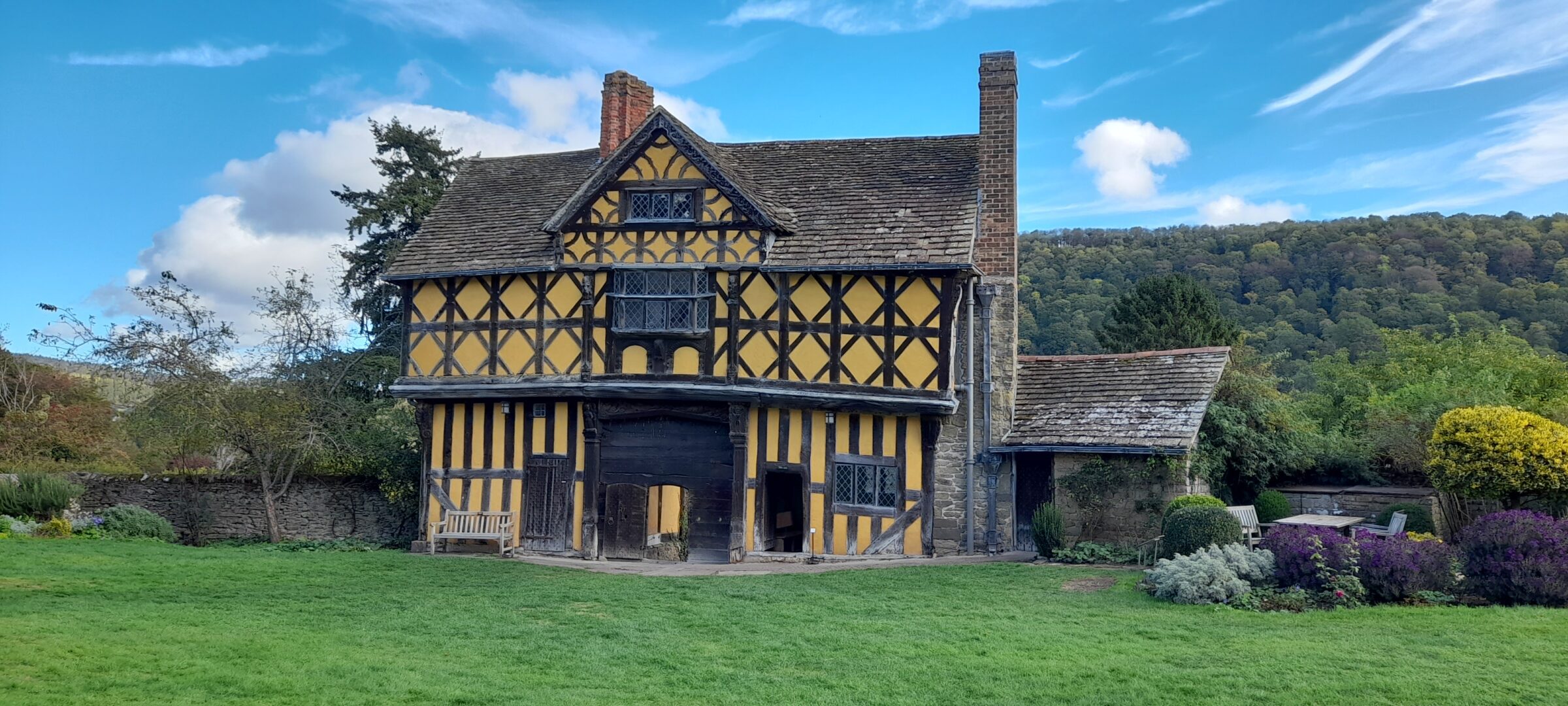
Stokesay Castle, October 2026
It is as a rare survivor from the late thirteenth century, widely considered the finest preserved hall of its kind in England. Stepping inside provides an opportunity to look at the culture of a great hall frozen in time and place—an atmosphere that mirrors the world of Geoffrey Chaucer and the St. Erkenwald poem, when castle entertainments filled spaces just like this.

The Great Hall at Stokesay Castle was built in the 1280s by the wealthy wool merchant Laurence of Ludlow.
A notable architectural detail of the hall is its early rainwater spouts and shoots rather than continuous guttering. This absence of integrated roof gutters is particularly interesting when considered alongside Soulton.
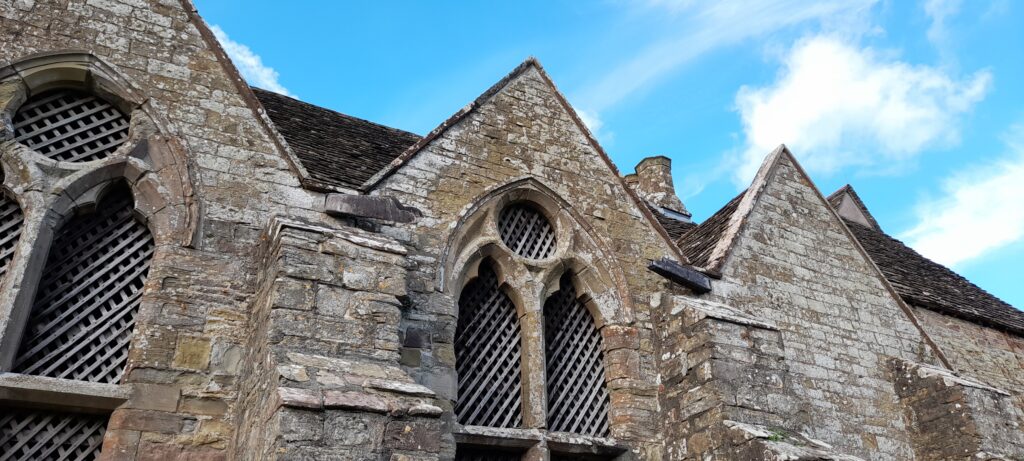
Rainwater handling at C13th Stokesay – Soulton Hall C16th arrangements wet every likely the same
It accords directly with how the sixteenth-century design and rainwater handling of Soulton operated, preserving an earlier medieval approach to shedding water from broad rooflines.
The structure was extraordinarily well received by an American admirer and copied across the Atlantic. It also underwent extensive restoration work in the nineteenth century, which carefully preserved its medieval framing rather than over-restoring it.
All of this makes the visit deeply relevant to Soulton. Excavations by Dig Ventures revealed a lost early castle structure, positioned where the basecourt and Moot Hall sit today. Soulton Court even contains ancient timbers of the exact same character as those at Stokesay, linking both Shropshire sites through a shared timber-framing tradition.
