


Bluebells, Law, and Literature: A Sapphire Spring at Soulton Wood
The final week of April 2026 marks a spectacular convergence of nature, heritage, and history at Soulton Hall.
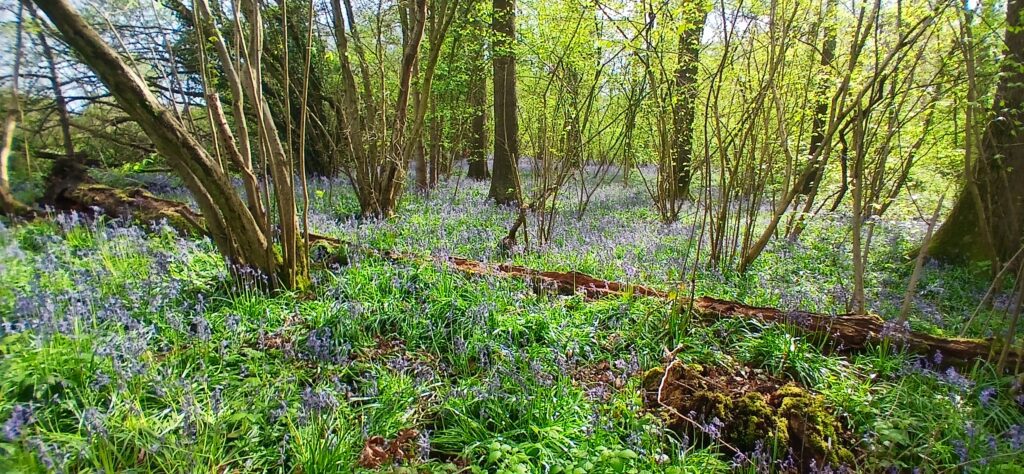
2026 Springtime and bluebells in Soulton Wood, the inspiration for the Forest of Arden in Shakespeare’s ‘As You Like It’. ‘Well, this is the Forest of Arden.’
As the Shropshire landscape prepares to honor the birthday of William Shakespeare and the feast of St. George, the ancient grounds of Soulton Wood offer a sensory and intellectual journey that bridges the past with the present day.
The Real Forest of Arden in Bloom
In April and May, Soulton Wood—the physical inspiration for the Forest of Arden—is blanketed in a sea of native bluebells. This vibrant display is accompanied by the delicate white petals of wood anemones and the unmistakable, fresh aroma of wild garlic carpeting the woodland floor.
Walking through these paths today provides a tangible link to the world Shakespeare immortalized in As You Like It. The core of the play—the idea of finding a better life away from the “public haunt”—is rooted in this very soil. As Duke Senior famously observes:
“And this our life, exempt from public haunt, Finds tongues in trees, books in the running brooks, Sermons in stones, and good in everything.”
It is no coincidence that the play feels so at home here. The real-world “Old Sir Rowland” (the historical Sir Rowland Hill) owned these lands. The deep texture of the play is a direct push-through from the culture and geography of Soulton, moving beyond the mere literary influence of Thomas Lodge to the actual landscape Lodge inhabited.

“Bluebells in Soulton Wood, the ‘As You Like It’ wood, 2026. ‘And this our life, exempt from public haunt, finds tongues in trees…’
A Weekend of Law and Legacy
This year, the peak of the bluebells coincides with a landmark event for the Shropshire community.

Throughout her career, Lady Arden has been a trailblazer, achieving a series of historic “firsts” that have reshaped the judiciary—including her appointment as the first woman to the Chancery Division of the High Court, and later as a Justice of the Supreme Court.
On Friday, 24 April 2026, Soulton Hall welcomes Lady Arden of Heswall, a former Justice of the Supreme Court, for a charity lecture regarding the Magna Carta.
The setting for this lecture is deeply symbolic. Soulton Hall was built by the aforementioned Sir Rowland Hill, a statesman who occupied the same office held in 1215 by one of the key negotiators of the Magna Carta. During the evening, the original sixteenth-century “chair of estate” belonging to Sir Rowland will be present in the room—a silent witness to the legal and constitutional history that Lady Arden will discuss.
The Macmillan Bluebell Walk
The celebrations culminate on Sunday, 26 April 2026, with the annual Macmillan Cancer Support Bluebell Walk.

Spring 2026 in Soulton Wood, where a sea of bluebells fills the ‘fair valley’ that Thomas Lodge Jr. once called home. This is the living landscape that inspired the Forest of Arden—a place where Shakespeare’s heroes ‘find tongues in trees, books in the running brooks, sermons in stones, and good in everything.’
This is a rare invitation for the public to step into the private woodland that sparked the imagination of the world’s most famous playwright while supporting a vital cause.
-
The Experience: Visitors can explore timed routes through the bluebells and surrounding fields.
-
Discovery: Keep an eye out for the wood anemones and the lush carpets of wild garlic that share this ancient space.
-
Community Spirit: The event features a popular plant stall with hardy perennials and refreshments to follow your walk.
As we celebrate Shakespeare’s birthday and our national heritage this April, Soulton Wood remains a place where literature, law, and nature are inextricably linked—all under a canopy of ancient trees and a carpet of sapphire blue.
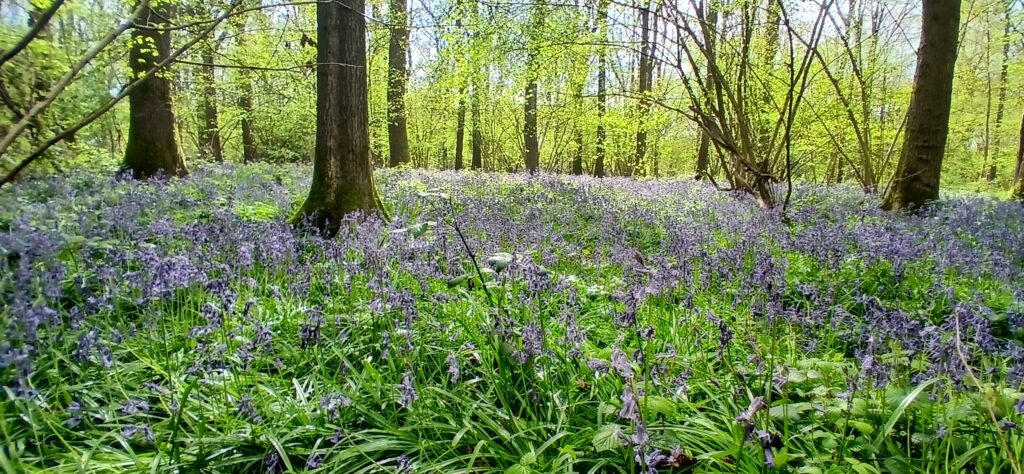
Soulton Wood, 2026: Exploring the ‘As You Like It’ wood. Thomas Lodge Jr. wrote of this place: ‘I wander in this forest, to light on some cottage and content me with a country life.’
