

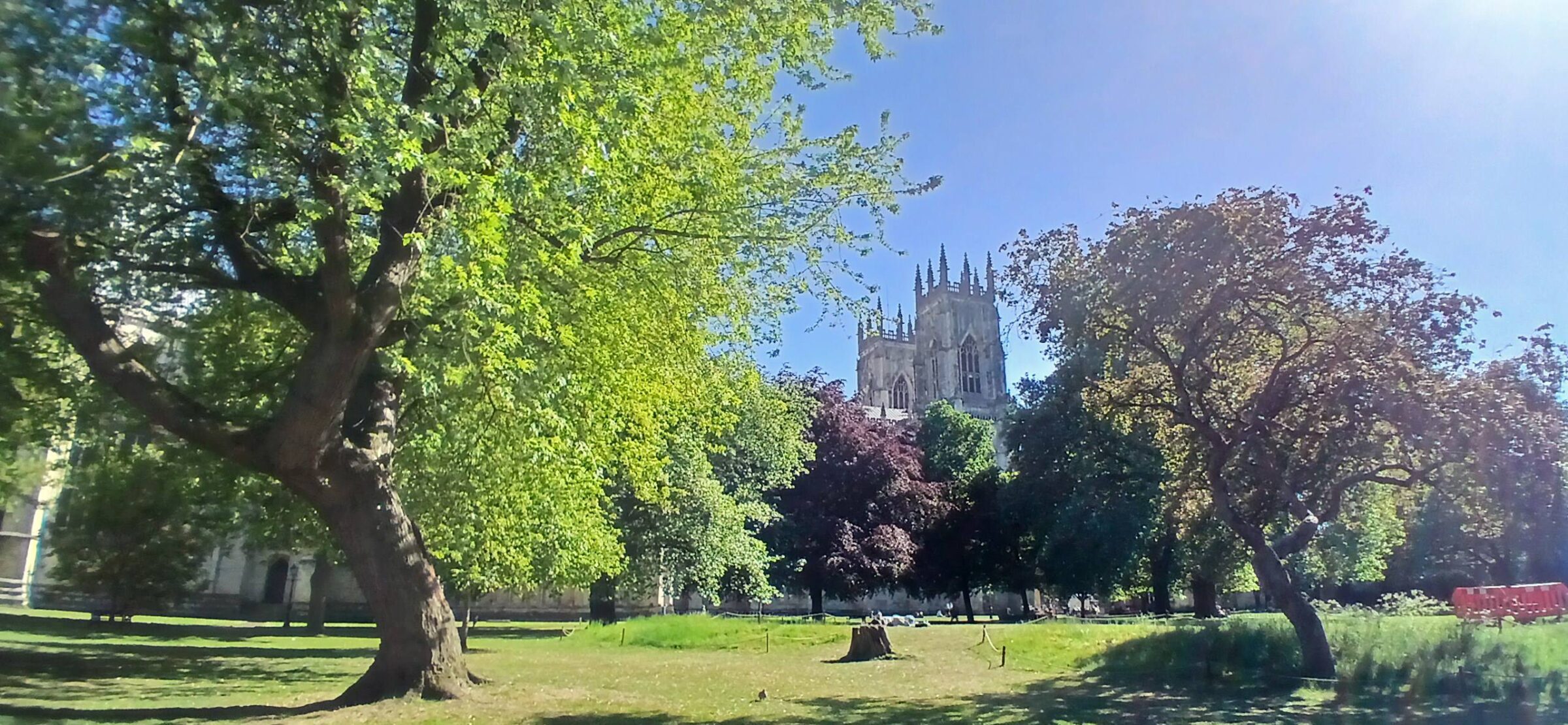
A recent attendance at York Minster offered a wonderful opportunity to reconnect with the UK’s rich heritage and culture.
As dusk settled, the vast, ancient stones seemed to absorb the fading light, creating an atmosphere of profound serenity and timelessness, and we found ourselves gently pondering the meditations of the In Hoc Signo artwork we recently encountered here with a private view organised by Byrga Geniht.
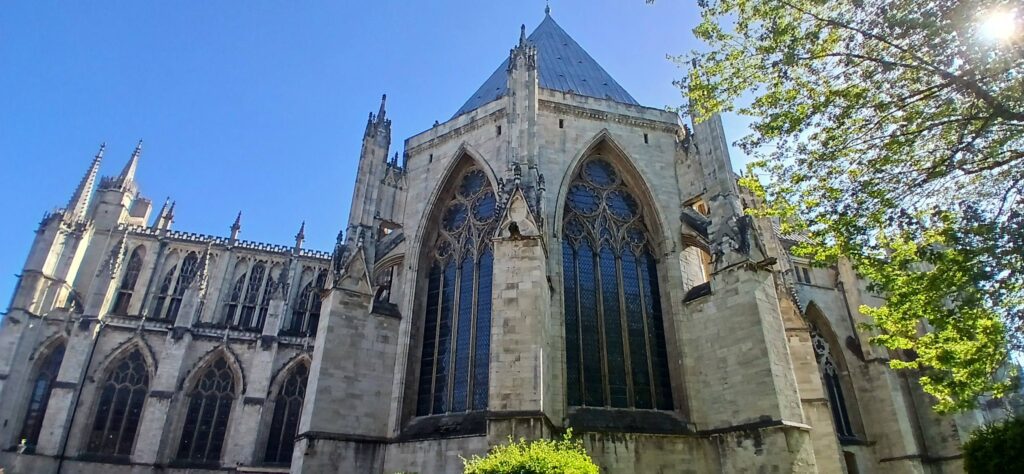
The Octagonal Chapter House at York
Standing there, it’s impossible not to recall York’s profound connection to the Roman Emperor Constantine. It was here that Constantine was proclaimed emperor in 306 AD. On the eve of a pivotal battle, he experienced a vision – a celestial sign that he interpreted as a divine directive.
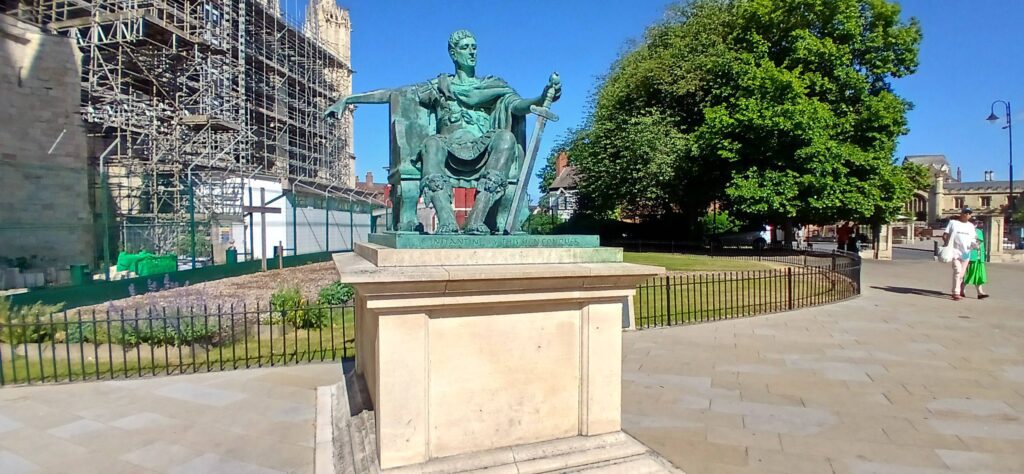
Constantine, a statue in York
This moment is famously credited with his conversion to Christianity, and it set in motion a chain of events that would irrevocably alter the course of Europe. The decriminalisation of Christianity under his rule, followed by its rise as the dominant faith, fundamentally reshaped the continent’s social, political, and cultural landscape.
