

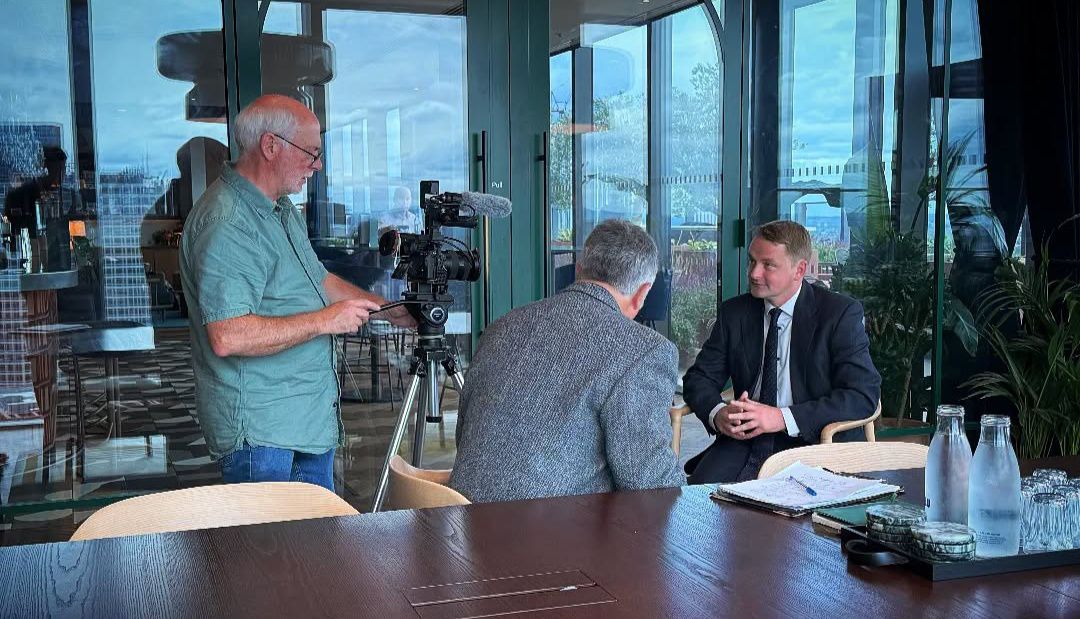
Tim Ashton is today delivering a powerful statement to the All-Party Parliamentary Group (APPG) on Fairer Finance.
This moment is the culmination of a dedicated, multi-year dialogue with the APPG regarding issues of financial misconduct and disability discrimination.
The evidence focuses on a five-year ordeal involving weaponization of his disability (dyslexia) by a major insurer, to frustrate complex litigation related to COVID-19 Business Interruption claims, and the systemic failure of the regulator, the Financial Conduct Authority (FCA), to address the resulting institutional cruelty.
The statement below constitutes the full, prepared oral remarks.
Please note that while this is the prepared text, the live delivery in the room may vary slightly.
Prepared Oral Evidence to the APPG on Fairer Finance
Statement by Tim Ashton
I am dyslexic.
That part of who I am can be profoundly challenging. But my dyslexia is also what lets me see the bigger picture. I have anticipated, since the very beginning of this long ordeal, that I would need to come here to Parliament and be vulnerable about this.
That knowledge has tormented me, but it has also grown my character, as I have fought for justice for half a decade. Nevertheless, I am weary of the imposition of that burden and the alienation it brings to my very soul.
I am privileged to have your attention, but I do not have time in these short remarks for all that has happened and continues to be done.
The campaign of institutional cruelty began in the depths of the pandemic, and it has not stopped.
They focused on my disability, but they have a bigger systemic point of origin affecting thousands of people the FCA has let down. Both streams of wrongdoing continue to augment. I will focus primarily on the damning weaponization of disability, but make reference to the wider constellation of failures.
The main message today is simple: I expected that, as a person with a disability, I would be treated with basic humanity.
Instead, it was weaponized.
I went through total marginalization and harm that compounded in a fractal way, and I continue to endure this.
I am soul-sick of upholding the basic standards that a regulator and an industry have walked away from, and being harmed for it.
I want to share my observations about the culture and leadership of NFU Mutual, and how that business’s behaviour bleeds into an industry, and how a regulator validates it. I struggle not to see this as evil and a moral stain. It is certainly a systemic threat to fairness in the sector.
NFU Mutual is currently a defendant in a high-profile class action on business interruption, which has been strategically and frivolously delayed, in breach of allegedly firm expectations communicated to Parliament by the FCA back in early 2021. The affected people have had to pioneer class actions for clarity and—I expect—remedy alone, while Parliament was fobbed off by the industry and the regulator with devastating effect.
I was one of the very first people to see this breach in the protection of policyholders and that the insurance company I was a customer of was not inhabiting the full truth. I was punished for this, and the only thing they could reach for was my protected characteristic of dyslexia. They failed to make adjustments in this complex situation and then victim-blamed me for understandable distress. This was done at the Board and CEO level, explicitly and with massive vindictiveness, forcing lifelong consequences.
The most offensive part of NFU Mutual’s reckless actions was to mark my file ‘denied for insurance’ for no commercial reason, leaving the farm my family look after with no cover—a breach of criminal law. This was done simply because I asked for adjustments for my disability to begin a case.
The former CEO once told me he was sorry I was dyslexic. He went on to say that for me to be dyslexic, I ought to be a totally illiterate person who couldn’t even sign letters, directly challenging my competence and professional standing. He also stated that other members of my family, not me, would need to advocate for the business, despite my qualifications in law—qualifications now validated by the serious litigation that followed, confirming my early insight.
Worse, the local agent in Shrewsbury recognised he represented bullying and harm but, instead of blowing the whistle, he telephoned my father to ask that he see I was chemically sedated. This is profound moral degradation.
Furthermore, the current CEO telephoned my Member of Parliament without asking, and lied to her about the contents of an official report in order to frustrate a parliamentary accountability process.
NFU Mutual has strategically weaponized my disability to frustrate vital court cases—the Business Interruption matters. They did this because they found my ability to see the bigger picture terrifying. This is a textbook example of DARVO—Deny, Attack, and Reverse Victim and Offender.
Lawyers involved confirmed this strategy: ‘This has been their tactic from day one. Let the company go bust so the claim dies, or stall long enough to make it time barred.’
My need for ethical leadership is unmet: the Consumer Duty Champion was actively involved in this abuse, while simultaneously producing diversity videos so distasteful that other industry stakeholders demanded their withdrawal on my behalf. NFU Mutual controls 80 per cent of the farm insurance market. This is not stewardship; it is toxic market dominance and looting.
I must now turn to the regulator, the Financial Conduct Authority (FCA).
The FCA’s failure is a symptom of wider systemic sickness. They assessed the leadership responsible for this institutional cruelty as meeting the test of ‘fit and proper,’ and have deemed their output to be that of ‘good stewardship.’
The UK regulator told me that discrimination was fine, so long as it was blended with other wrongdoing. They validated a situation where the Financial Ombudsman Service found life-long discrimination costing £1,000 a month and called that ‘fine.’ The FCA accepted a statement that my exclusion was done for ‘no commercial reason’ and was contaminated by disability.
The human cost of this delay is catastrophic: people involved in the litigation are utterly trapped and expressing suicidal ideation. I have been told there have been deaths before justice could be served.
When I observe a regulator that deems this systematic cruelty as ‘good stewardship,’ I am forced to conclude that this is not a system of oversight; it is a system of enabled abuse.
I did not come here to offer proposals; I came here to offer a warning.
This system has repeatedly attempted to force a total market participation collapse. My market participation did collapse, and my need for insurance was offered to the market 60 times and was refused by all but one supplier solely because of my disability. The consequence of this forced market collapse was that I was left without compulsory cover for a time—a criminal law breach that occurred against both my expectations and the explicit demands of the Financial Ombudsman Service. My business was completely refused insurance, and it is still hard to place.
This systemic failure means that I have been placed in a position less safe than a person with a contested parking ticket, and worse off than convicted criminals.
In conclusion, based on my observations of this entire system—from the boardrooms of NFU Mutual to the supervisory offices of the FCA—my deepest feeling is despair, because my need for justice and protection remains utterly unmet.
The damage inflicted upon me is the inevitable outcome when a lack of regulatory action meets a lack of corporate conscience.
The fundamental need for financial protection, which this system is meant to provide, is completely undermined. I will never be able to buy insurance again—a thing I am compelled to do to survive—without being forced to defame a protected characteristic. This system enables the complete collapse of total market participation.
Yet, I want to leave you with this truth: I would never want my dyslexia taken from me. I am proud of it. I understand that because my mind is different, I can unlock more. I come directly from the farm where Shakespeare set As You Like It. That play’s message is one of renewal and radical inclusion, symbolized by a dance in the final act. That humane dance is also reflected in the architecture of this building, placed in Central Lobby.
When the state stands idly by, it fails to uphold the fundamental values—the ‘sermons in stones’—that Parliament itself carries in its architecture.
