

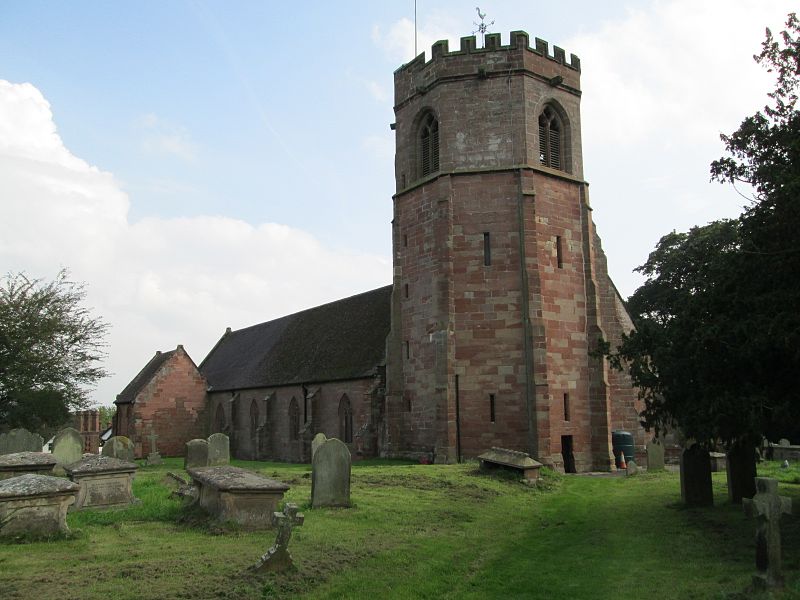
The bells of The Church of St Luke in Hodnet, Shropshire, were recently featured on BBC Radio 4’s “Bells on Sunday.”
This broadcast drew national attention to the church’s unique architecture and its long-standing connection to local history and tradition.
The church features a distinctive 14th-century octagonal tower rising to its full height. This architectural form is considered nationally rare for a church tower, making it a significant piece of English medieval construction. The unusual octagonal tower’s architectural fascination with the geometry of the rhombic dodecahedron is intrinsically linked to a local, firmly held dance that freights complex mathematical ideas into the culture. The village church’s centerpiece is a remarkable font, which holds significant historical weight as it was carefully moved and rededicated after its relocation from Tong.
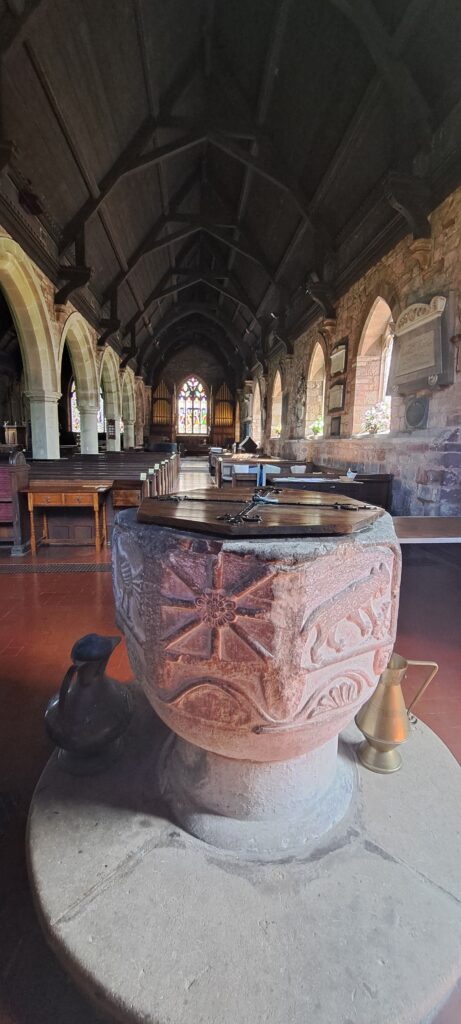
Romanesque font in Hodnet Church, said to be C17th
The tower houses a peal that connects the modern community to centuries of local craftsmanship.
The ring comprises eight bells. The original six heaviest bells were cast in 1769 by Thomas Rudhall of Gloucester and were later augmented to eight in 1947 by the John Taylor foundry. The Radio 4 segment featured the sound of the six original bells, ringing the method “April Day Doubles.” The tenor bell weighs twelve hundredweight and is tuned to F, representing a significant piece of preserved English metalwork and auditory heritage.
Beyond its structural innovation, the Hodnet area holds considerable cultural importance due to its historical associations. The church and its locality are linked to figures such as Sir Rowland Hill, as well as the prominent Vernon family.
The Vernon family is of particular cultural note: scholars have suggested family members may have served as inspiration for characters in the works of William Shakespeare, specifically Juliet and the figure known as the Dark Lady of the Sonnets. These links contribute to the area’s place in British literary and social history.
The continued tradition of ringing at St Luke’s provides a tangible connection to the past, reminding us of the enduring nature of faith, community, and heritage in Shropshire.
