

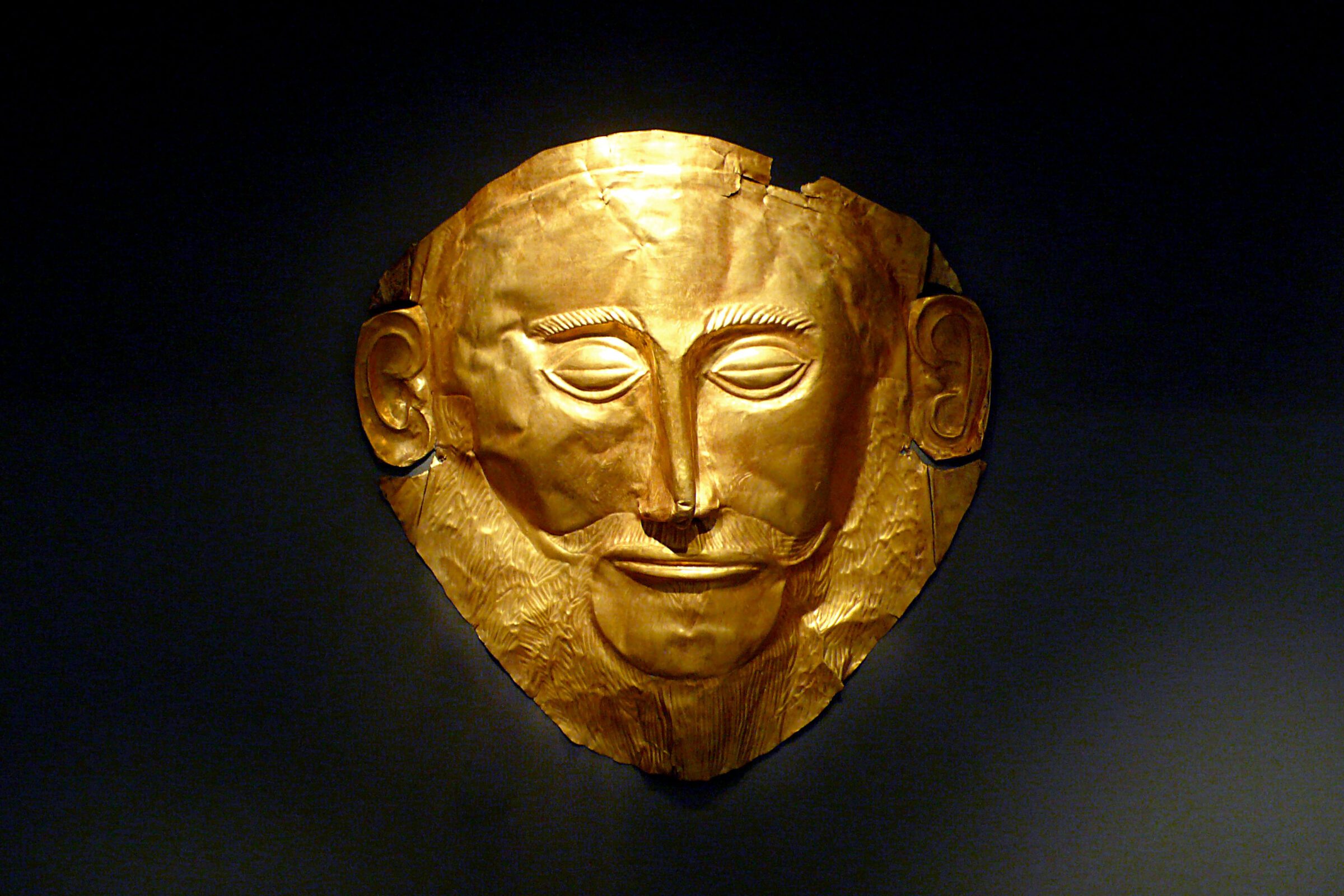
The experience of witnessing Shrewsbury School Senior School perform a fierce, new translation of Aeschylus’s Agamemnon transformed the ancient tragedy into a vibrant spectacle of drama and historical resonance.
This is no mere play; it is a profound historical and cultural dialogue. It finds unique purchase when framed by the institution that staged it, and it also triggers deep reflections for anyone familiar with Soulton Hall’s story and the work of Old Sir Rowland Hill.
Drama and the classics are culturally foundational to Shrewsbury School. Founded in 1552, the school carries an important legacy as part of the Tudor humanist settlement of the Elizabethan Renaissance, cultivating a deep interest in classical learning and an impressive tradition in drama—Queen Elizabeth I arranged to see the extravagant, nationally notable plays staged there in 1565.
The school’s foundational years were steeped in political danger.
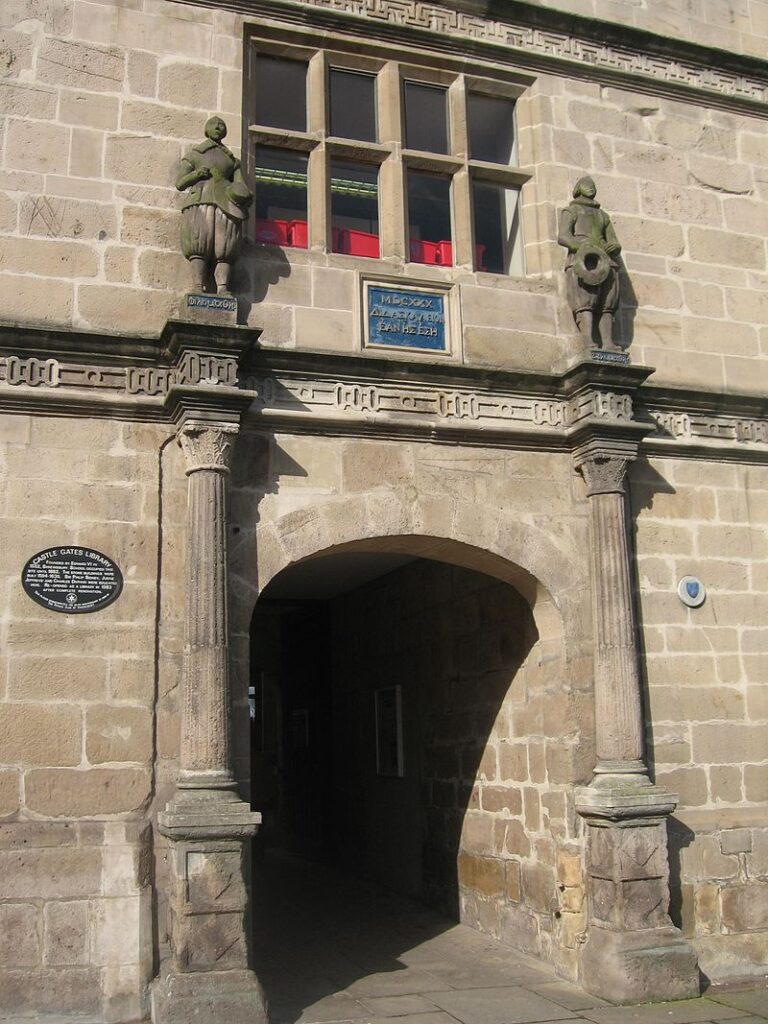
The entrance to the Old Shrewsbury School buildings – an instutution renewing the Saxon traditions of education, which Sir Rowland Hill helped to set up
Beginning amid Reformation iconoclasm, the institution was still emerging when the swing back to the Catholic Counter-Reformation before its Protestant kind of refoundation in 1561 under Elizabeth I. The Queen’s first Archbishop of Canterbury, Matthew Parker, licensed Thomas Ashton to run the school, and it is considered very possible that both figures sought the powerful protection of Sir Rowland Hill, likely at Soulton. In this context, the themes of Agamemnon—the murder of political opponents, the demand for sanctuary, and the deadly consequences of ambition—are curiously resonant of the 16th-century struggles that shaped the institution staging the play.
On a contemporary note, the skill and commitment of the Shrewsbury students, coupled with the power of the new translation, brought a savage clarity to Clytemnestra’s rage and Cassandra’s despair. A wonderful engagement with the foundational and enduring power of Greek tragedy.
From the perspective of Soulton Hall’s deep historical layers, this staging sets up fascinating reflections.

This image depicts a scholarly reconstruction of Soulton Hall, highlighting its architectural elements inspired by the ancient theater of Epidaurus. The yellow lines trace these features, revealing the Rowland Hill’s homage to the renowned Greek structure.
The Hall’s design, steeped in the Renaissance revival of classicism, features coded references to classical drama, specifically via conjuring Epidaurus (in Epidaurus Court) and via the repeated familiarity with Eleusis.
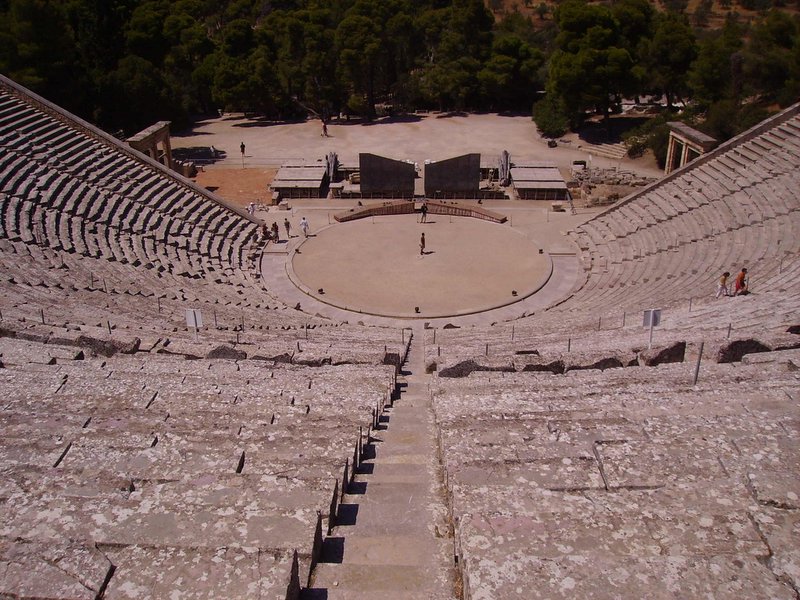
Classical Epidaurus
While we know the famous stone Theatre of Epidaurus was constructed long after Aeschylus’s lifetime (he wrote for a simpler structure at the Theatre of Dionysus), the Hall’s architectural gesture connects its history to the refinement of the classical Greek theatre that Epidaurus came to symbolise so clearly to Tudor scholars.
Moreover, the architectural reference to Eleusis is powerfully fitting: Aeschylus’s plays, particularly Agamemnon and Choephoroi, contain subtle allusions to the “light of Eleusis,” using the imagery and terminology of the Eleusinian Mysteries to underscore the transition from the darkness of vengeance to the light of civic justice.
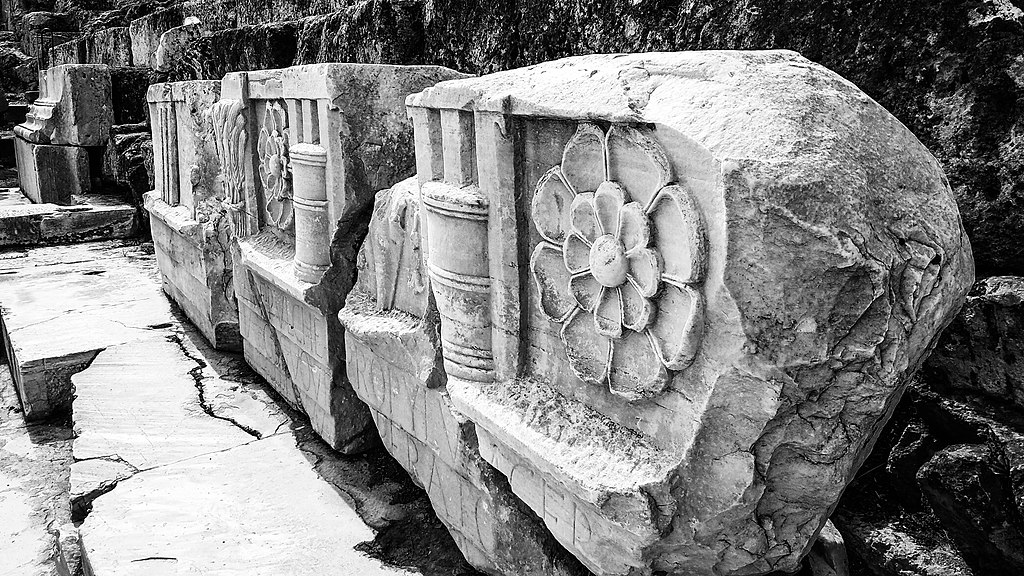
Surviving carvings from the Telesterion at Eleusis
Soulton’s deliberate association with Eleusis, therefore, captures a noted nuance of Aeschylus’s original text: the sense that a higher, ritualistic justice is being sought, transforming Clytemnestra’s murderous revenge against a backdrop that evokes the sacred ritualism of the Mysteries and the civic architecture of London.
Soulton Hall’s elite status in the story of Renaissance drama, particularly its ties to Shakespeare and Thomas Lodge (whose Rosalynde was the source for As You Like It), provides a further vital lens for viewing this staging of classical theatre.

AS YOU LIKE IT Blue Plaque at Soulton Hall
Aeschylus’s work, filtered through humanist scholarship and the blood-soaked tragedies of Roman playwright Seneca, provided the essential seed corn that Shakespeare drew upon. The core concept of a bloody, inherited curse—the very engine of the House of Atreus—is what drives the plot of Hamlet. The Danish prince, compelled to avenge a murdered father, mirrors the fate of Agamemnon’s son, Orestes, placing both characters in an agonizing ethical dilemma born directly from ancient Greek drama.
Shakespeare shows explicit, knowing awareness of these classical conventions. In a moment of sharp wit, Ophelia tells Hamlet:
You are as good as a chorus, my lord.
This line demonstrates that Shakespeare not only understood the themes but could playfully reference the central structural device of Greek tragedy: the Chorus, which narrates, comments, and moralizes on the action. The playwright’s use of this shared vocabulary solidifies the ancient play’s status as a foundational text for the English Renaissance.
Furthermore, in works like The Winter’s Tale, Shakespeare engages with and evolves the tragic arc of the Agamemnon trilogy.
The original Greek cycle, continuing through The Libation Bearers (where Orestes murders his mother Clytemnestra to avenge his father) and concluding in The Eumenides (where the rule of law replaces the Furies’ ancient blood vengeance), tracks the devastating path of inherited bloodshed.

Shakespeare portrait by Pupils of Shrewsbury School
Shakespeare’s play explores these same ideas of guilt, generational suffering, and atonement within a fictional universe utilizing a pagan Graeco-Roman cultural context, explicitly referencing deities like Apollo and Jupiter. This setting allows Shakespeare to blend classical mythology with themes that resonated powerfully with his Renaissance audience, including Christian concepts of sin, repentance, and redemption.
While Leontes’s baseless jealousy initiates a tragedy as destructive to the family unit as Agamemnon’s initial sacrifice, the resolution follows a similar path from chaos to order with divine assistance.
The process is mediated by the Oracle of Delphi (echoing the divine intervention in Eumenides establishing the Rule of Law), the magical realism of the Bohemian pastoral, and the eventual, miraculous “resurrection” of Hermione.
This demonstrates that healing and the restoration of the lost family unit can break the ancient cycle, using grace, art, and time as powerful new forces in the pursuit of justice.
Finally, the Trojan War context of Agamemnon connects intimately to London’s self-identity in the Tudor period.
The tragedy is rooted in the aftermath of the Trojan conflict, and remarkably, London has a centuries-old tradition that it was founded by a Trojan hero, Brutus, making it Troia Nova (New Troy).

Brutus of Troy, the legendary founder and first king of Britain according to medieval myth, was a descendant of the Trojan hero Aeneas.
This mythical lineage was hugely important in the 16th century, defining a deliberate sense of the British nation’s noble origins.
Sir Rowland Hill was acutely aware of this, particularly as he sought to protect the Christian legacy of St. Erkenwald and the patromony of Old St Paul’s during times of political and religious danger.

Gog and Magog, the traditional guardians of the City of London, and they have been carried in the Lord Mayor’s Show since the reign of Henry V.
The play’s grand themes of destiny, royal downfall, and the fall of Troy were not distant myths; they were part of the vital, charged identity work of London itself. The cycle of vengeance that destroys Agamemnon is thus set against the backdrop of a city that saw its own origins in that same ancient catastrophic moment, completing the loop between Mycenae and the City of London.
Well done Shrewsbury School on staging a magnificent play which provoked such serious reflection.
