

Shrewsbury’s Forgotten Role in the Fall of a King
Inspired by a the current run of Shakespeare’s Richard II starring Jonathan Bailey (Bridgerton, Fellow Travellers), we thought to into the history of this fascinating, flawed king. Bailey’s portrayal of Richard – charismatic yet disastrous, thinking himself divinely sanctioned yet politically incompetent – brought to life the perennial question:
how to deal with a ruler who has an office, but is determined to ruin the country?
Richard II’s manipulation of the legal system and assertion of absolute power established a dangerous precedent for challenging royal authority, a pattern that foreshadowed not only the Battle of Shrewsbury (the climax of Shakespeare’s Henry IV, Part 1) but also the broader dynastic conflicts of the Wars of the Roses.
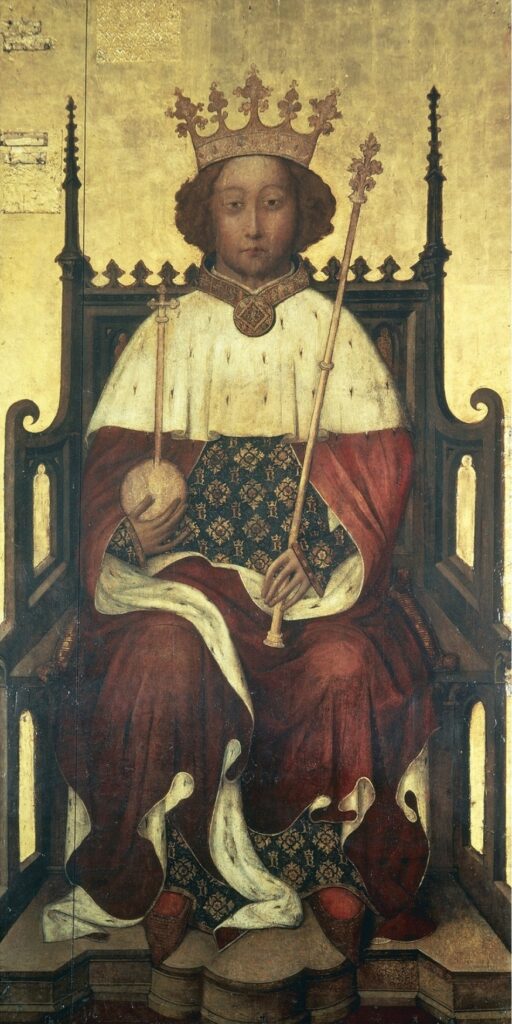
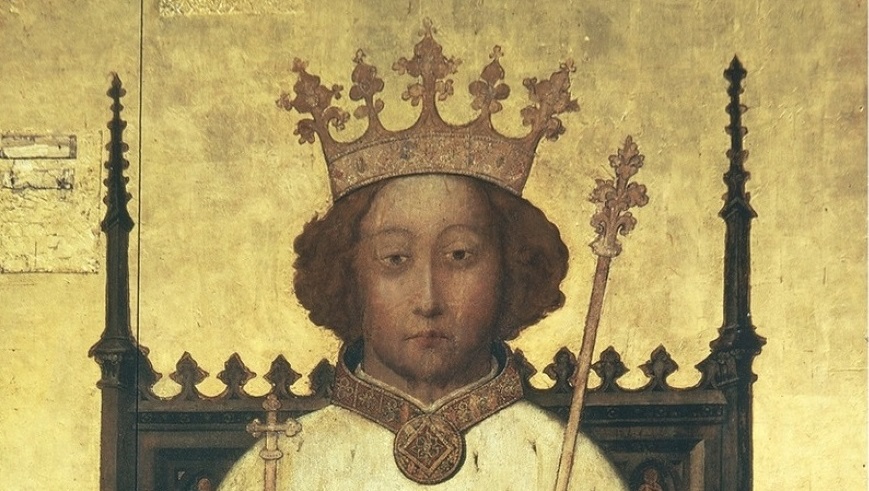
Richard II, who held parliament in Shrewsbury, a key moment in his turbulent reign.
This raises the question of Shropshire’s involvement in these earlier rumblings of discontent. Indeed, Shrewsbury played a significant, if perhaps less widely known, role, serving as the venue for prorogued parliaments and witnessing the abuse of constitutional principles, contributing to the growing tensions that ultimately engulfed the nation.
********
Richard II’s visits to Shrewsbury proved pivotal to his reign, ultimately contributing to his downfall.
In 1387, after the “Wonderful Parliament” curtailed his powers, Richard came to Shrewsbury seeking legal justification for his claims.
He convened a group of judges who, unsurprisingly, sided with the king. This act of defiance foreshadowed the conflicts to come.
But Shrewsbury was not just a backdrop for national politics; local issues were also at play. Grievances against the town’s ruling burgesses simmered, eventually leading to a legal “Composition” in 1389 that sought to reform local governance. It’s fascinating that the same legal minds advising the king were also involved in these local controversies, demonstrating the intricate connections between national and local affairs.
In 1397, Richard II returned to Shrewsbury for a parliament that would become known as the “Revenge Parliament.”
Why Shrewsbury? Some speculate that Richard believed he could exert greater influence in a provincial town.
He, naturally enough, claimed it was out of love for the Shropshire people.
Regardless of the reason, this parliament marked a crucial step in Richard’s attempt to consolidate his power.
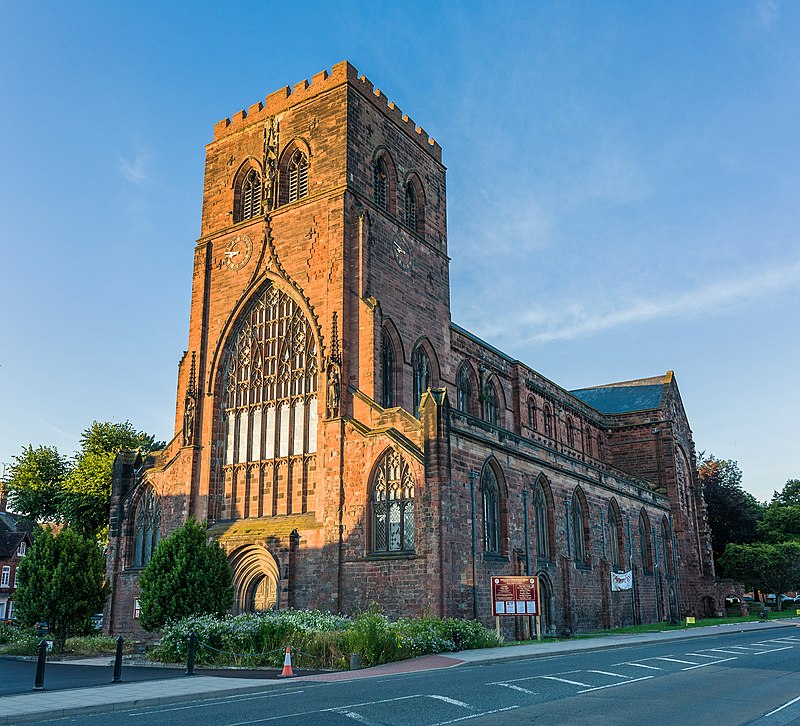
Shrewsbury Abbey, possible location for the 1397 Revenge Parliament.
Richard arrived in Shrewsbury with great pomp, intending to overawe Parliament with his royal splendour. He feasted them, he flattered them, and he got what he wanted: the reversal of previous parliamentary actions and a substantial grant of funds. He even forced lords and clergy to swear on the cross of Canterbury to uphold these new statutes. He then sought the public’s approval, with the people of Shrewsbury duly raising their hands and proclaiming their satisfaction.
Richard left Shrewsbury seemingly triumphant.
Shakespeare’s Richard II, particularly as brought to life by Jonathan Bailey’s compelling performance, explores the themes that played out in Shrewsbury: the nature of kingship, the struggle for power, and the question of legitimacy. Richard’s actions in Shrewsbury, his manipulation of the legal system, and his display of royal authority mirror his character in the play. Both the historical record and Shakespeare’s drama depict a king obsessed with power, but ultimately blind to the needs of his people.
Richard’s victory at Shrewsbury was short-lived.
His increasingly tyrannical rule led to his deposition by Henry Bolingbroke (Henry IV) in 1399. And, in a twist of irony, Shrewsbury, which had so recently acclaimed Richard, welcomed Henry with open arms. The town’s swift change of allegiance underscores the fickle nature of political support and the importance of just and effective governance.
The story of Richard II, the Shrewsbury Parliament, and Shakespeare’s play continues to resonate because it raises fundamental questions about power, legitimacy, and the responsibilities of leadership. These are questions that remain relevant not just to historians and theatergoers, but to all of us. And the fact that these events played out in a town like Shrewsbury reminds us that history isn’t just something that happens in distant capitals; it’s something that touches our local communities and shapes our understanding of the past.
What happened in the Shrewsbury parliamentary proceedings made it into Richard II’s deposition as follows:
in parliamento ultimo celebrato apud Salop., idem rex proponens opprimere populum suum procuravit subtiliter et fecit concedi, quod potestas parlia- menti de consensu omnium statuum regni sui remaneret apud quasdam certas personas, ad terminandum dissoluto parliamento certas petitiones in eodem parliamento porrectas protunc minime expeditas. Cuius con- cessionis colore persone sic deputate processerunt ad alia generaliter parliamentum illud tangentia, et hoc de voluntate regis, in derogationem status parliamenti et in magnum incommodum totius regni et perniciosum exemplum. Et ut super factis eorum huiusmodi aliquem colorem et auc- toritatem viderentur habere, rex fecit rotulos parliamenti pro voto suo mutari et deleri, contra effectum concessionis predicte.
In the last parliament held at Shrewsbury, the same king, proposing to oppress his people, managed to subtly manage it, and caused it to be granted that the power of the parliament, by the consent of all the states of his kingdom, should remain with certain certain persons, in order to terminate certain petitions which had been brought forward in the same parliament by the dissolution of the parliament. On the color of which concession the persons thus deputed proceeded to another petition that parliament, and this about the will of the king, to the derogation of the state of the parliament and to the great inconvenience of the whole kingdom and a pernicious example. And in order that their acts of this sort might appear to have some color and authority, the king caused the rolls of the parliament to be changed and erased at his will, contrary to the effect of the aforesaid grant.
Further reading
The Parliamentary Committee of 1398, J. G. Edwards, The English Historical Review, Vol. 40, No. 159 (Jul., 1925), pp. 321-333
