

Shakespeare’s birthplace in Stratford-upon-Avon is a magnet for anyone who admires the playwright’s enduring works. Recently, we visited this historic town, to celebrate the legacy of William Shakespeare, and sit with a fascinating connection between Soulton and the playwright himself.

Childhood and Teenage Home of William Shakespeare
As many of you know, Old Sir Rowland Hill, who built Soulton Hall during the time of Mary I, was a cousin of Shakespeare’s mother, Mary Arden. This family link adds a fascinating layer to Soulton’s rich history.

Childhood and Teenage Bedroom of William Shakespeare
Our journey first led us to Shakespeare’s Birthplace, a beautifully preserved half-timbered house offering a window into his early life. The atmosphere of fellow visitors was very special, everyone eager to connect with the birthplace, and teenage and childhood home, of literary genius.

The Room in where Mary Arden gave birth to William Shakespeare
No exploration of Shakespeare’s formative years would be complete without a visit to his schoolroom. Stepping into the Guildhall’s dedicated space, you can imagine a young William Shakespeare diligently mastering his Latin grammar and studying from the Geneva Bible, under the watchful eye of his school master. The worn desks and aged walls are a monument to countless students who had passed through these very doors, shaping the minds that would one day contribute to so much of our culture.
Next, we visited Holy Trinity Church, a magnificent building holding immense significance in Shakespeare’s life.
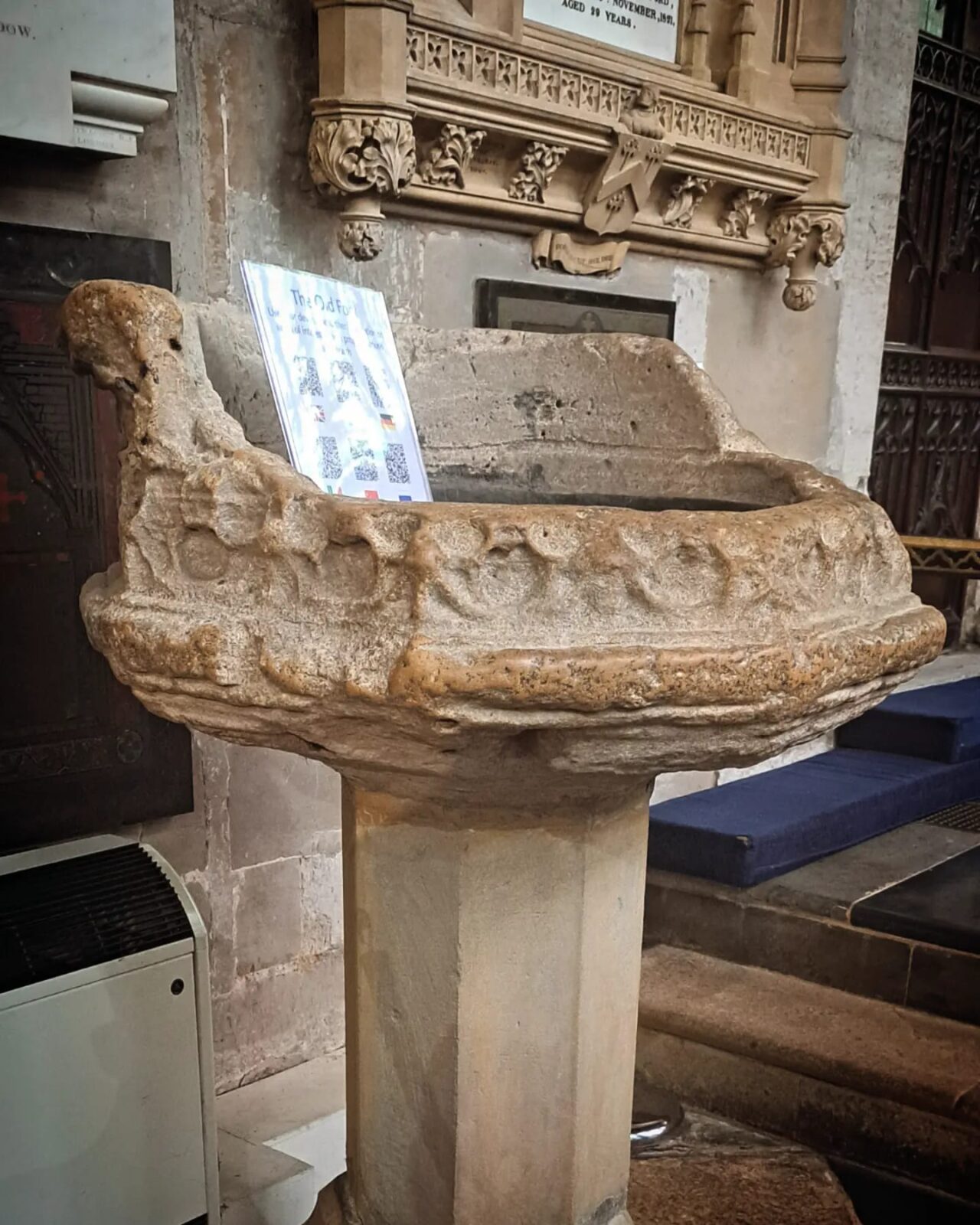
The Font in in which William Shakespeare was baptised on 26 April 1564.
Here, he was both baptized in 1564 and eventually laid to rest in 1616. Standing here, you can’t help but feel a sense of awe, imagining the presence that once graced this place.

The place of burial of William Shakespeare
The church proudly displays a King James Version (KJV) Bible, an official translation of the Bible during the later part of Shakespeare’s life. It’s quite likely that the older William would have not only read from this very edition, but also heard it read aloud during church services. This tangible connection to the text Shakespeare so masterfully employed in his plays adds an extra layer of appreciation for his work.

The funerary monument of William Shakespeare – which has some stylistic resemblance to the Tudor monument to Old Sir Rowland Hill in the school he founded in Market Drayton
Interestingly, the Holy Trinity Church also possesses a Geneva Bible, arguably the senior English translation from that period. This particular translation was favored by many playwrights, including Shakespeare. While not currently on display, there are plans to showc this historical artifact in the near future, offering visitors an even deeper dive into Shakespeare’s literary influences.
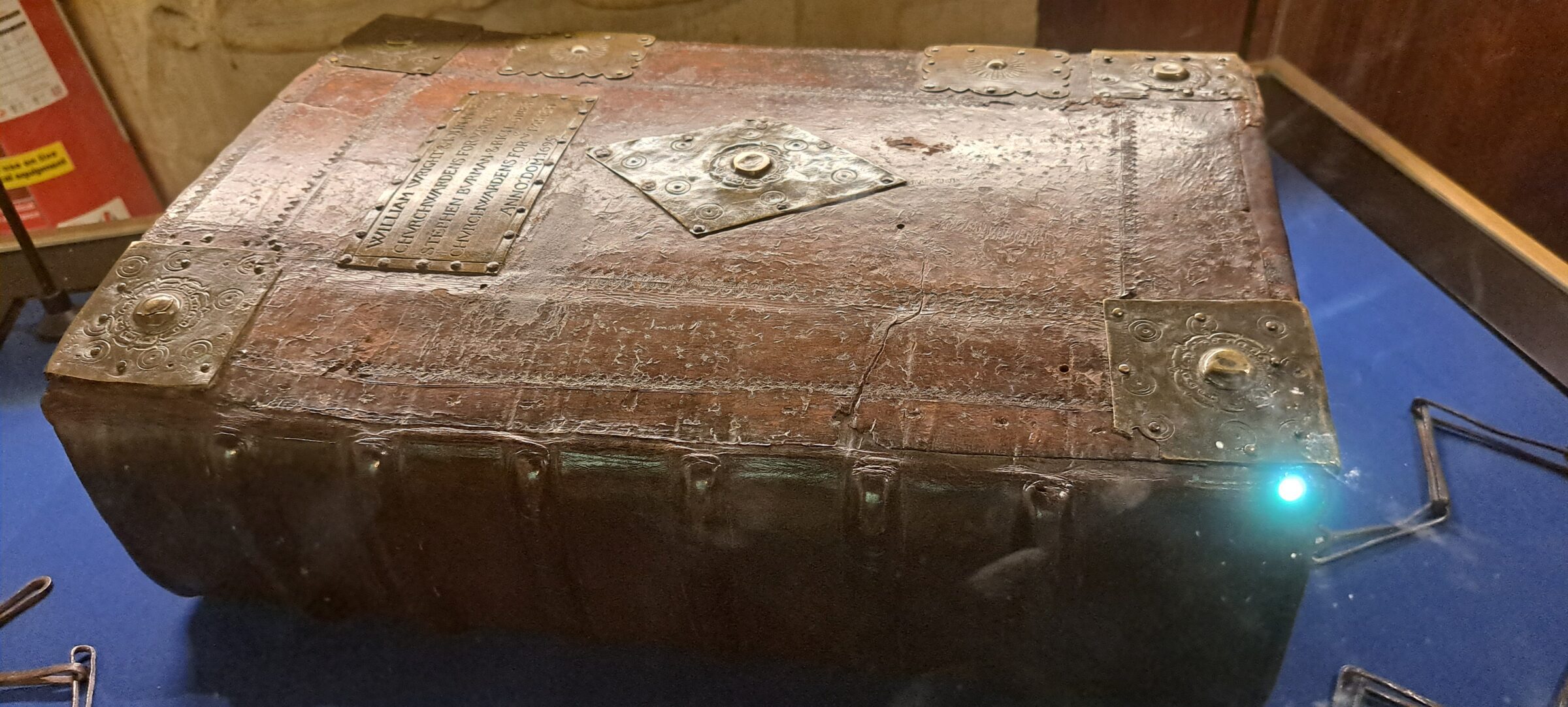
A copy of the KJV Bible used at the parish church William Shakespeare attended during his later years. The parish also possesses a Geneva Bible (the one he likely would have been familiar with from boyhood and quoted in his plays). This Bible, published by his relative Sir Rowland Hill, is hoped to be displayed soon.
This journey not only provided a fascinating glimpse into the world of the playwright, but also reaffirmed the captivating connection between Soulton Hall and William Shakespeare, a connection forged through a shared family and inspiration.
