

A Renaissance Man Honors Diverse Faiths
The sefirot are a central concept in Kabbalah, the mystical tradition of Judaism. They are often visualized as ten interconnected emanations or attributes of the divine, through which God reveals and interacts with the universe.

The ten Sefirot
Each sefirah represents a different aspect of divine nature, such as wisdom, understanding, mercy, justice, and beauty. They are often depicted in a diagram called the Tree of Life, which shows their relationships to each other.
The sefirot are not seen as separate entities from God, but rather as different expressions of the divine essence. They are believed to be the underlying structure of all reality, both spiritual and material.
The concept of the sefirot has been interpreted and elaborated upon in various ways throughout the history of Kabbalah. Different schools of thought within Kabbalah have developed their own unique understandings of the sefirot and their significance.

Portrait of Sir Rowland Hill, Mercer’s Copy
Sir Rowland Hill, the builder of Soulton Hall and publisher of the influential Geneva Bible, was intrigued by the mystical concept of the sefirot.
Recognizing their potential symbolic power, he incorporated an amended form of this ancient system into the architectural design of Soulton Hall. This innovative approach, which invokes spiritual readings of the building which place high respect and value on Jewish culture on the house of a senior C16th century statesman who was held as a hero by Shakespare .
It also shows Hill’s deep interest in thought and his desire to bridge the gap between the material world and philosophy and metaphysical realms.

The 2-16 cell diamond brickwork on the north face of Soulton Hall represents an adaptation of the Jewish sefirot, a mystical concept of divine emanations.
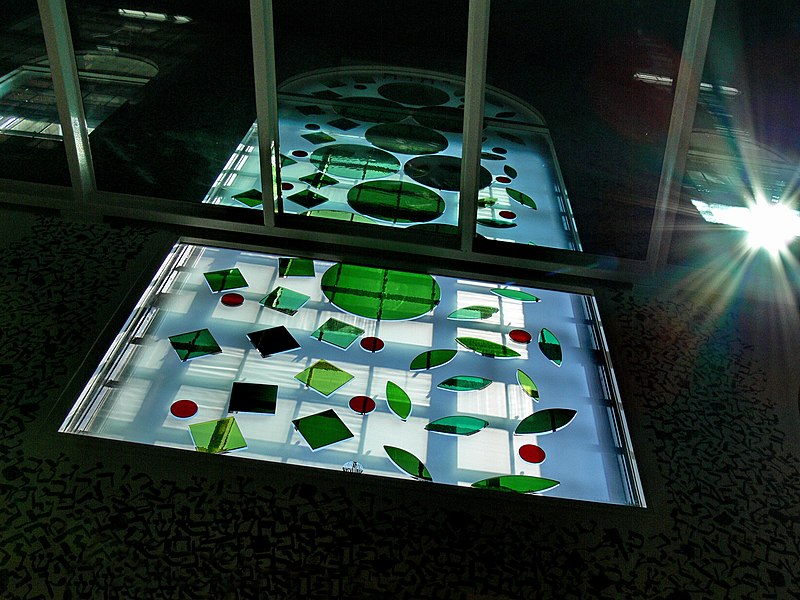
These ancient ideas continue to resonate in contemporary art and architecture. A striking example can be found in the work of Eli Content at the Joods Historisch Museum (Jewish Historical Museum) in Amsterdam. Content’s 2006 window, entitled “The Tree of Life” or “Etz haChayim” in Hebrew, engages with the same concepts of the Sefirot and Kabbalah. This artwork explores the path to HaShem and the divine creation of the world ex nihilo, demonstrating the enduring power of these ideas to inspire and inform artistic expression.
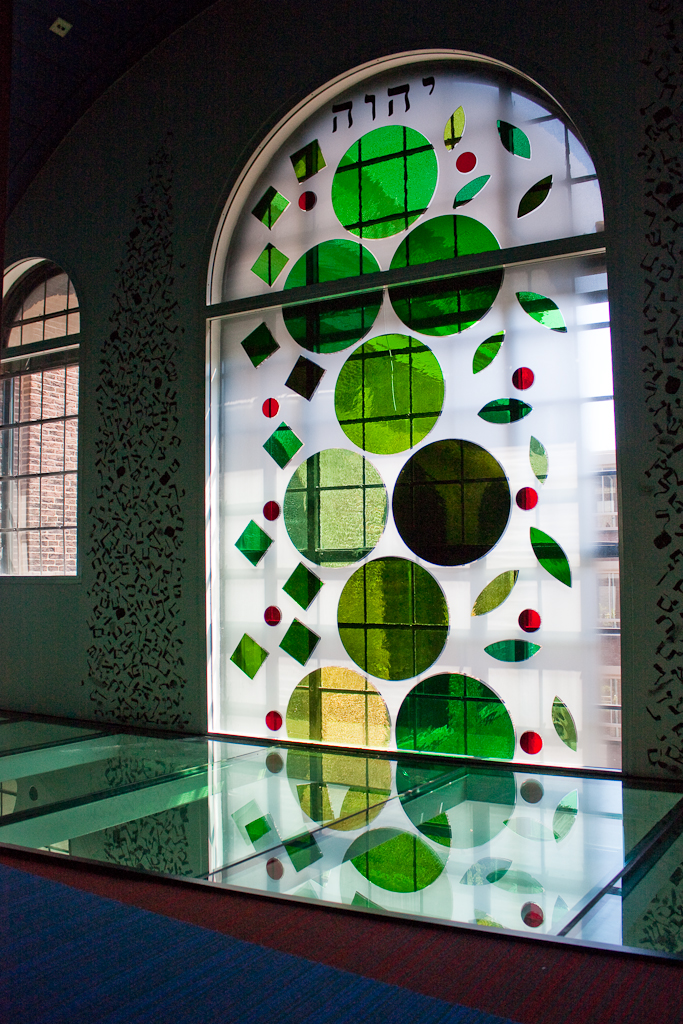
Tree of Life by Eli Content (2006) [Creative Commons]
The way he chose to show this concept adjusted it to 16 cells for a Christian application of the relational behind the Jewish concept.
Given that Hill’s London residence was located near Old Jewry, a historical center of Jewish life, he would have been acutely aware of the persecution and discrimination that Jewish communities had endured throughout history. The expulsion of Jews from England in 1290 by King Edward I was a stark reminder of the challenges faced by minority groups.
Hill’s embrace of Jewish thought suggests a more nuanced and open-minded approach to religious and philosophical diversity.
********
These matters were discussed at a recent conference at Soulton, which you can see in the video below.
