

Crews, Commerce, and the Perils of the Printing Trade
The Renaissance was a period of immense intellectual and cultural growth, and printing presses played a pivotal role in disseminating knowledge and ideas. Among the most influential presses of the era were the Aldine Press and the Estienne Press.
These were not merely printing houses but complex operations, with various individuals contributing to their success under the banner of a single, enduring name. An important thing to hold in mind when thinking about the Rowland Hill/Rouland Hall/Haule press in London which ran in similar (if not actually rather more frightening) circumstances.
The Aldine Press: A Family Legacy
Founded in 1494 by Aldus Manutius in Venice, the Aldine Press became a symbol of Renaissance innovation. Initially a partnership between humanist scholar Manutius and printer Andrea Torresani, the press was later inherited by the Manutius family. After Manutius’s death in 1515, his wife Maria and her father, Andrea Torresani, took the reins, followed by Aldus’s son Paulus and grandson Aldus Manutius the Younger.
The initial partnership was a complex arrangement involving Pier Francesco Barbarigo, the nephew of the reigning Doge Agostino Barbarigo. This connection to the Venetian aristocracy highlights the political and economic significance of the Aldine Press.
The Aldine Press was renowned for its groundbreaking innovations:
- Italic Typeface: A more compact and readable script, commissioned by Manutius.
- Pocket-Sized Editions: Portable books that made knowledge accessible to a wider audience.
- Scholarly Editions: Meticulously edited and annotated classical texts.
- Beautiful Typography and Design: Elegant and visually appealing books.

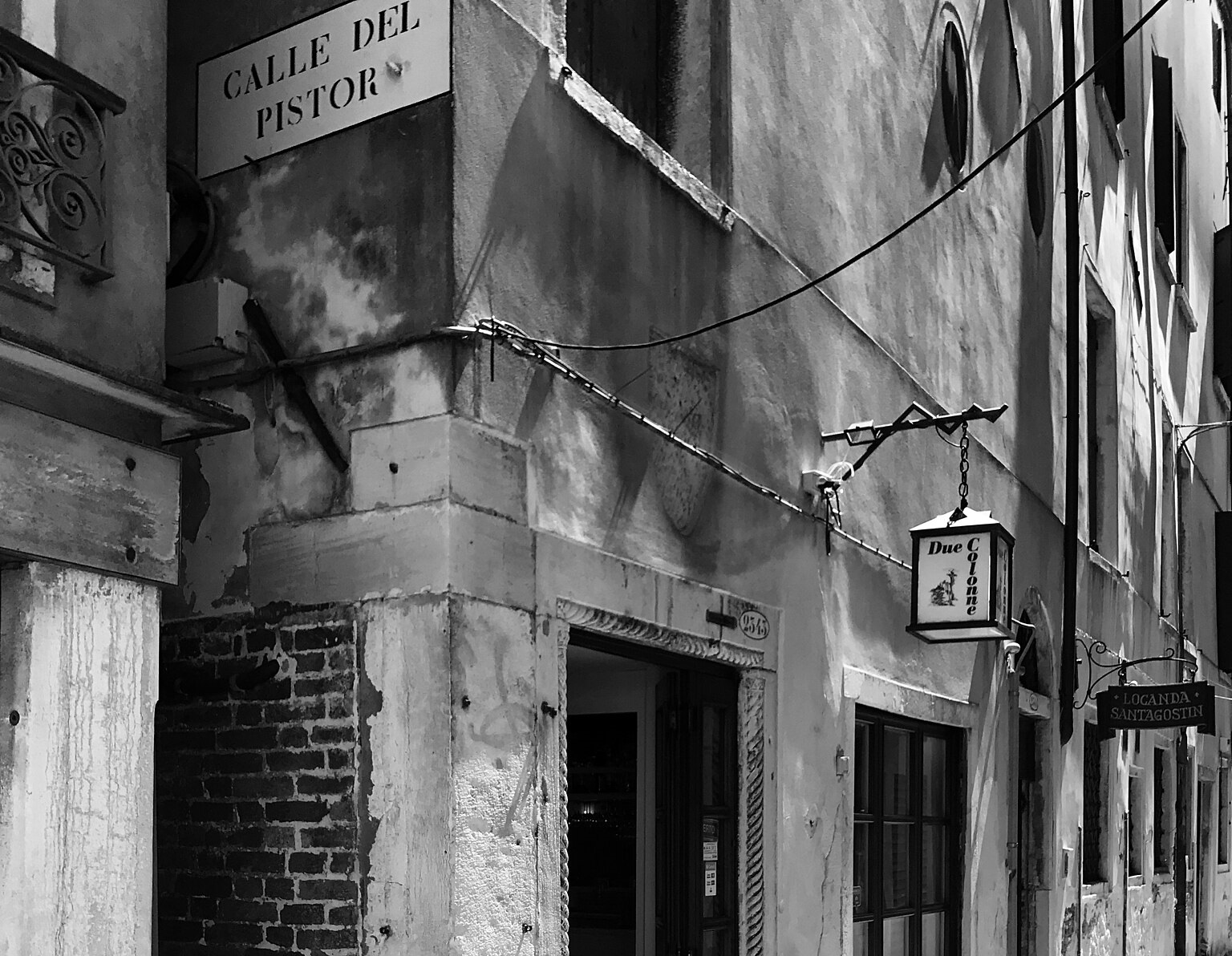
The true first location of the Aldine Press on campo Sant’Agostin, now the restaurant Due Colonne, #2343 calle della Chiesa. Creative Commons Jmpknoops
The Estienne Press: A Dynasty of Scholars and Printers
The Estienne Press, based in Paris, was another influential printing house. Founded by Henri Estienne in the early 16th century, the press continued to thrive under the stewardship of successive generations of the Estienne family.
Robert Estienne, often called “the King’s Printer,” was a particularly significant figure. He was a renowned scholar and produced numerous scholarly editions of classical texts, including Greek and Latin Bibles. The Estienne Press was known for its high-quality printing and its commitment to scholarly accuracy.

From Charles Estienne’s De dissectione partium corporis humani libri tres (Paris, 1545).
Shared Legacy
Both the Aldine Press and the Estienne Press played crucial roles in shaping the intellectual and cultural landscape of the Renaissance. They were more than just printing houses; they were complex operations involving skilled craftsmen, scholars, and entrepreneurs. The continuity of these presses, often spanning multiple generations, ensured a consistent level of quality and innovation.
These Renaissance printing houses exemplify the complex dynamics of family businesses, often intertwined with legal and financial considerations. The printing industry itself was a volatile and risky venture, subject to censorship, religious conflicts, and economic fluctuations. Yet, despite these challenges, these presses persevered, driven by intellectual curiosity and a desire to disseminate knowledge.
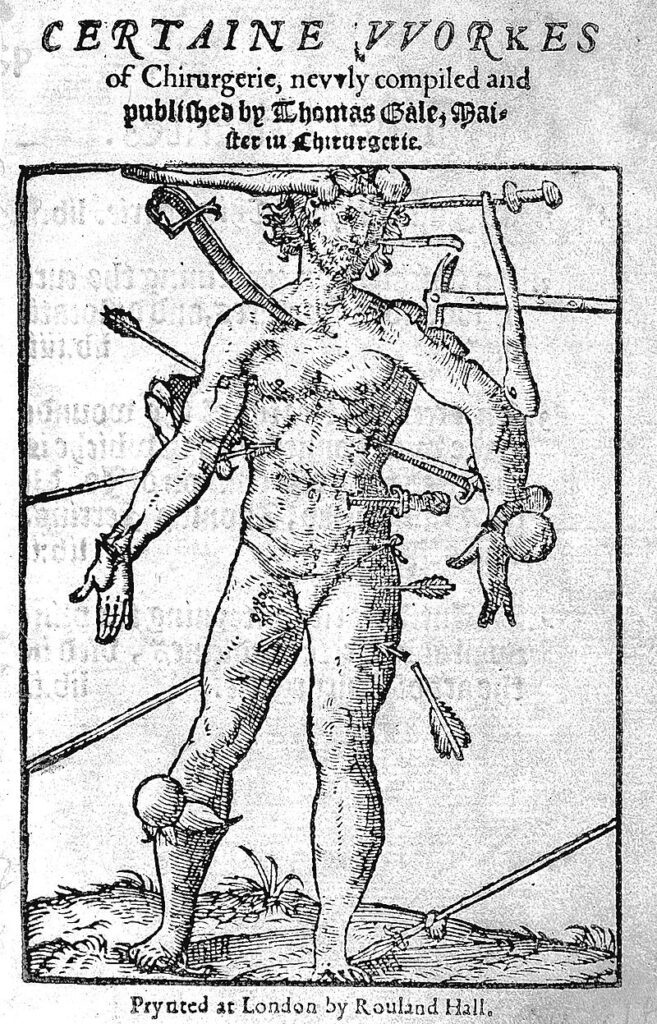
A “wound man” seen on the frontispiece of ‘Certaine vvorkes of chirurgerie’.
