

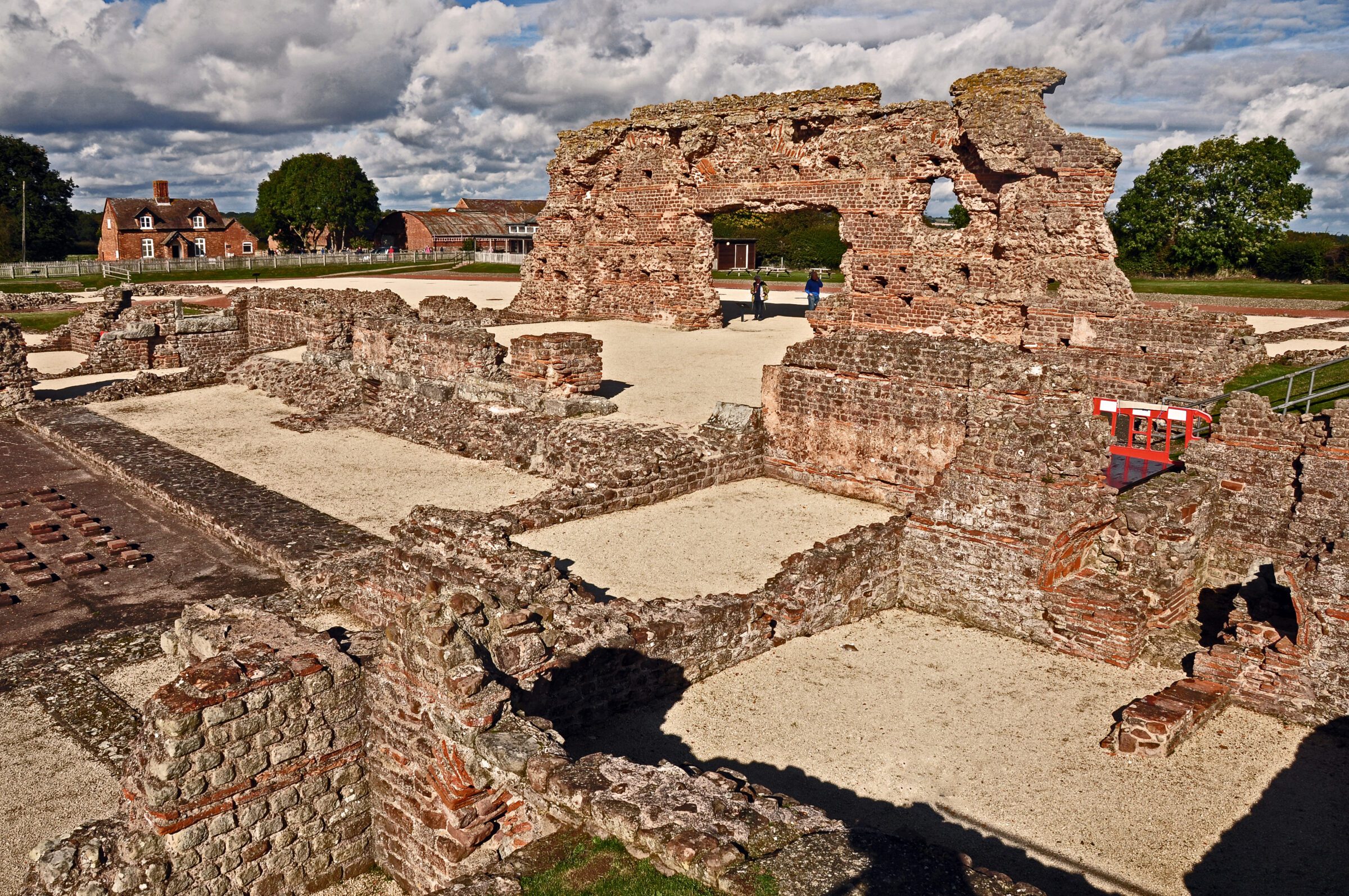
Shropshire: A Unique Crucible of Cultural Evolution?
A groundbreaking archaeological discovery has transformed our understanding of life in Shropshire.
Recent excavations by the National Trust on the Attingham Estate, around the old route of Watling Street (the northern boundary of the Forest of Arden), have unearthed a treasure trove of historical evidence, spanning millennia.

The Mansion at Attingham Park
Two previously unknown Roman villas have been uncovered, shedding new light on the lives of high-status Roman citizens in the region. These opulent residences, located near the ancient city of Wroxeter, offer a glimpse into the wealth and sophistication of Roman Britai, and one of fewer than 10 known in Shropshire at this time. Prehistoric human activity, urban and rural Roman-era settlements have also been studied.
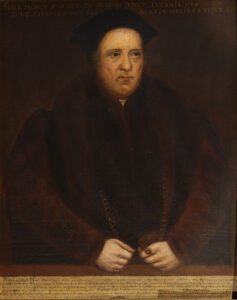
Sir Rowland Hill, Attingham Park copy, built the bridge over the Severn at Attingham and the causeway there; members of the Hill dynasty, is cultural hiers, built the house at Attingham
********
Roman into Saxon continuity?
Facinatingly, researchers have discovered similar evidence of of Anglo-Saxon banquet halls and farming systems that evolved throughout the medieval and post-medieval periods.
Crucially, this suggests a cultural continuity in Shropshire where Roman life gradually transitioned into a Saxon Kingdom, potentially indicating a unique pattern of cultural evolution and the social reproduction of ideas within the early medieval period, unlike anywhere else in Britain or Europe.
Setting this research alongside the documetary materials and long cultural traditons of Shropshire, we should note what the historical records suggest about the areas around Shrewsbury as Rome fell.
- Pengwern, often considered the capital of Powys, was located in the modern-day town of Shrewsbury. This link has an early reference by Gerald of Wales (Giraldus Cambrensis) in the 12th century.
- It was stated in the sixteenth century* that Brochwel Ysgithrog, the 6th-century king of Powis, had a palace at Shrewsbury in the 500s CE that became the site of the foundation of St Chad (which alongside being a church was a school that survived unti the 1540s, and was refounded as Shrewsbury School). Authority for this being in Historia Divae Monacellae, itself composed in the 14th or 15th century.
- This is understanding is also relayed by Caradoc, of Llancarvan in The historie of Cambria, now called Wales which says:
“Brochwel Yscithroc… dwelt in a towne then called Pengwerne Powys, and now Salope, whose dwelling house was in the verie same place where the College of Saint Chad now standeth”
- Another Welsh source attributes the foundation of the church of Pengwern to Brochwel’s son Tysilio (see: Lives of the British Saints by Baring Gould).
- Town life in Viroconium continued in the fifth century, but many of the buildings fell into disrepair between 530 and 570, when most Roman urban sites and villas in Britain were being abandoned.
- The Roman urban settlement likely experienced a gradual and peaceful decline during the latter half of the seventh century. The subsequent emergence of the Wreocensæte sub-kingdom, a region under Anglian control, followed the conquest of Pengwern by Oswiu in 656. Ultimately, facing famine and plague, the court of the Kingdom of Powys relocated to Mathrafal prior to 717.
- Tthe historian, John Wacher, suggests that Shrewsbury may have been refortified by refugees fleeing an outbreak of a plague in Viroconium around this time, and there is a tradition that Shrewsbury was:
“founded in the 5th century, on occasion of the decay of the Roman Uriconium.”**
- In late 8th century, it is claimed that Offa took Shrewsbury town for the Mercians in 778, meaning an urban Saxon settlement of importance existed for some period prior to that event ( he is associated by some sources with establishing the town’s first church and dedicating it to St Chad, offering a later but still firmly Saxon date for the St Chad foundattion to that in the mid the 500s CE if the Brochwel Ysgithrog association is discounted)
- By the beginning of the 10th century, Shrewsbury was home to three moneyers who had permission to operate a mint in the town, using dies supplied by the royal government.
- In the early tenth century, the relics of St. Alkmund were transferred to the Shrewsbury (which was important enough and established enough to have them) from Derby, likely under the direction of Æthelflæd, daughter of Alfred the Great (known as the Lady of the Mercians)
- Recent excavations have revealed that what we now know as Shrewsbury Castle was likely a fortification in Saxon times.
The learning perspective that this offers, that Saxon culture in Shropshire and therefore Mercia never quite shed its knowlege of Roman and classical wisdom is an tantilising one, and there are reasons to entertain this seroiously in emerging sholarship which we have been adjacent to.
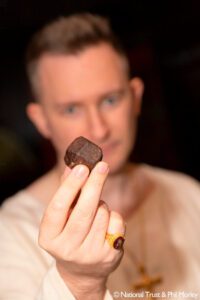
James Wenn with a garnet stone (copyright National Trust & Phil Morley)
Press:
- Shock as survey reveals villas in buried Roman city of Wroxeter
- Two Roman villas found near ancient Wroxeter
________
*The historie of Cambria, now called Wales: a part of the most famous yland of Brytaine, written in the Brytish language aboue two hundreth yeares past: translated into English by H. Lhoyd Gentleman: corrected, augmented, and continued out of records and best approoued authors, by Dauid Powel Doctor in diuinitie. (1580)
** Imperial Gazetteer of England and Wales, (1870).
