

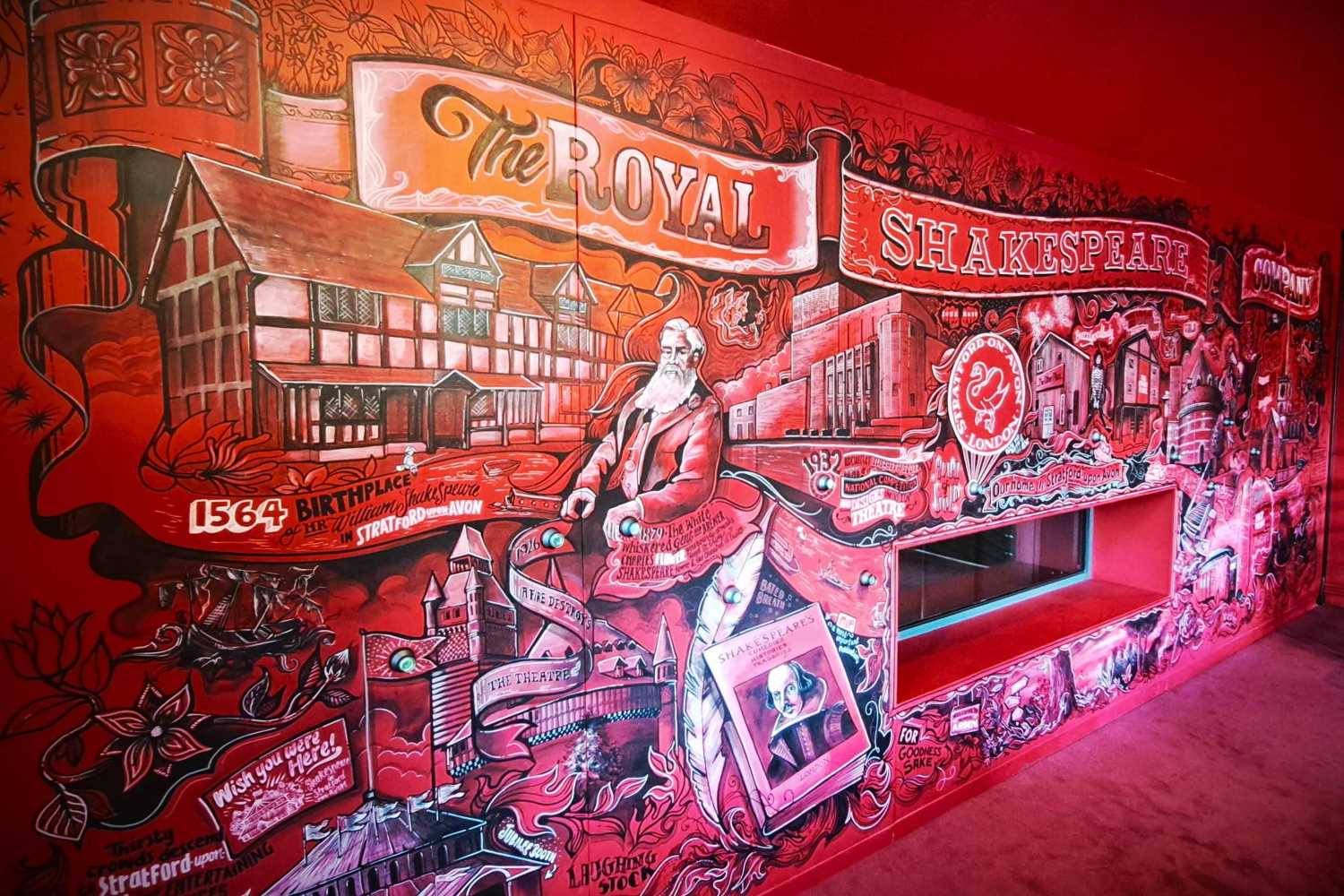
The Royal Shakespeare Company’s exhibition galleries offer a comprehensive overview of the company’s history and the art of theatre. A particular highlight is the extensive costume collection, showing the intricate designs and craftsmanship that bring characters to life on stage.

Portait of Shakespear at the RSC
The gallery also features a striking series of stained glass windows depicting Shakespeare’s Seven Ages of Man, providing a visual interpretation of this iconic passage from As You Like It.
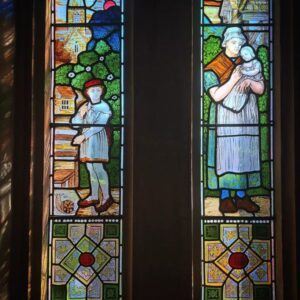
Stained Glass at the RSC showing the Seven Ages of Man: At first the infant,
Mewling and puking in the nurse’s arms;
And then the whining school-boy, with his satchel
And shining morning face, creeping like snail
Unwillingly to school.
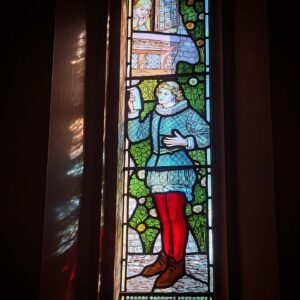
Stained Glass at the RSC showing the Seven Ages of Man: And then the lover,
Sighing like furnace, with a woeful ballad
Made to his mistress’ eyebrow.
These windows offer a contemplative counterpoint to the dynamic world of theatre represented elsewhere in the exhibition. ach panel is a miniature masterpiece, capturing the essence of each life stage with vivid imagery and symbolism.
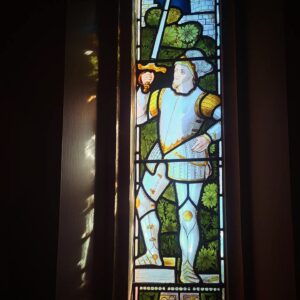
Stained Glass at the RSC showing the Seven Ages of Man: Then a soldier,
Full of strange oaths, and bearded like the pard,
Jealous in honour, sudden and quick in quarrel,
Seeking the bubble reputation
Even in the cannon’s mouth.
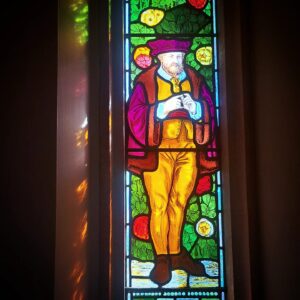
Stained Glass at the RSC showing the Seven Ages of Man: And then the justice,
In fair round belly with good capon lin’d,
With eyes severe and beard of formal cut,
Full of wise saws and modern instances;
And so he plays his part.
The windows invite visitors to pause and reflect on the passage of time and the complexities of human existence, providing a thought-provoking complement to the theatrical displays.
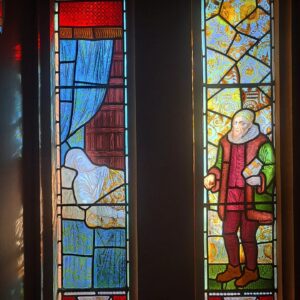
Stained Glass at the RSC showing the Seven Ages of Man: At first the infant,
Mewling and puking in the nurse’s arms;
And then the whining school-boy, with his satchel
And shining morning face, creeping like snail
Unwillingly to school.
The Royal Shakespeare Theatre stands as a monumental tribute to the Bard’s legacy. A Grade II* listed building, its architecture is as impressive as the performances it houses. Originally opened in 1932, it underwent a major renovation in 2010, resulting in a modern yet characterful space. With its thrust stage, the theatre offers an intimate connection between actors and audience, a dynamic environment that mirrors the energy and passion of Shakespeare’s plays.

The RSC main building
Elsewhere in the town the C19th Shakespeare Memorial statue was created in 1888, the work of Lord Ronald Gower and can be found in Stratford’s Bancroft Gardens. This memorial features a central statue of the Bard, flanked by iconic characters from his plays.
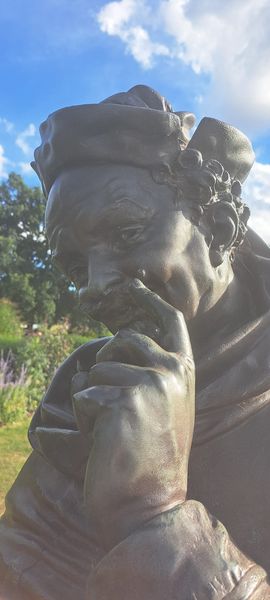
The Face of Falstaff: This larger-than-life character, Sir John Falstaff, embodies the antithesis of the ideal Tudor subject. Falstaff remains a captivating figure, embodying the darker side of human nature, a foil to the more virtuous characters, highlighting the complexities of human behavior.
Of particular interest to Salopians are the figures of Prince Hal and Falstaff, immortalized in Shakespeare’s Henry IV plays, which are set in Shrewsbury.
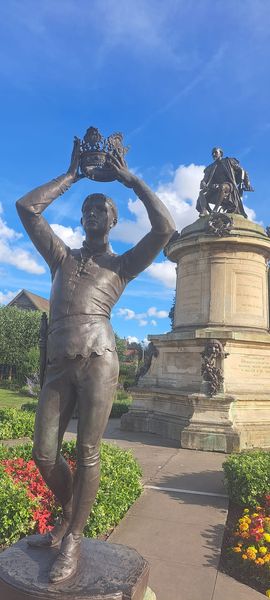
This Victorian sculpture of Prince Hal fails to capture the dynamic and complex character portrayed in Shakespeare’s plays. Rendered in a stiff and overly dramatic pose, the statue falls short of conveying the young prince’s journey from rebellious youth to noble king.
The monument offers a thrilling representation of these beloved characters and their enduring appeal – one Sheewsbury itself is lacking, for the moment….

Why does Shrewsbury not have a Sculpture of Falstaff?
