

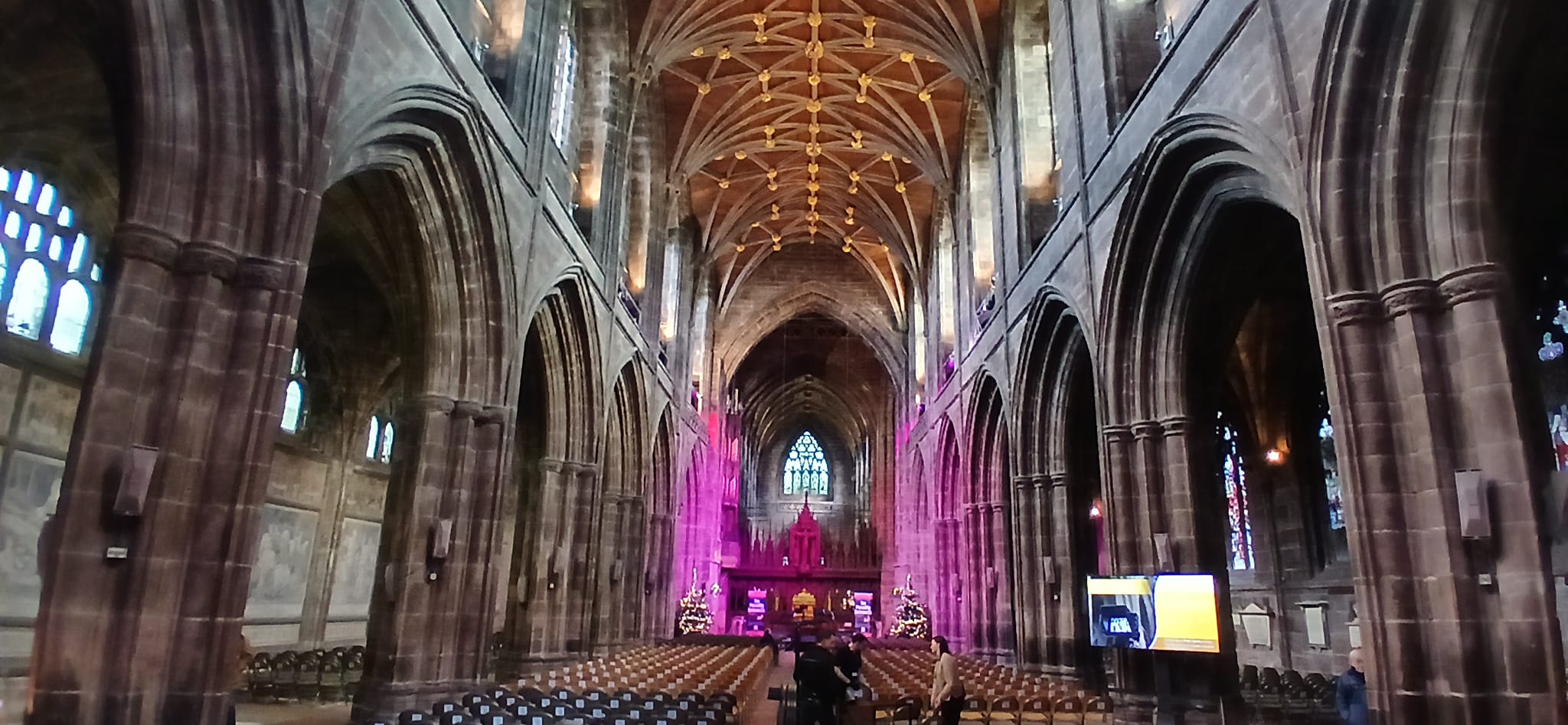
Glimpsing England’s Ecclesiastical Past at Chester
A recent visit to Chester Cathedral offered a captivating glimpse into England’s rich ecclesiastical history. As a significant pilgrimage site and architectural marvel, the cathedral expresses centuries of devotion and craftsmanship.
The intricate stonework, soaring arches, and stained glass windows create a breath-taking ambiance that transports visitors to another era.
The cathedral’s history is intertwined with the broader narrative of England, from its Norman origins to its role in the Reformation. The transition from abbey to cathedral in the 16th century marked a significant shift, shaping the institution’s character and purpose.
Exploring the cathedral’s interior reveals a wealth of historical artifacts and artistic treasures.
The Chester Cathedral boasts a remarkable collection of historical treasures, including the exceptional 17th-century furnishings of its Consistory Court. Located in the south tower, this unique survival offers a fascinating glimpse into the past, showing the careful details and craftsmanship of the period. The Consistory Court, once a hub of ecclesiastical justice, remains a testament to the cathedral’s rich history and architectural significance. It was this in particular we wished to see.
Note on Consistory courts
Consistory courts are ecclesiastical courts within the Church of England, established by William the Conqueror. They originally had broad jurisdiction over various matters, including defamation, probate, matrimonial causes, and church discipline.
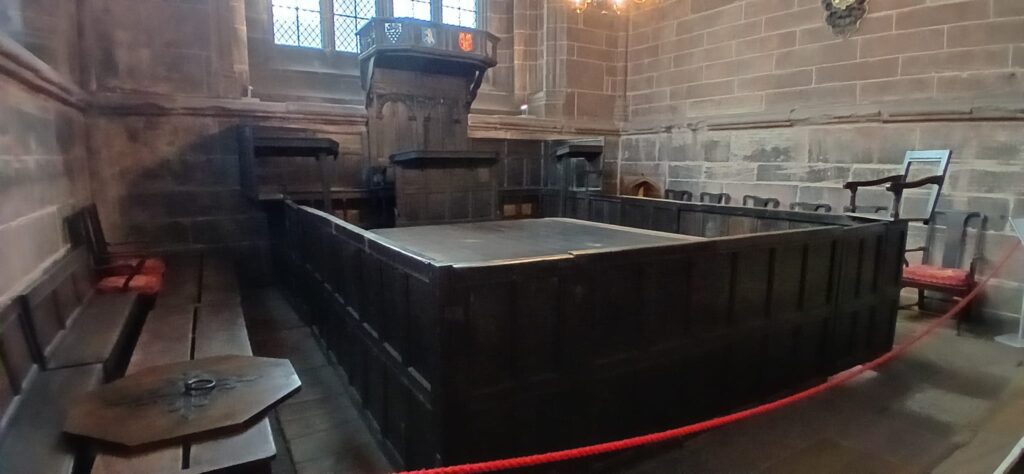
Very early and hugely rare court furniture in Chester Cathedral
Consistory courts were (noting their jurisdiction) historically significant institutions within England. Their post-Reformation design and furnishings represent a notable chapter in English court architecture.
Over time, their jurisdiction has diminished. In the 19th century, probate and matrimonial matters were transferred to secular courts. Their remaining jurisdiction primarily concerns the control of consecrated church property and disciplinary matters related to the clergy, even there, recent reforms, such as the Ecclesiastical Jurisdiction Measure 1963, which created the Court of Ecclesiastical Causes Reserved.
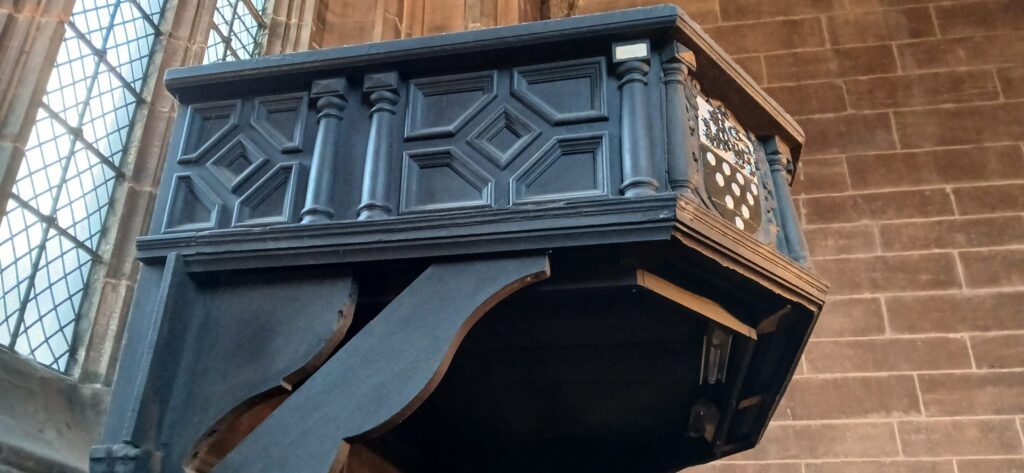
A detail on the canopy over the Chancellor’s chair
The Court of Ecclesiastical Causes Reserved is a court within the Church of England, handling cases involving church doctrine, ceremony, or ritual. It has jurisdiction over both the Province of Canterbury and the Province of York. which as only ever sat twice to this date:
- Re St Michael and All Angels, Great Torrington – a case in which an icon of Our Lady of Częstochowa in that church (a replica of the original in Poland) was installed, which was initially blocked by the Chancellor of the Diocese of Exeter, but a successful appeal to the Court of Ecclesiastical Causes Reserved, itting for the first time. overturned the decision.
- Re St Stephen Walbrook – curiously, a case which relates to the Church in which Sir Rowland Hill is buried, though is monument was lost in the Great Fire: in this case, the facts of which emerged in 1987, a large white stone altar, designed by Henry Moore, was installed in the center of the church – this unusual placement required special approval from the Court.
The Clergy Discipline Measure 2003, have further streamlined the jurisdiction of consistory courts.
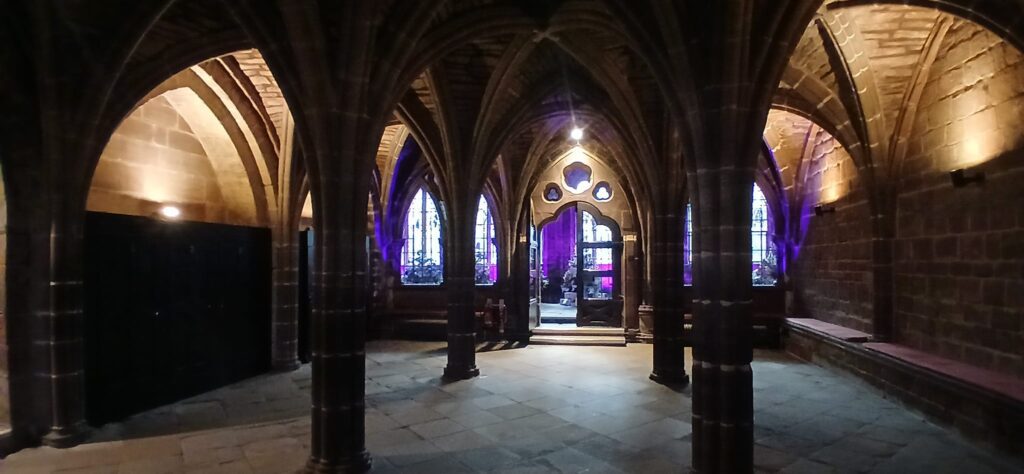
Tetrastyle anti-room for the Chapter House
The 2003 Measure transferred the criminal jurisdiction over the clergy (except for matters of doctrine, ritual, or ceremonial) to new “bishop’s tribunals” with modern procedures and penalties. While consistory courts have lost much of their former power, they continue to play a role in ecclesiastical matters within the Church of England.
