

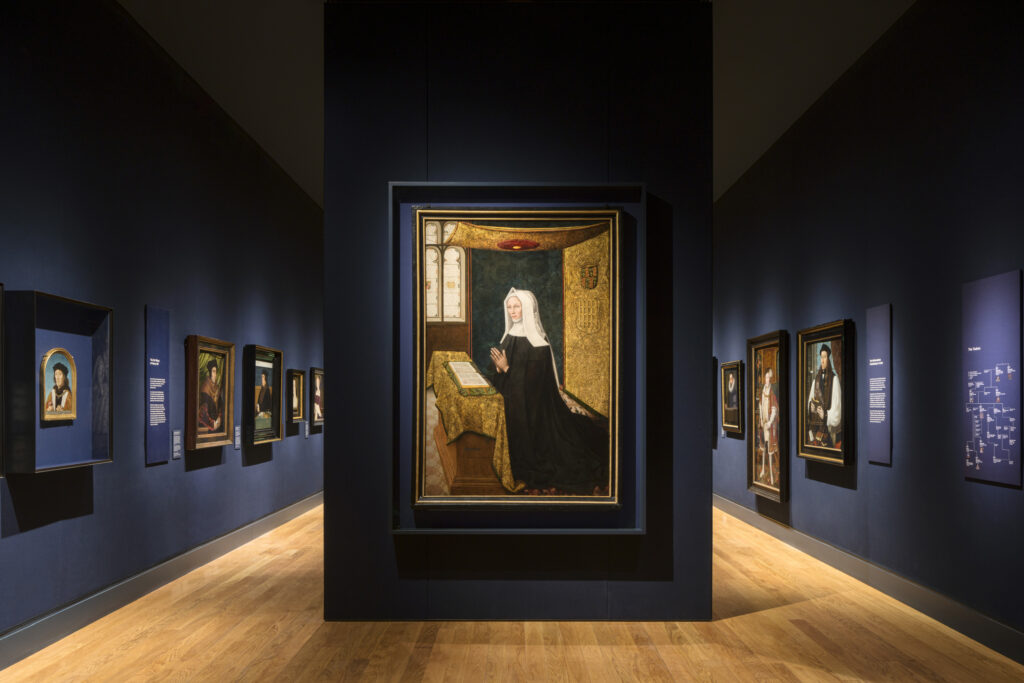
Nestled discreetly on the top floor of Soulton Hall lies the Lady Margaret Room, a space steeped in history and named in honor of a remarkable woman – Lady Margaret Beaufort.
Lady Margaret Beaufort’s influence transcended her lifetime. Her commitment to education, religion, and the arts continues to resonate today.
She is connected to Soulton in a couple of ways:
- The Ashton family are assoiated closely with Lady Margaret, via Hugh Ashton (d. 1522), who was an English church official her protégé. He rose through the ranks holding various ecclesiastical positions. He’s remembered for his benefactions to St. John’s College, Cambridge, funding fellowships and scholarships.
- Lady Margaret Hall, Oxford Univeristy has 100 years of association with recent gereations of the Ashton family.

Lady Margaret Hall, a college of Oxofrd University
The Lady Margaret Room at Soulton Hall serves as a tribute to her legacy, a quiet space imbued with the spirit of a remarkable woman. Today, the room is used for seminars and academic discussions, fostering intellectual exchange. Cultural activities such as poetry readings also find a home here, creating an atmosphere reminiscent of a college common room.
********
Lady Margaret Beaufort (1443-1509) was a pivotal figure in English history. Descended from royalty through her father, John Beaufort, Duke of Somerset, and a great-granddaughter of King Edward III, she held a prominent position within the aristocracy. However, her legacy extends far beyond her lineage.
Lady Margaret Beaufort’s life was marked by political intrigue and power struggles. Married three times, she navigated the turbulent waters of the Wars of the Roses, a period of civil war in England. Notably, she was the mother of King Henry VII, the first Tudor monarch, and played a significant role in securing his claim to the throne.
Beyond politics, Lady Margaret Beaufort was a dedicated patron of learning and the arts. She championed education, founding Christ’s College and St John’s College at Cambridge University. She also supported the translation and printing of religious texts, promoting literacy and religious scholarship.
