

A Merchant’s Vision: Lacock Abbey’s 16th-Century Renaissance
Lately, we were able to make a visit to Lacock Abbey.
The history of this place stretches back to the 13th century, but it was the 16th century that truly shaped its character. When the Dissolution of the Monasteries brought the abbey’s religious life to an end, it was granted to Sir William Sharington, a wealthy landowner, merchant, and man of culture.

Sir William Sharington: Hans Holbein the Younger – Royal Collection
Sharington’s acquisition of Lacock coincided with a period of architectural innovation in England. He found the abbess’s lodgings on the west side of the cloister had recently been modernized, and he was quick to embrace and build upon these contemporary trends.
Rather than demolishing the monastic buildings, Sharington cleverly adapted them to suit his needs. He retained essential spaces such as the sacristy, chapter house, warming house, dormitory, refectory, and kitchen. However, it was his addition of a striking octagonal tower that truly transformed the abbey’s skyline. This Renaissance-inspired tower, with its ornate carvings and mullioned windows, is an expression of Sharington’s wealth and his desire to create an intelligent and meaningful.

Lacock Abbey tower
The alterations and improvements made by Sharington in the 1540s incorporated many Renaissance and Mannerist features, placing Lacock Abbey at the forefront of English fashion. The result is a stunning blend of medieval and Tudor architecture that continues to captivate visitors today.
By focusing on the 16th-century alterations, we can appreciate the foresight and creativity of Sir William Sharington. His transformation of Lacock Abbey into a grand Tudor residence has left a lasting legacy, allowing us to glimpse into the past and marvel at the architectural and cultural shifts of the era.
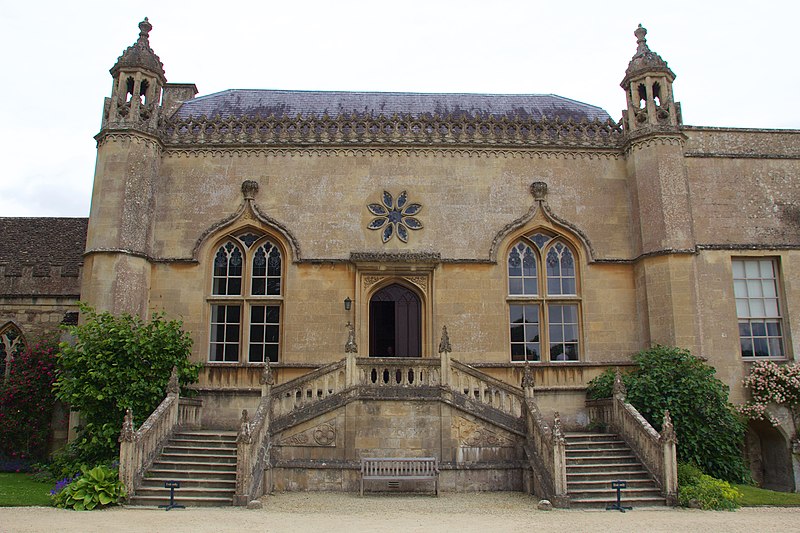
Lacock Abbey, Lacock, Photograph Creative Commons by Mike Peel (www.mikepeel.net).
Sharington’s transformation of Lacock Abbey set the stage for future generations to further enhance its grandeur.
In the 18th century, renowned architect Sanderson Miller, working with owner John Ivory Talbot, added the impressive Gothic-style Great Hall. This magnificent space, with its soaring ceilings and intricate details, is a testament to the enduring appeal of Lacock Abbey and its ability to adapt to the changing tastes of the times. Miller also contributed to the exterior of the abbey, adding Gothic features to enhance its picturesque appearance.
