

This week marks a significant moment for both literature and cinema in the UK. Maggie O’Farrell’s beloved novel Hamnet has just made its debut on the big screen, and the early reviews are nothing short of extraordinary. Critics are calling it a “masterpiece of the sensory world,” praising Chloé Zhao’s direction and the raw, haunting performances of Jessie Buckley and Paul Mescal.
eyond the acclaim, the film is being recognized for something far more profound: its unflinching, quiet gaze into the heart of the most devastating loss a family can endure. Hamnet is a meditation on the raw anatomy of bereavement. It refuses to blink at the agony of a child’s death or offer the hollow refuge of easy comforts.
Instead, it sits in the suffocating stillness of that room in Stratford before following a mother into a garden where the world has suddenly, violently, changed its shape.
In this story, the soil is not a mere backdrop; it is a protagonist.
It is the earth Agnes Shakespeare uses to heal, yet it is also the earth that must receive her son.
There is a staggering weight to this.
When words fail even Shakespeare—as they inevitably must—the physical presence of the landscape becomes the only anchor heavy enough to hold a grief of this magnitude.
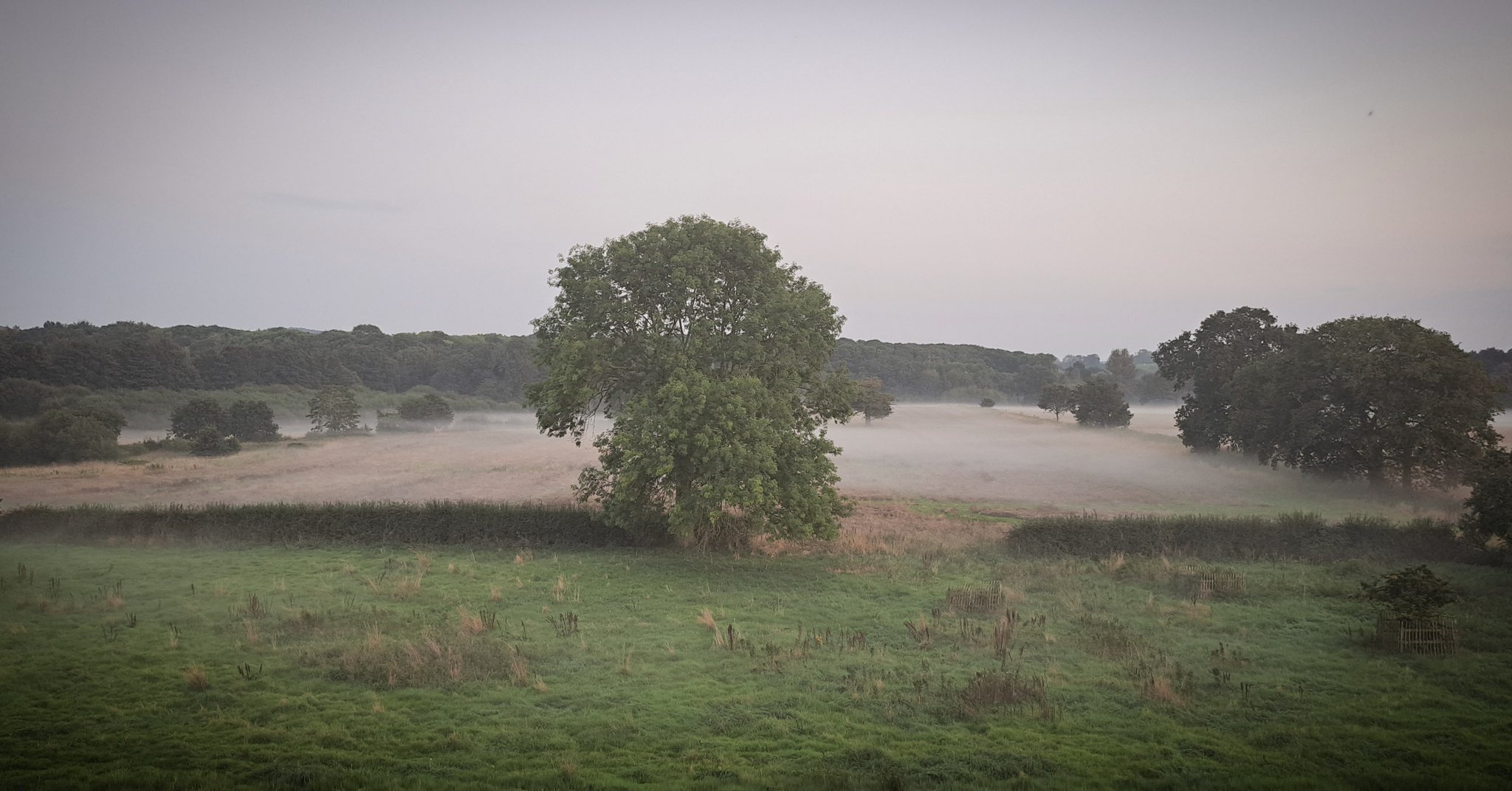
For us at Soulton, this resonance between earth and memory is made manifest in the Barrow—a place where the landscape itself stands as a silent, enduring witness to love and loss.

Soulton Long Barrow in its landscape
In the film, we see the visceral need for a physical, permanent anchor for grief—a place where the living can stand on the threshold of the gone.
The Barrow, much like the ancient “Greenwood Tree” Agnes frequents, offers this kind of liminal grounding. It is a space that acknowledges that while a life has ended, its presence remains woven into the stone and the soil.

Winter Solstice Sunset in Soulton Long Barrow 2025 (Image: Tim Ashton)
It doesn’t ask the bereaved to “move on”; it simply stands with them in the stillness.
There is a striking, almost jarring contrast in the film between the Urban and the Rural. The City (London) is a place of commerce and dirt. Here, William attempts to process his bereavement through the artifice of the stage, transforming his son’s name into the tragedy of Hamlet. The Country and The Soil: Agnes’s world. It is quiet, rhythmic, and raw.
The film suggests that the city tries to “do” something with grief, while the country simply allows it to be.
This “clash” is beautifully captured in Max Richter’s score, particularly the track “The Great Globe Itself,” which carries the earthy, low vibrations of the Warwickshire woods into the wooden rafters of the London theater.
It is only after sitting with this grief that we can, perhaps very meekly, see the “germs” of the Forest of Arden.
In As You Like It, the forest is a place where people go when they can no longer survive the “court” or the city.

Bluebells in Soulton Wood, the AS YOU LIKE IT wood in late April
In Hamnet, we see the real-world origin of that sanctuary.
Nature does not “heal” by removing the pain; it heals by providing a vast, ancient context for it.
It offers a sense of continuity—that the seasons will turn, the herbs will grow, and the earth will remain, even when our own world has stopped.
It is not suggested that the landscapes provide an answers to loss. We only observe that it provides a silence that is respectful, and a soil that is steady. As the film begins its journey in UK cinemas, we reflect on how the “Green World” has always been a place where the broken-hearted go to find their footing again.
