


Worcester Cathedral stands on a site spanning over a thousand years, acting as a direct link to England’s medieval and Tudor past. The present Norman-era structure was built on an adjacent site to the earlier Saxon church which was demolished by the Normans.
This cultural rupture was famously contested; Norman bishop is recorded as having wept over the loss of the beloved old work during its demolition.
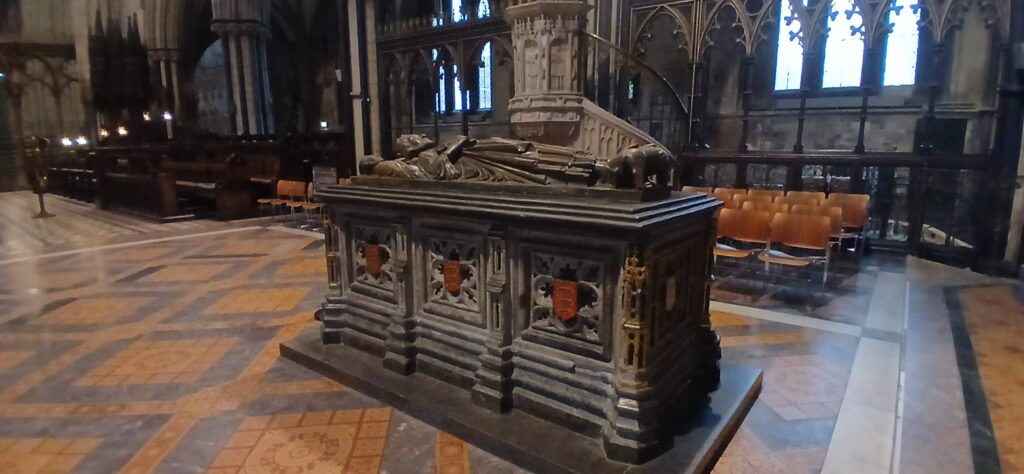
Tomb of King John (father of Henry III, a Much Better King) – once between shrines to St. Oswald (Saxon) and St. Wulfstan (Norman), which were removed in the C16th with the fate of the reclis a mystery.
The Cathedral holds two exceptionally significant royal tombs. The first is King John (d. 1216), the monarch who sealed the Magna Carta, buried here interred between two saints.
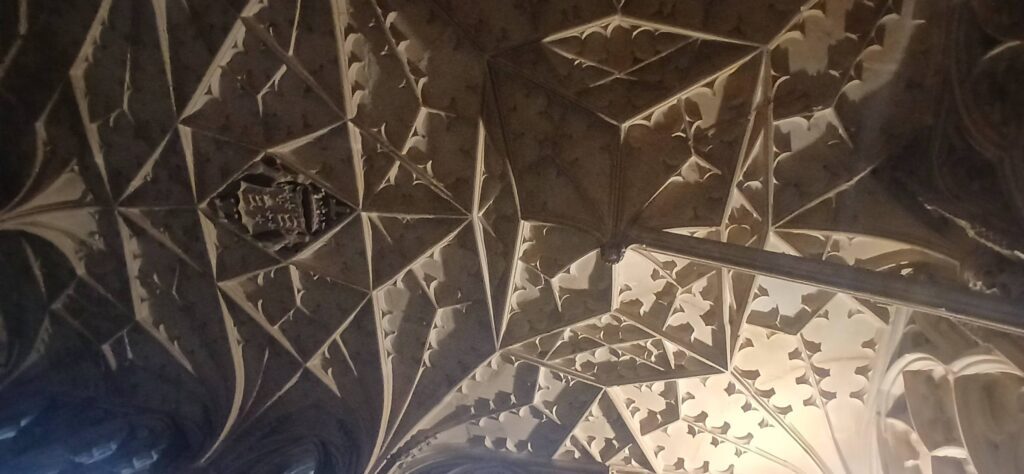
The ceiling of the chantry chapel of around the tomb of Prince Arthur
The second is Prince Arthur, Prince of Wales (d. 1502), the elder brother of Henry VIII, whose untimely death directly put Henry on the throne and led to the Reformation. Arthur died at Ludlow in Shropshire and was subsequently interred at Worcester.
During the 16th-century Reformation, the Cathedral took drastic measures to save its spiritual heritage. When the great, ornate shrines of the two major saints—St. Oswald (Saxon) and St. Wulfstan (Norman)—were targeted for destruction by the Crown’s commissioners, the revered relics were traditionally secretly buried within the Cathedral walls. The true fate of these relics remains a profound mystery, a silence consistent with quiet, protective actions documented elsewhere during iconoclasm. The sensitivity of those who definitively acted this way at other places, and may have done so at Worcester, involved protecting both the sensitive human remains and the spiritual symbols, which together promotes a significant space for reflection on loyalty and conscience during times of schism and upheaval.
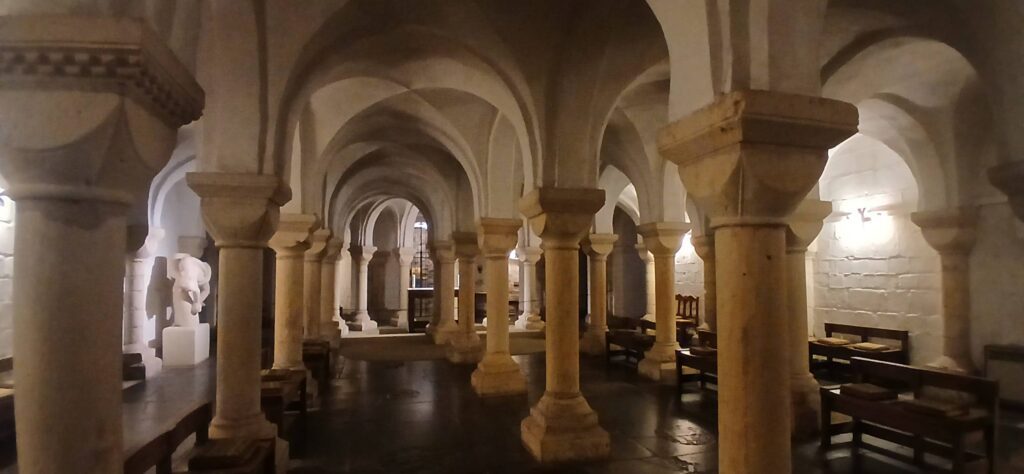
The Worcester Cathedral crypt is the largest Norman crypt in England, dating back to 1084, and features a distinctive groin-vaulted ceiling
Worcester Cathedral is thus a physical archive of history, containing the bodies of kings and the hidden memory of saints.
