


As August 2025 marks the 400th anniversary of his death, we remember John Fletcher (1579-1625), a prominent Jacobean playwright whose life and work offer fascinating insights into the interconnected world of Renaissance England.
Tracing Shakespeare, Corpus Christi, and Soulton Hall through John Fletcher’s Life
When we speak of Jacobean theatre, William Shakespeare often dominates the conversation. However, a closer look reveals John Fletcher (1579-1625), a playwright whose immense popularity in his own time rivalled Shakespeare’s. As Shakespeare’s successor and principal dramatist for the King’s Men, Fletcher’s influence on the stage was profound, particularly through his collaborative and individual works that remained popular even through the Stuart Restoration.
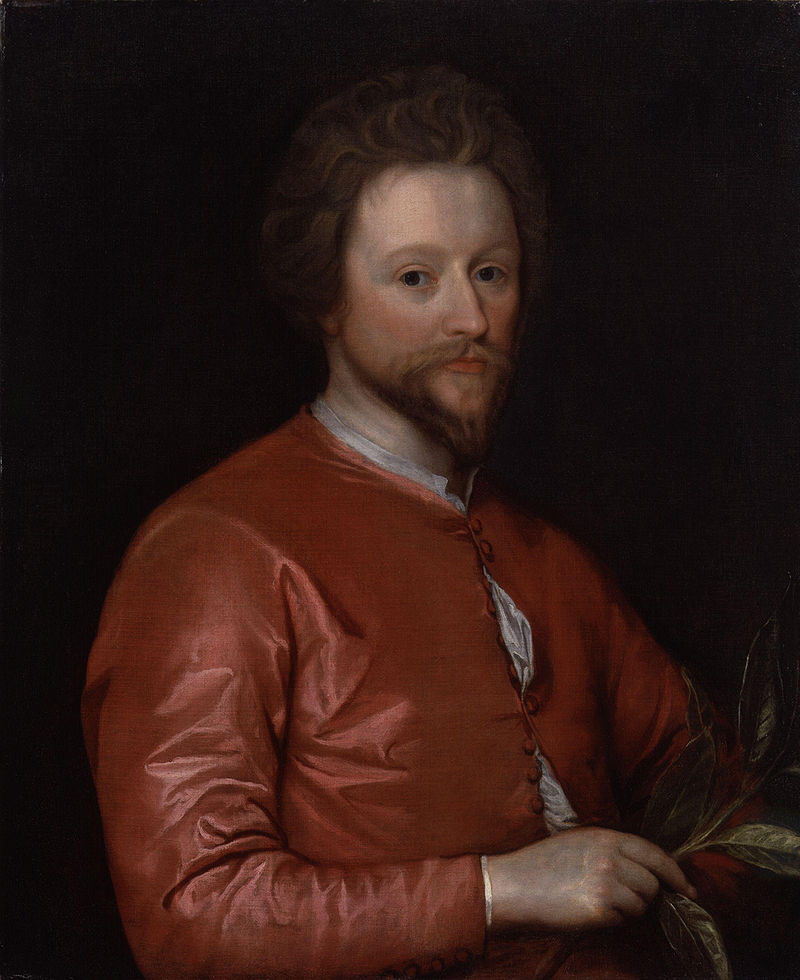
John Fletcher, by unknown artist. NPG
Perhaps most notably today, Fletcher is recognized for his direct collaborations with Shakespeare on:
- Henry VIII (c. 1613),
- The Two Noble Kinsmen (c. 1613), and
- the lost Cardenio (c. 1613).
Indeed, some scholars credit Fletcher’s influence with inspiring features in Shakespeare’s own late romances, including Pericles, Prince of Tyre, Cymbeline, The Winter’s Tale, and The Tempest.
By the mid-1610s, Fletcher’s plays were so successful they cemented the King’s Men’s pre-eminence in Jacobean London.
The lives of prominent Tudor and Jacobean figures were often deeply intertwined, and John Fletcher’s story offers a compelling example of this, shedding light on connections that resonate with the history of Soulton Hall.
At the heart of this web is (as so often) Sir Rowland Hill (d. 1561), Soulton’s celebrated hero.
As the first Protestant Lord Mayor of London and a key patron behind the publication of the Geneva Bible, Hill operated within the highest echelons of English society, constantly interacting with leading churchmen and academics. His significant role in the Protestant Reformation aligns directly with the work of Matthew Parker in shaping the Elizabethan Church. Sir Rowland Hill’s connection to William Shakespeare is well-established through various routes, including family (he was Shakespeare’s mother’s cousin) and the strong association of his name and the Soulton estate with Shakespeare’s As You Like It. This demonstrates how deeply rooted Hill was in the cultural landscape that fostered the likes of Shakespeare and, by extension, Fletcher.
Central to the wider narrative is Corpus Christi College, Cambridge.

Corpus Christi College Cambridge
This institution served as a powerful cultural engine, intimately connected to the intellectual project that Hill and Parker were championing (it was also the college of Nicholas Bacon). The influence of Corpus Christi College on the intellectual landscape of the era, and on figures like John Fletcher, was immense. This impact can be traced back to individuals like Matthew Parker, who was elected Master of Corpus Christi College on December 4, 1544, serving until 1553. Parker, a future Archbishop of Canterbury, was a colleague and friend of Sir Rowland Hill of Soulton, further extending this vital network of influence.
John Fletcher’s personal history further solidifies these academic and ecclesiastical links. His father, Richard Fletcher (1544/5–1596), was a distinguished cleric who held successive influential positions: Dean of Peterborough (1583–89), Bishop of Bristol (1589–93), Bishop of Worcester (1593–95), and Bishop of London (1595–96). Richard Fletcher himself was educated at Norwich School and Trinity College, Cambridge, later gaining a fellowship at Corpus Christi College, Cambridge.
John Fletcher followed, it is thought, in his father’s academic footsteps, matriculating at Corpus Christi College in 1591 at the age of eleven.
While details of his time there are scarce, he clearly followed the well-trodden path from Cambridge’s academic environment to London’s flourishing commercial theatre, a trajectory common among the “University Wits” before him.
These overlapping spheres—academia, church, and theatre—illustrate how institutions like Corpus Christi, guided by figures like Parker, were crucial in shaping the intellectual and creative environment from which such significant literary talents emerged, and how those talents, in turn, connected to places like Soulton Hall.
