

Connecting Shakespeare’s ‘Old Sir Rowland’ to the Real-Life Figure Who Battled Britain’s Bumpy Byways
What, wouldst thou have me go and beg my food?
Or with a base and boisterous sword enforce
A thievish living on the common road?
This I must do, or know not what to do:
Yet this I will not do, do how I can;
I rather will subject me to the malice
Of a diverted blood and bloody brother.
These powerful lines, spoken by the character Orlando in Shakespeare’s As You Like It, perfectly encapsulate the harsh realities and desperate choices faced by many in Tudor England (1485-1603). Life was precarious, and the “common road,” far from a symbol of progress, often represented a path to desperation or peril.
Tudor roads were generally in an abysmal state. Though the Highways Act of 1555 tried to place the burden of maintenance on local parishes, enforcement was weak, and neglect was rampant. Even King Henry VIII described roads as “foul and full of pits” and “very perilous.” Travel was agonizingly slow – covering even 30-40 miles a day by horse was considered good progress.
This poor infrastructure not only hampered trade and communication but also created fertile ground for those who, like Orlando’s implied alternative, might “enforce a thievish living on the common road.” While the classic highwayman of popular legend truly rose to prominence after the Tudor era, these dangerous conditions meant that robbers and bandits were a constant threat to anyone venturing outside the safety of town walls.
Amidst this widespread neglect, some individuals recognized the critical need for better connectivity.
One such figure was Sir Rowland Hill (d. 1561), a prominent merchant, Lord Mayor of London, and a native of Hodnet, Shropshire.
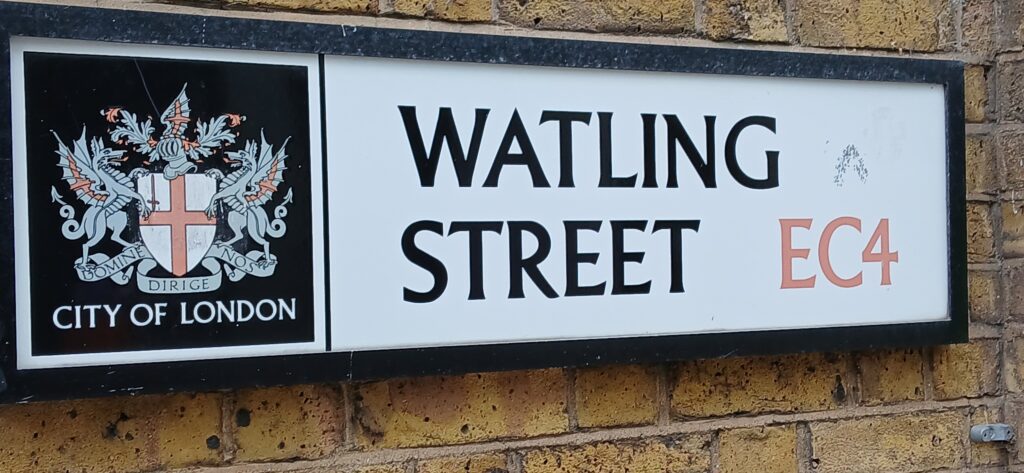
Watling Street in the City, near St Paul’s and St Stephen Walbrook.
While most roads suffered, Sir Rowland understood the vital role of good transport links. He’s particularly remembered for his significant efforts in improving Watling Street, a historically crucial route.
Beyond just roads, Sir Rowland Hill was also a benefactor in the construction of bridges in his native county of Shropshire. Specifically, he is credited with building:
- Tern Bridge: This was a significant stone bridge.
- Atcham Bridge: Another key bridge, also in stone, over the River Tern.
- He also built two further timber bridges. Building stone bridges in the Tudor era was a substantial undertaking, requiring considerable resources and engineering skill. These bridges would have been vital for crossing rivers that often posed significant obstacles to travel, especially during floods.
This road led directly to Shropshire, forming part of the boundary of the Forest of Arden – a fascinating connection when we consider Shakespeare’s “Old Sir Rowland de Boys” (of the forest) in As You Like It.
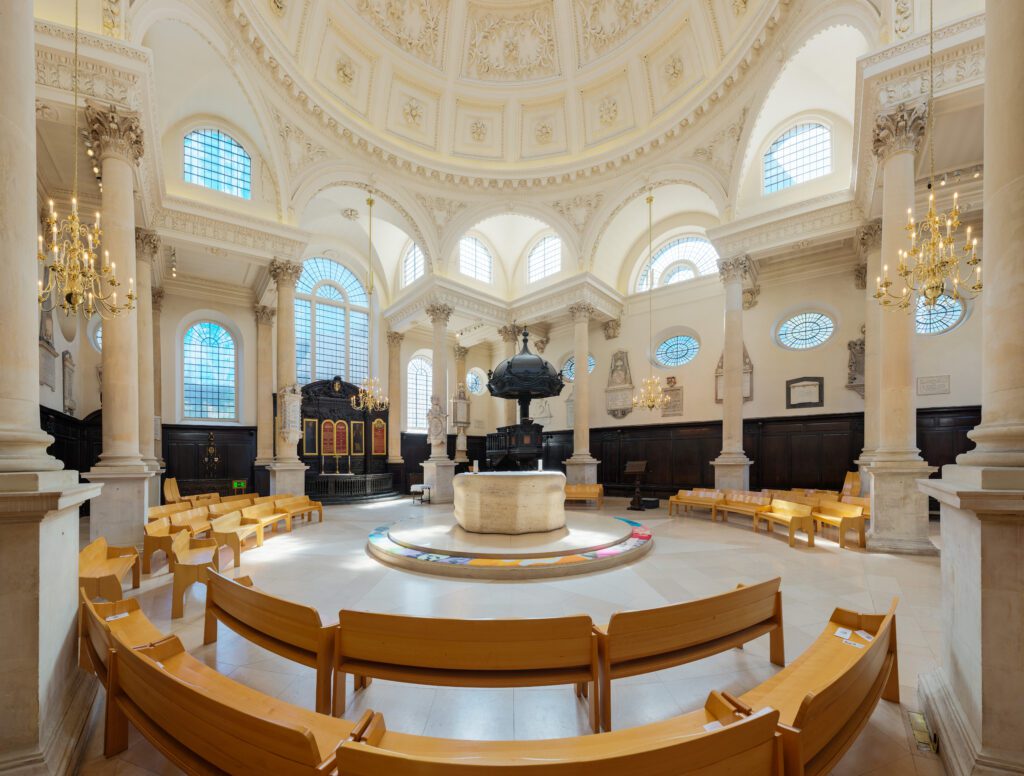
St Stephen Walbrook
Perhaps sections of this very road, leading far from Hill’s parish of St. Stephen Walbrook in London, helped cement the real Sir Rowland’s association with the wilder, wooded landscapes, making the play’s reference to “Sir Rowland de Bois” cling even tighter to this historical figure.

‘Old Sir Rowland’: Publisher of the Geneva Bible and insiration for AS YOU LIKE IT
At a time when investing in public infrastructure was rare and maintenance largely fell to local, often reluctant, communities, Hill’s personal initiative made a tangible difference. His foresight in upgrading this crucial artery would have eased trade, allowed for quicker travel, and reduced the isolation that contributed to the dangers lurking on less-maintained routes. He left a lasting legacy of practical improvement in a challenging age.
As we navigate the perpetual traffic on the M6 today, or ponder the implications of cancelled rail improvements, it’s easy to view infrastructure challenges as uniquely modern dilemmas. Yet, reflecting on the arduous Tudor roads and the far-sighted efforts of figures like Sir Rowland Hill reminds us that the state of our transport networks has been an “ever green” issue for centuries…
