

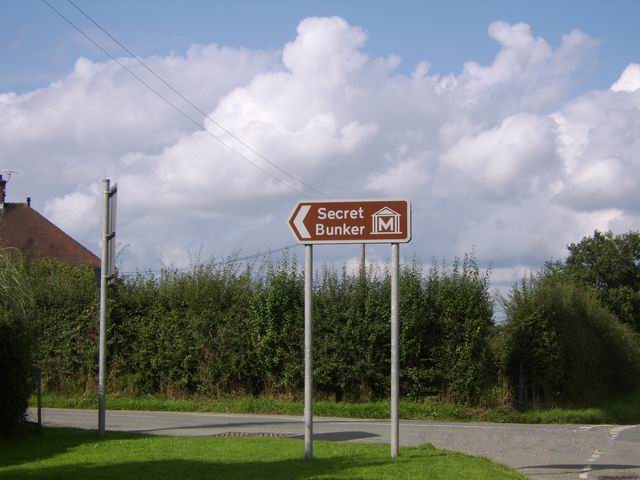
At Hack Green, Cheshire, there is a s a preserved Regional Government Headquarters (RGHQ), a component of the UK’s Cold War contingency planning
A visit is not a light-hearted excursion.
It’s a sombre and profoundly provoking experience, one that forces a confrontation with the chilling realities of the Cold War.
The sterile, concrete corridors, the remnants of early warning systems, and the stark simulations of nuclear devastation cast a long shadow, prompting reflection on the fragility of peace and the sheer scale of preparations made for unimaginable catastrophe. Yet, this unsettling journey is undeniably worthwhile. It offers a tangible connection to a pivotal period in history, a chance to understand the intricate mechanisms of a government preparing for its own potential demise. Beyond the historical artifacts, Hack Green serves as a potent reminder of the human cost of conflict and the enduring need for vigilance, making it a powerful and deeply memorable visitor experience in the heart of the Cheshire countryside.
Its function was to provide a secure location for regional governance in the event of a nuclear attack. The site’s history progressed from a World War II “Starfish” decoy to a ROTOR radar station, culminating in its designation as a fortified government bunker.
The core purpose of Hack Green, and the network of similar RGHQs, was to ensure continuity of government at a regional level. This involved the establishment of a command structure capable of operating in a post-nuclear environment.
Key to this structure were the Regional Commissioners. Regional Commissioners were designated officials, typically senior civil servants or military personnel, tasked with maintaining order and coordinating survival efforts within their respective regions. Their role would have been to:
- Implement emergency powers: These powers would have allowed them to control resources, enforce regulations, and maintain essential services.
- Coordinate civil defense: This would have involved managing evacuation, shelter, and post-attack recovery.
- Maintain communication: Establishing and maintaining communication networks would have been critical for coordinating efforts across the region.
- Restore essential services: Prioritizing the restoration of water, power, and food supplies would have been paramount.
- Maintain law and order: In a post-attack environment, maintaining order and preventing societal collapse would have been a crucial function.
Hack Green, as an RGHQ, was designed to facilitate these functions. The bunker provided secure communication facilities, operational control rooms, and living quarters for the Commissioners and their staff. The site’s infrastructure was designed for self-sufficiency, with backup power systems and water supplies.
The presence of Ballistic Missile Early Warning System equipment at Hack Green highlights its role in providing situational awareness to the Commissioners. This information would have been critical for decision-making in a rapidly evolving crisis.
The decommissioning of the RGHQ network following the end of the Cold War resulted in the site’s transition to a museum. The exhibits at Hack Green provide a representation of the Cold War’s contingency planning and the role of the Regional Commissioners in ensuring regional government continuity.
The museum’s focus on the technical and operational aspects of the bunker, as well as its inclusion of early warning systems and communication equipment, provides a clear understanding of the environment in which these Commissioners would have operated.
The facility serves as a strong reminder of the concrete preparations made for the potential collapse of civil society.
