

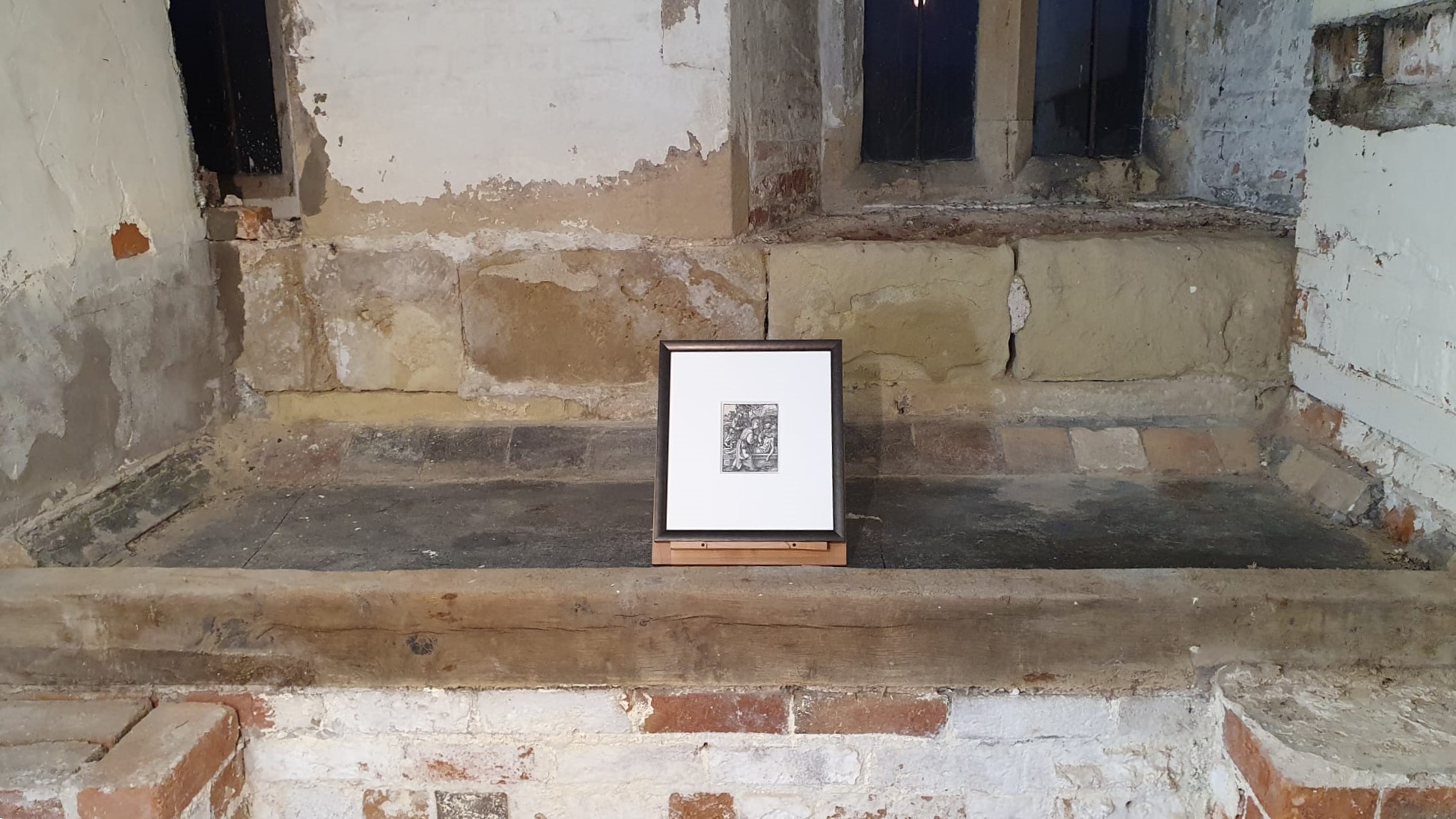
Soulton Hall recently played host to a very special occasion: a private viewing of Albrecht Dürer’s exquisite woodcut, “Small Passion: 29. Burial of Christ” (1511).
Brought to the Hall by the directors of Byrga Geniht, this intimate gathering offered a unique opportunity to experience the power and artistry of one of history’s greatest printmakers.
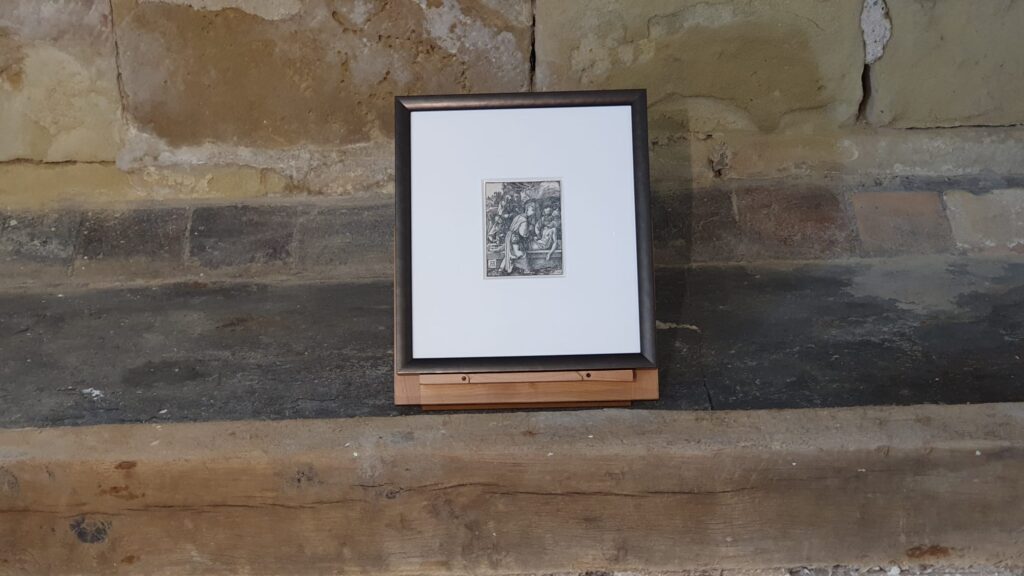
Albrecht Dürer’s Entombment from Die kleine Passion.
Dürer’s “Small Passion” series, a set of 37 woodcuts depicting scenes from Christ’s life, is a masterpiece of Renaissance art. The “Burial of Christ” is a particularly poignant image, capturing the solemnity and grief of the moment. Dürer’s mastery of the woodcut medium is evident in the intricate details and expressive figures, all rendered with a remarkable level of precision and emotional depth. Even in this small format, the scene feels monumental, conveying the weight of Christ’s sacrifice and the sorrow of his followers.
The private viewing at Soulton Hall provided a rare chance to engage with the artwork up close. The intimate setting allowed for close examination of Dürer’s technique, from the delicate lines that create texture and shadow to the masterful composition that draws the eye to the central figures. It was a privilege to witness the skill with which Dürer conveyed such profound emotion through the seemingly simple medium of woodcut.
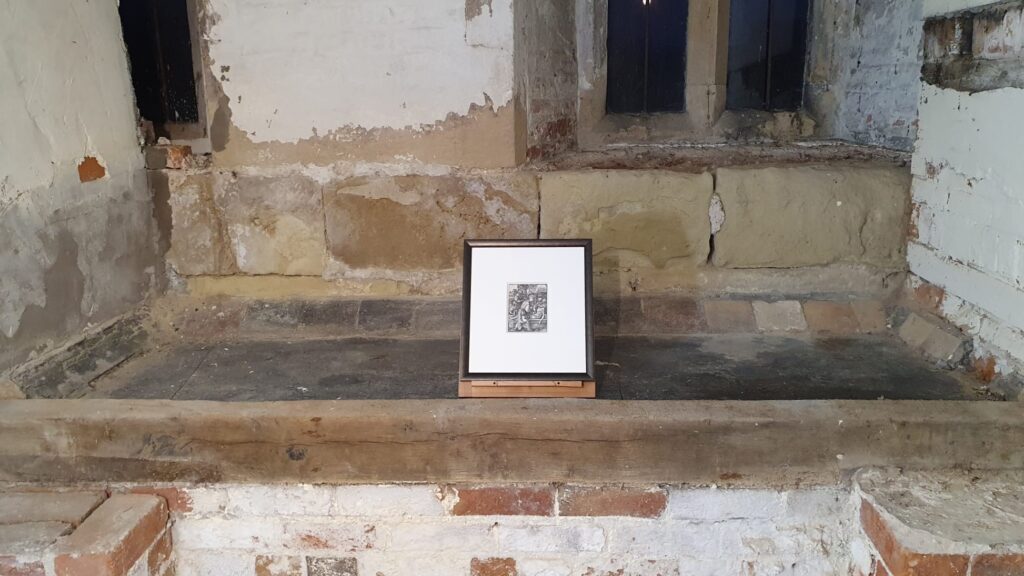
A glimpse of Dürer’s Kleine Passion: The “Entombment” displayed in the intimate setting of Soulton’s private chapel.
But what makes this viewing particularly fascinating in the context of Soulton Hall is the possibility that Sir Rowland Hill himself may have been familiar with these very illustrations.
Hill’s activities in publishing, coupled with his connections to Germany, make it highly plausible that he was aware of Dürer’s work and perhaps even possessed a copy of the “Small Passion” series. The intellectual and artistic currents of the Renaissance flowed readily across Europe, and a man of Hill’s stature and interests would likely have been engaged with the artistic innovations of his time.
Imagine the possibility of Hill, in the midst of building his visionary home, drawing inspiration not only from the architectural designs of the continent but also from the powerful imagery of Dürer’s woodcuts.
The directors of Byrga Geniht, known for their expertise in heritage and the arts, curated this event with a clear appreciation for Dürer’s genius and the historical significance of his work, and perhaps with a nod to this potential link to Soulton’s past. Their insightful commentary enriched the viewing experience, providing context for the artwork and highlighting its enduring relevance. The setting of Soulton Hall, with its own rich history and connection to the past, provided a fitting backdrop for this encounter with a Renaissance master. The combination of Dürer’s timeless art and the Hall’s unique atmosphere created a truly memorable and thought-provoking occasion. It invites us to consider the intellectual world of Sir Rowland Hill and the potential influences that shaped his vision for Soulton Hall.
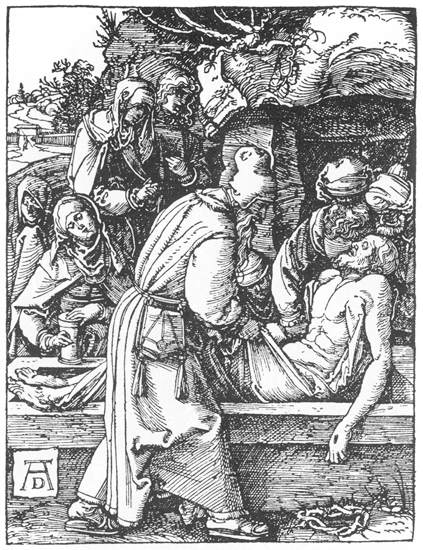
Albrecht Dürer, ‘Small Passion: 29. Burial of Christ’ (1511)
