

More Than Ink and Paper: The Significance of Illustrations in a Geneva Bible
We were delighted when we recently received a most extraordinary and thoughtful gift from friends in America (who would prefer to to be named): some original pages from a 1575 Geneva Bible, making them 450 years old this year!
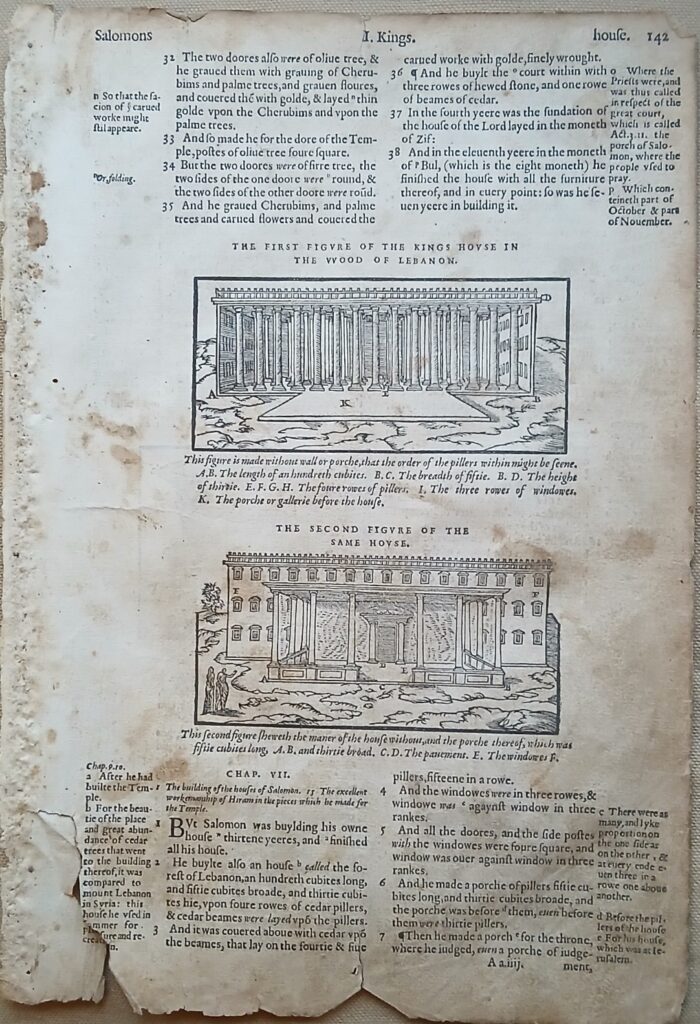
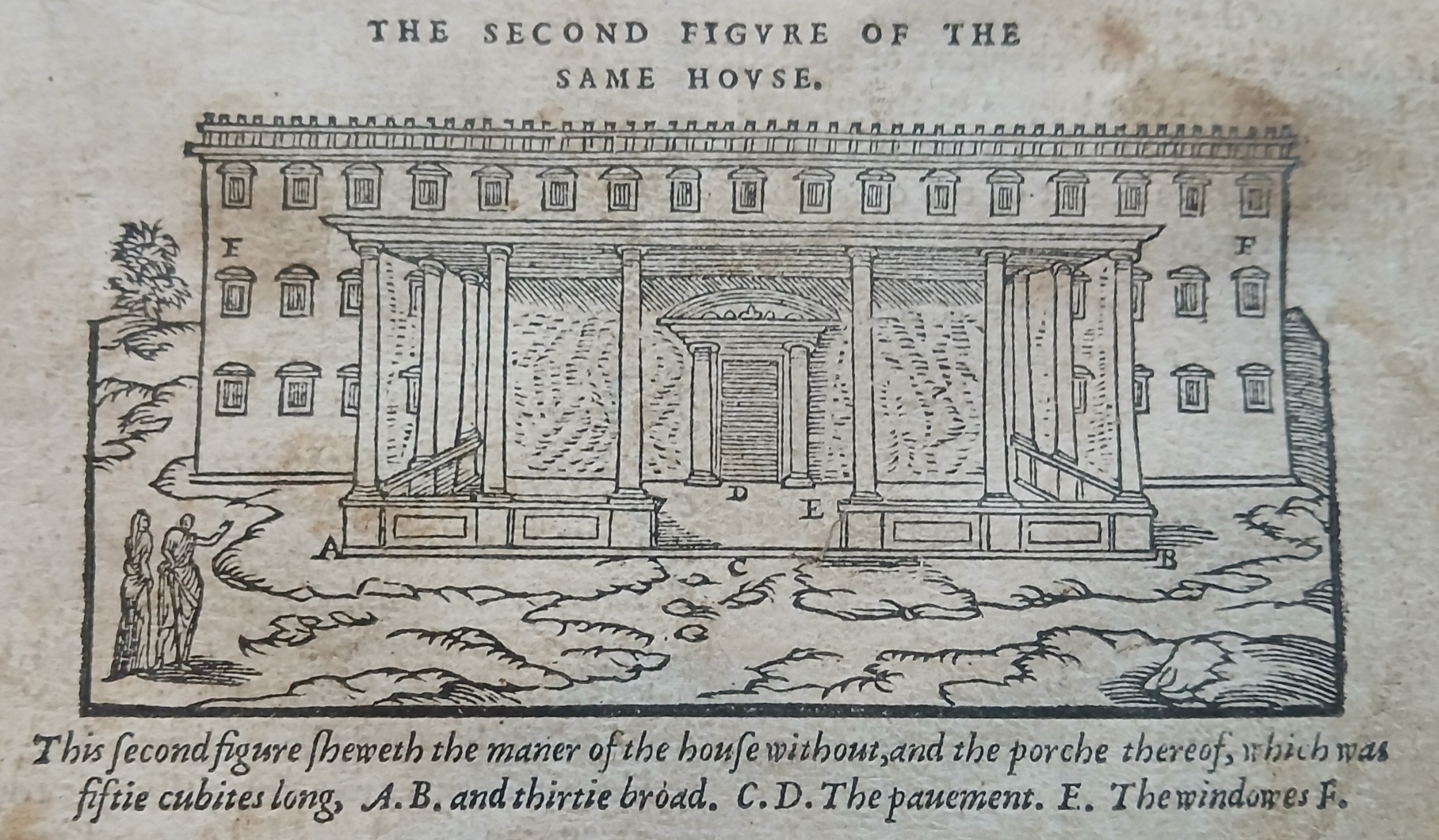
A page from a 1575 Geneva Bible showing Solomon’s House
These particular pages, spanning 1 Kings 6:6-38 and 7:1-7, are part of the edition printed in London by Christopher Barker, a mere 15 years after the original 1560 Geneva Bible was published, with which Sir Rowland Hill is so closely associated.

A page from a 1575 Geneva Bible showing the pillar and the great cauldron
Beyond the historical context, these pages hold a deeper level of significance in their exquisite illustrations. Four intricate drawings adorn the gifted pages:
- The pillar
- The Great Cauldron, and
- two depicting Solomon’s House
These illustrations provide a visual representation of Solomon’s House and its impressive furnishings, highlighting the opulence and grandeur associated with the building and what is both seemly and tasteful in state architecture – which to Tudors included a Country House – like Soulton.
These illustrations were not merely decorative elements; they were integral to a larger project of biblical and theological interpretation, as outlined in the “Epistle to the Reader” of the 1560 Geneva Bible. This preface alludes to a broader endeavour to renew England in the image of scrpiture, suggesting a deeper engagement with the Bible’s message and its relevance to contemporary society. In this light, the illustrations were tools, visually conveying the grandeur and significance of Solomon’s House and, by extension, the divine order it represents.
These illustrations without doubt served as models for builders in the Elizabethan Age, demonstrating what was fitting and graceful and what demanded to be expressed in the buildings of state during this period of national renewal.
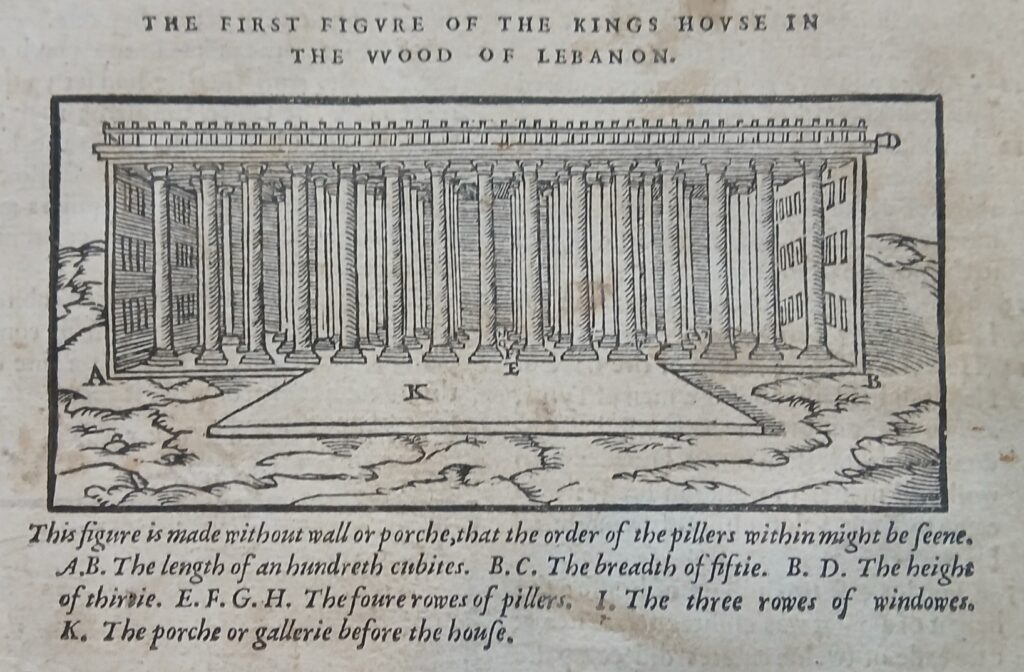
First Illustration of Solomon’s House in the Geneva Bible
The two illustrations of the “King’s house in the wood of Lebanon” offer a glimpse into the vast scale and intricate details of Solomon’s building projects.”
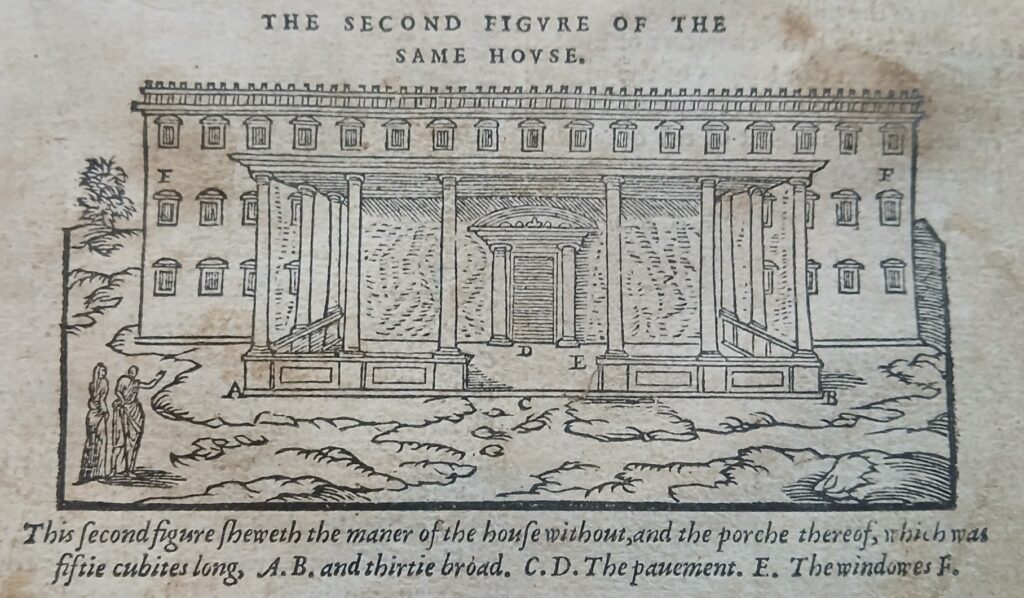
Second Illustration of Solomon’s House
There is then an image of the “great cauldron” which is a prominent feature in the biblical account of Solomon’s Temple (1 Kings 7:23-26), was a monument of immense size and significance. Described as “round all about” and ten cubits (approximately 15 feet) in diameter, it was cast from bronze, this engineering marvel rested upon twelve oxen, symbolizing strength and unwavering support.
Beyond its practical and liturgical functions function, the “great cauldron” was a testament to the technological and artistic advancements of Solomon’s era, showing the skill and ingenuity of his craftsmen. In the context of the Geneva Bible, the illustrations of the “great cauldron” conveys its grandeur and scale, emphasizing its awe-inspiring nature; highlighting the the twelve oxen is significant.
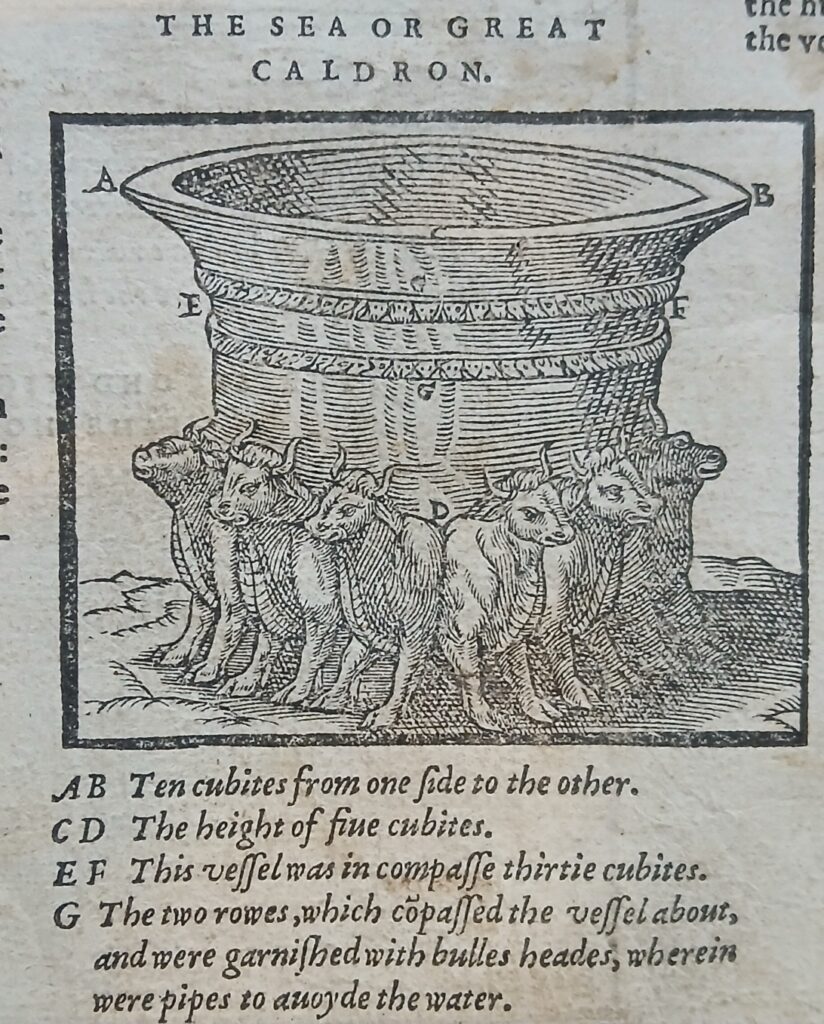
Illustration of Solomon’s Great Cauldron in the Geneva Bible
Finaly, there is a picture of the pillar. According to the Bible, Boaz (Hebrew: בֹּעַז Bōʿaz) and Jachin (יָכִין Yāḵīn) were two copper, brass, or bronze pillars which stood on the porch of Solomon’s Temple, the first Temple in Jerusalem. They are sometimes used as symbols in religious architecture.
The pillars were 18 cubits tall and were made of bronze and were about 5.7 cubits wide, with a capital that was 5 cubits high. The pillars were hollow and four fingers thick. They were positioned at the portico of the temple, with Jachin standing to the south and Boaz to the north. They were adorned with intricate decorations, including brass lilies, checker-work nets, pomegranates, and chains.
It’s important to note that these pillars were likely not support structures but free-standing, based on similar pillars found in other nearby temples.
Symbolically, the pillars are believed to represent the pillar of cloud by day and the pillar of fire by night, the divine guides that led the Israelites through the wilderness during the Exodus.
Sadly, the pillars met their demise when the First Temple was destroyed. They were not rebuilt when the Second Temple was constructed, leaving their memory to be preserved in historical accounts and the enduring symbolism they represent.
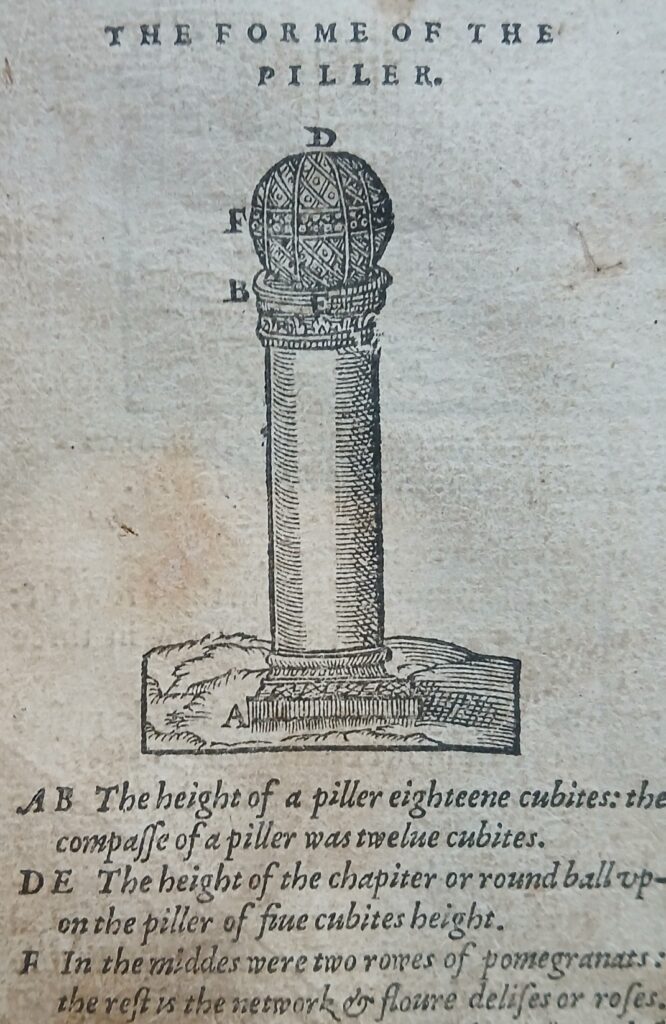
Illustration of the Great Pillar in the Geneva Bible
********
The gifted pages narrate a pivotal period in the reign of King Solomon. 1 Kings 6:6-38 describes the meticulous construction of the Temple, emphasizing its architectural splendour and the divine guidance that oversaw its creation. 1 Kings 7:1-7 is concerned with the construction of Solomon’s own palace.

Francis Bacon by By Paul van Somer
Solomon’s House has important cultural resonance as being the name of the institution in Francis Bacon’s New Atlantis, set out as a utopian vision of a scientific research centre dedicated to the advancement of knowledge and the betterment of humanity. This fictional institution, inspired by King Solomon’s wisdom and wealth, embodies Bacon’s philosophy of scientific inquiry and its potential to improve human life.
Bacon’s vision of Solomon’s House profoundly influenced the intellectual currents of the Enlightenment, inspiring the establishment of scientific societies like the Royal Society and shaping the development of the modern university.
Bacon is believed to have copied Soulton at his house at Verulam.
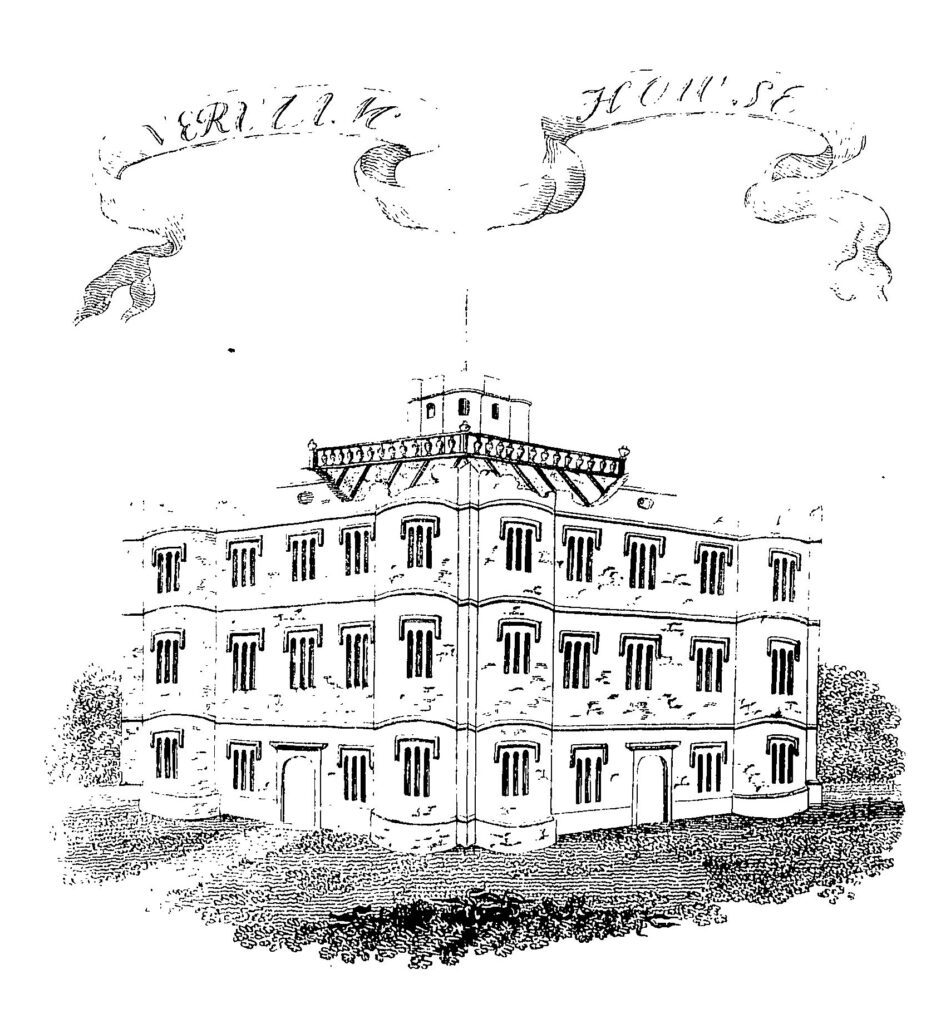
VerulamHouse
