

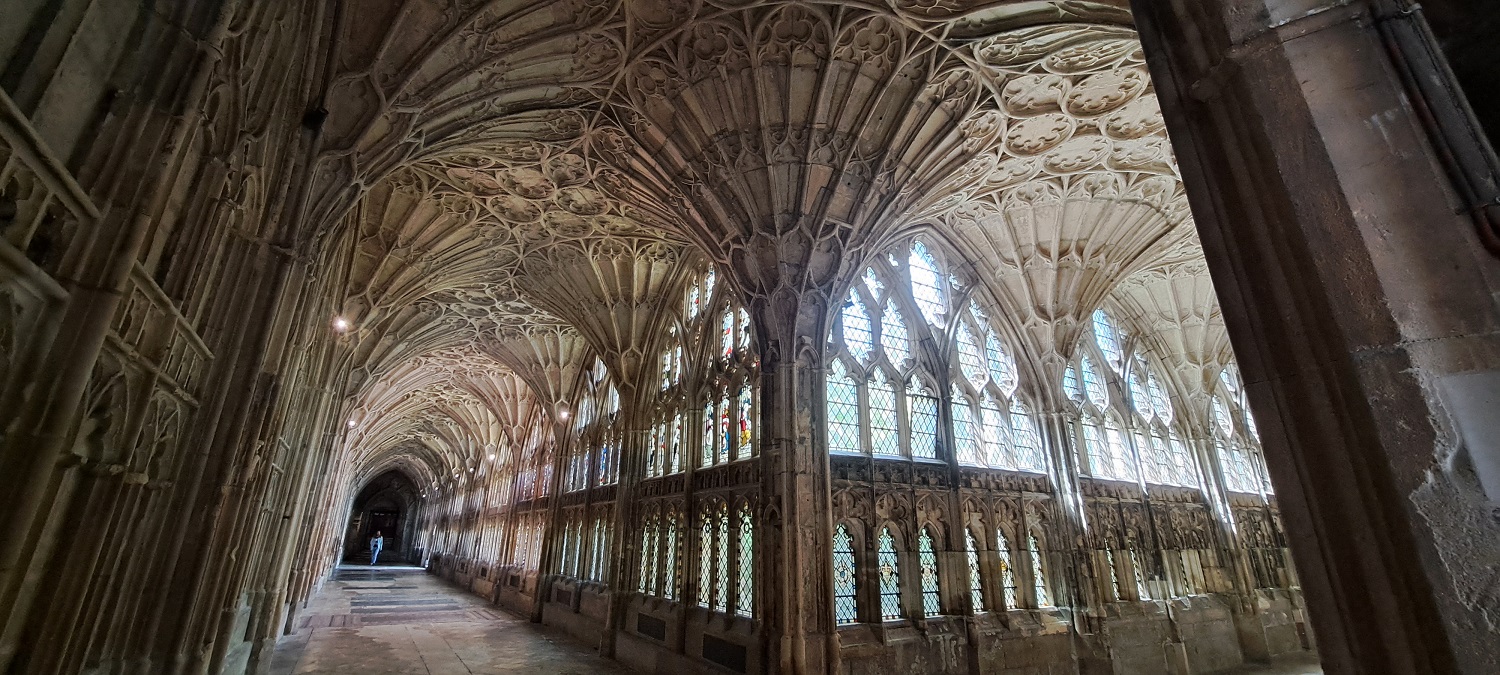
Gloucester Cathedral is a magnificent testament to centuries of history and a beacon of architectural splendour and religious significance. It is an imposing presence and an important place in the story of these islands.
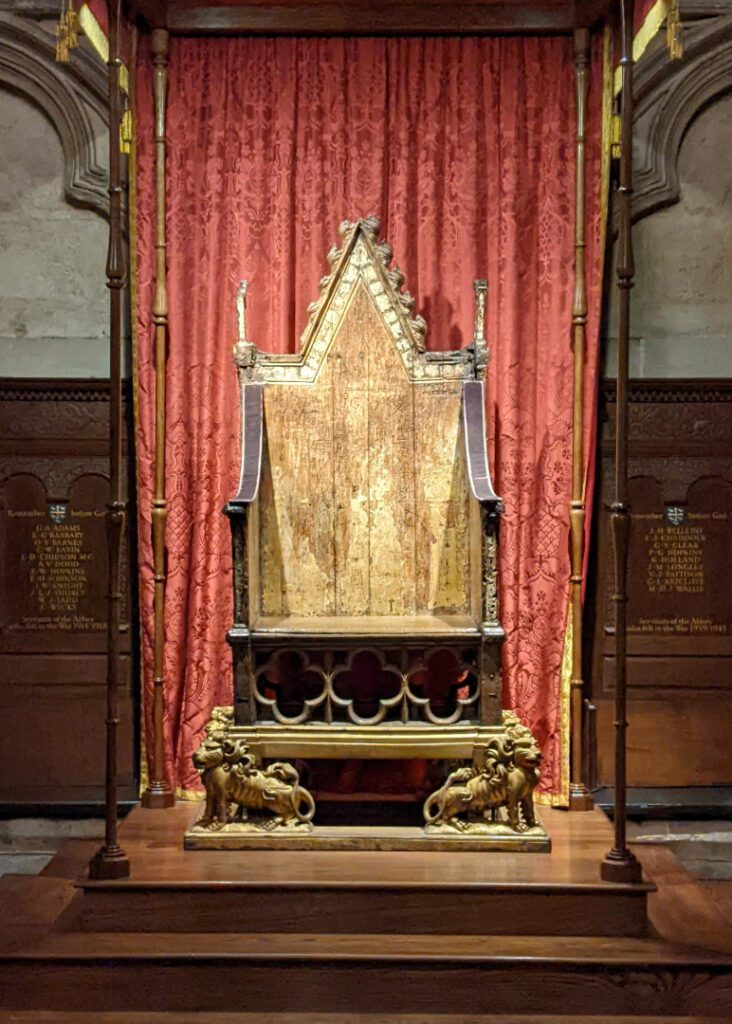
The Coronation Chair, now back in Westminster Abbey
An intriguing aspects of Gloucester Cathedral is its royal connections. During the tumultuous years of World War II, the cathedral served as a safe haven for the Coronation Regalia, including the iconic St. Edward’s Crown. This precious thing, symbol of British state, was meticulously protected within the cathedral’s walls, ensuring its survival during a time of great peril.
Moreover, Gloucester Cathedral holds the distinction of being the coronation site of King Henry III in 1216. This historic event marked a significant moment in English history, forever intertwining the cathedral with the nation’s royal heritage.
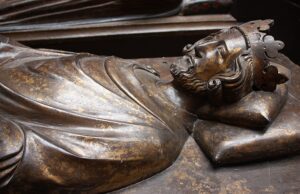
Tomb effigy, in gilt bronze, of Henry III of England (b.1206; d.1272) in the Confessor’s Chapel, Westminster Abbey
The cathedral’s history stretches back to the Anglo-Saxon era. In 679 AD, King Osric of Hwicce founded a monastery on the site, dedicated to St. Peter. Over the centuries, the monastery grew in prominence, becoming a center of religious and cultural life. The Norman Conquest in 1066 brought significant changes, and the monastery was transformed into a Benedictine abbey.

A Saxon or Norman altar, a relic of the cathedral’s rich history.
The cathedral’s architecture is a stunning blend of styles, reflecting the evolution of English Gothic architecture. The Norman crypt, the soaring Gothic nave, and the intricate fan vaulting of the cloisters are just a few of the architectural highlights that captivate visitors.
