

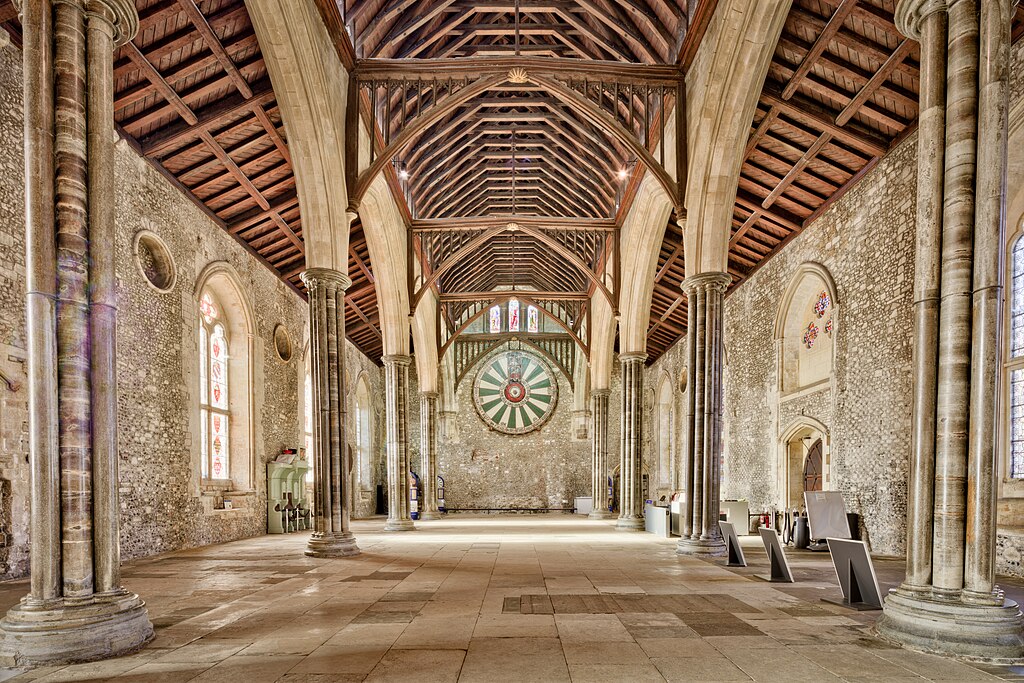
Henry III’s Royal Hall: Winchester Castle’s 55ft Double Cube Great Hall
A recent visit to Winchester was a delightful experience, filled with historical charm and architectural beauty.
Winchester Castle holds significant historical importance, particularly as the coronation site of King Edward the Confessor. Edward, a devout Christian and a revered figure in English history, is considered a great Anglo-Saxon royal saint.
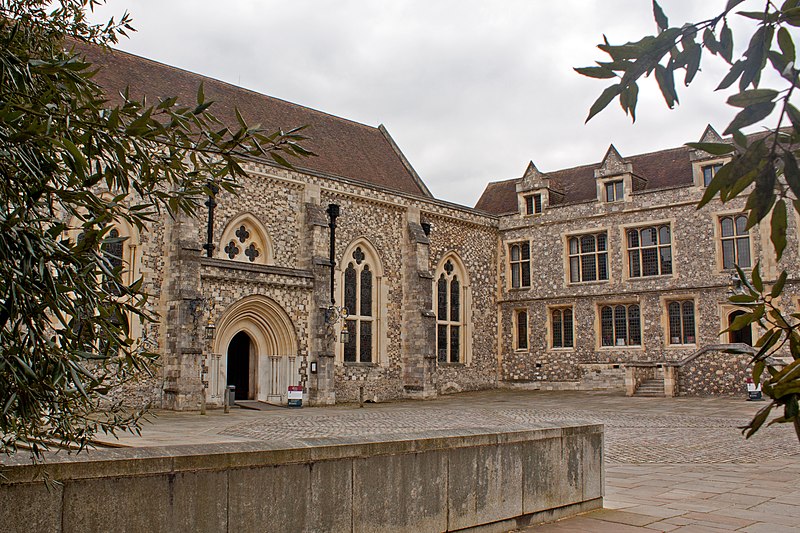
Henry III’s Great Hall, Winchester Castle
Henry III, born at Winchester Castle, added the Great Hall between 1222 and 1235. Designed as a “double cube,” measuring 110 feet by 55 feet by 55 feet, the Great Hall was constructed of flint with stone dressings. Originally, it had lower walls and a roof with dormer windows.
Interestingly, the dimensions of the Great Hall, based on the unit of 55 feet, are also found in the architecture of Soulton Hall. This observation was first made by James Wenn of Byrga Geniht in modern times.
The Great Hall has served as a venue for numerous significant historical events, including royal banquets, court sessions, and religious ceremonies.
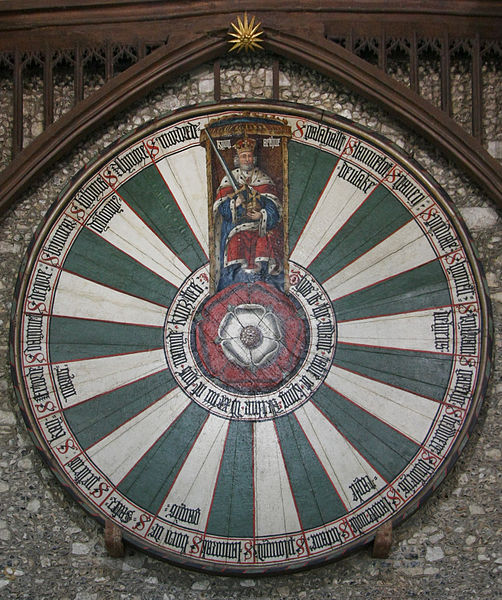
The painted table placed in the Great Hall of Winchester Castle, representing the Round Table of legendary King Arthur
Its association with King Arthur, while shrouded in legend, adds to its mystique.
********
Winchester, once the capital of England, was the seat of the powerful Bishops of Winchester.
These bishops maintained a presence in London on the south bank of the River Thames, where they established Winchester Palace. This significant landmark played a crucial role in medieval London’s social and political landscape.
The palace, dating back to the 9th century, served as a residence for the bishops and a centre for religious and administrative activities. It also housed a prison, which operated until the late 18th century.
Despite its decline as a religious centre, the palace’s architectural elements, such as the rose window in the Great Hall, remain of historical and cultural interest. Byrga Geniht has focused on the geometric aspects of the rose window, connecting it to other notable structures like the Shrine of St. Erkenwald and the North Transept Rose Window in Winchester Cathedral.
These architectural elements share a common reference to the Holy Almandal, a topic explored in other resources from the Byrga Geniht channel.
