

Happy Birthday, Alberti!
Celebrating a Renaissance Master
Leon Battista Alberti, the renowned Renaissance architect and humanist, was born 620 years ago today!
His groundbreaking work in architecture, art theory, and literature continues to inspire and influence scholars and artists today.
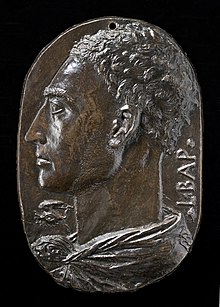
Leon Battista Alberti, Self-Portrait, c. 1435, NGA 43845
Rowland Hill, would have been familiar with Alberti’s work: Alberti’s influential texts had been circulating for decades before Rowland Hill came of age, providing him with a rich source of inspiration and knowledge.
Indeed, as a merchant and intellectual, Hill would have imported Alberti’s writings as taste-making documents for his age. Moreover, he would have read them as a Renaisance man himslef, which in turn would have influenced his own understanding of architecture and humanist ideals.
Alberti’s most famous work, “De re aedificatoria” (On the Art of Building), is considered a cornerstone of Renaissance architectural theory. His exploration of classical principles, combined with his innovative ideas, revolutionized the field and left a lasting legacy.
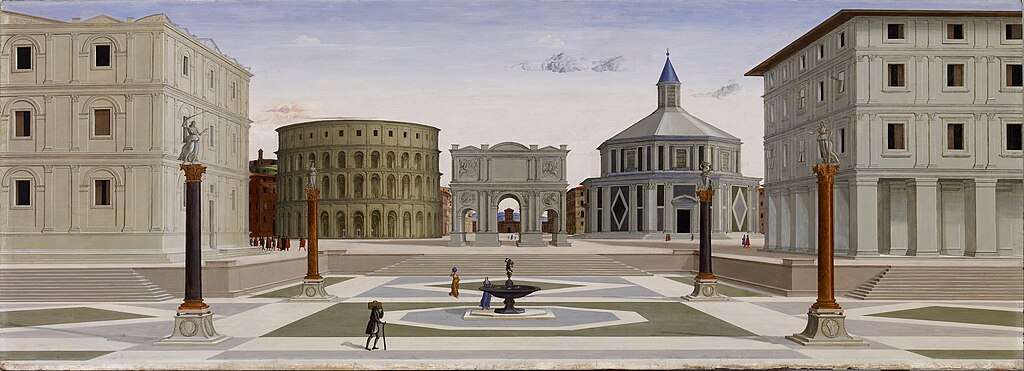
The ideal city attributed to Fra Carnevale, c. 1480–1484
Leon Battista Alberti’s vision of an ideal city, with its emphasis on harmony, beauty, and functionality, would have resonated with Rowland Hill, a builder and city leader who served as Lord Mayor of London. As a key figure in shaping the urban landscape of Renaissance London, Hill’s perspective on city planning likely aligned with Alberti’s ideals.

I am more proud to be Sir Rowland’s son,
His youngest son- and would not change that calling
To be adopted heir to Frederick.
Additionally, the cultural identity of London was enriched by the presence of St. Erkenwald, whose eponymous poem looks over into the qualities of a virtuous magistrate.

Shrine of St Erkenwald, relics removed 1550, lost as a monument in the Great Fire of London
This shared interest in the role of civic leadership and the pursuit of an ideal city would have connected these figures across time and disciplines, creating a rich tapestry of Renaissance thought.
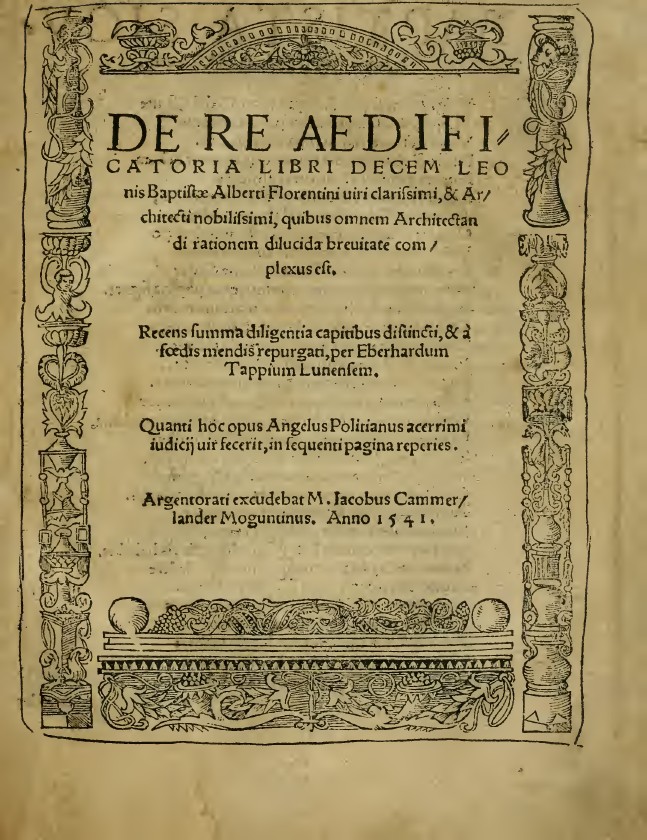
De re aedificatoria, title page of the 1541 edition
Leon Battista Alberti’s vision of an ideal city, with its emphasis on harmony, beauty, and functionality, would have resonated with Rowland Hill, a builder and city leader who served as Lord Mayor of London. As a key figure in shaping the urban landscape of Renaissance London, Hill’s perspective on city planning likely aligned with Alberti’s ideals. Additionally, the cultural identity of London was enriched by the presence of St. Erkenwald, whose eponymous poem delved into the qualities of a virtuous magistrate. This shared interest in the role of civic leadership and the pursuit of an ideal city would have connected these figures across time and disciplines, creating a rich tapestry of Renaissance thought.
Beyond architecture, Alberti’s contributions to art theory and humanist thought were equally significant. His writings on perspective and his embrace of humanist ideals helped to define the Renaissance and its emphasis on individual achievement and the beauty of the human form.
As we celebrate the 620th anniversary of Alberti’s birth, let us take a moment to appreciate his enduring influence and the lasting impact of his work on the world.
