

Today, we turn our attention to a pivotal event – the Battle of Shrewsbury, which took place on July 21st, 1403, exactly 620 years ago.
This bloody clash between King Henry IV and the rebellious Henry Percy, marked an important moment in English history.
The battlefield, just a short distance from Soulton Hall, became a scene of fierce combat, with both sides suffering heavy losses.
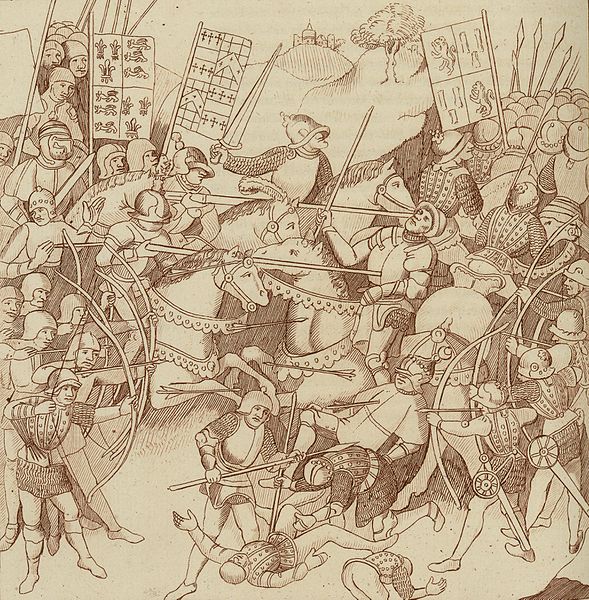
An image from a set of 8 extra-illustrated volumes of A tour in Wales by Thomas Pennant (1726-1798) that chronicle the three journeys he made through Wales between 1773 and 1776. These volumes are unique because they were compiled for Pennant’s own library at Downing. This edition was produced in 1781.
While the outcome secured Henry IV’s hold on the throne, the battle’s legacy extends far beyond the battlefield. It found its way into the vibrant world of William Shakespeare’s history plays.
Shakespeare, ever the keen observer of human nature and historical drama, drew inspiration from the Battle of Shrewsbury for his play “Henry IV, Part 1.” The play’s final two acts are set against the backdrop of the battle, with characters like Prince Hal (the future Henry V) and the roguish Falstaff coming to life on the stage.
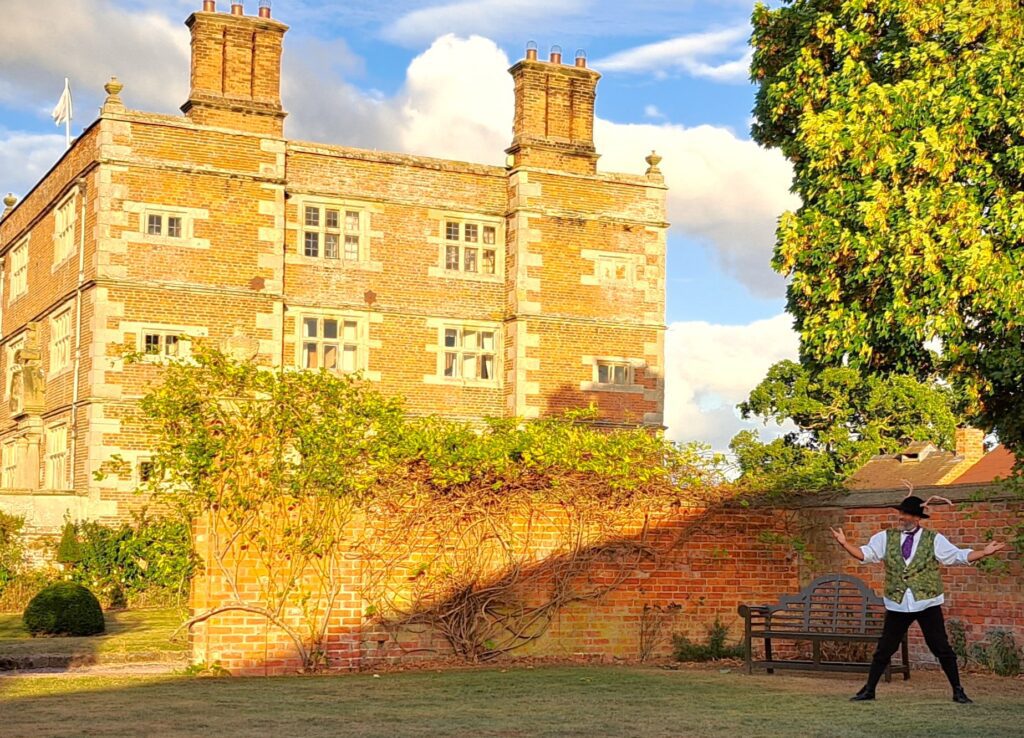
Flastaff in The Merry Wives of Windsor, a play by William Shakespeare performed at Soulton by British Touring Shakespeare
The presence of Soulton Hall near the battlefield adds a layer of intrigue to this historical connection. It’s tempting to imagine figures associated with the battle, perhaps weary soldiers or anxious nobles, passing through the very grounds where Soulton Hall now stands. We know some mustered in Hodnet.
