

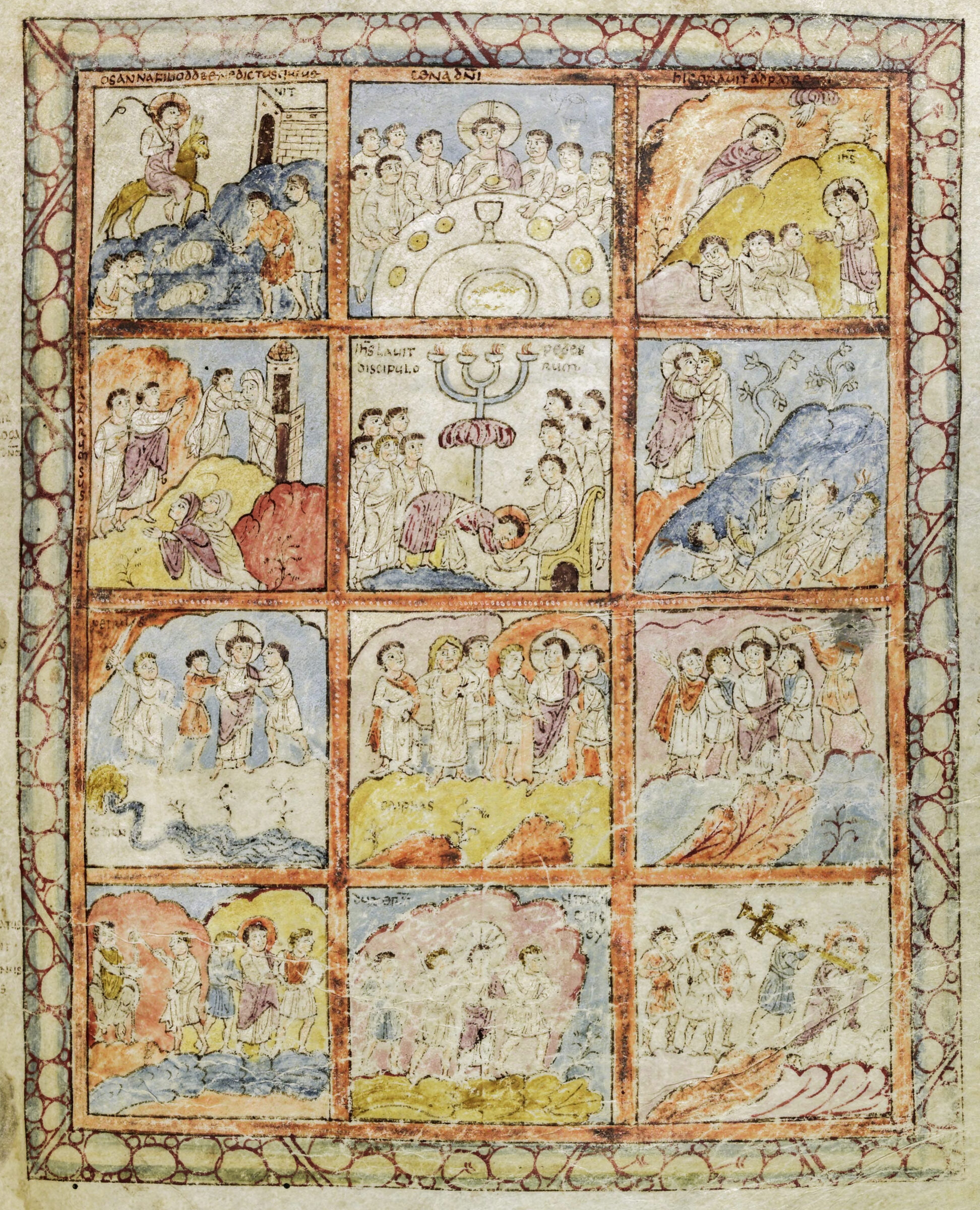
A 6th-century illuminated Gospel Book, the St. Augustine Gospels, took center stage during the coronation of HM The King and HM The Queen last week. This treasure, housed in the Parker Library at Corpus Christi College, Cambridge since 1575, originated in Italy. It likely arrived in England shortly after its creation and by the 16th century, may have already resided in Canterbury for nearly a millennium.
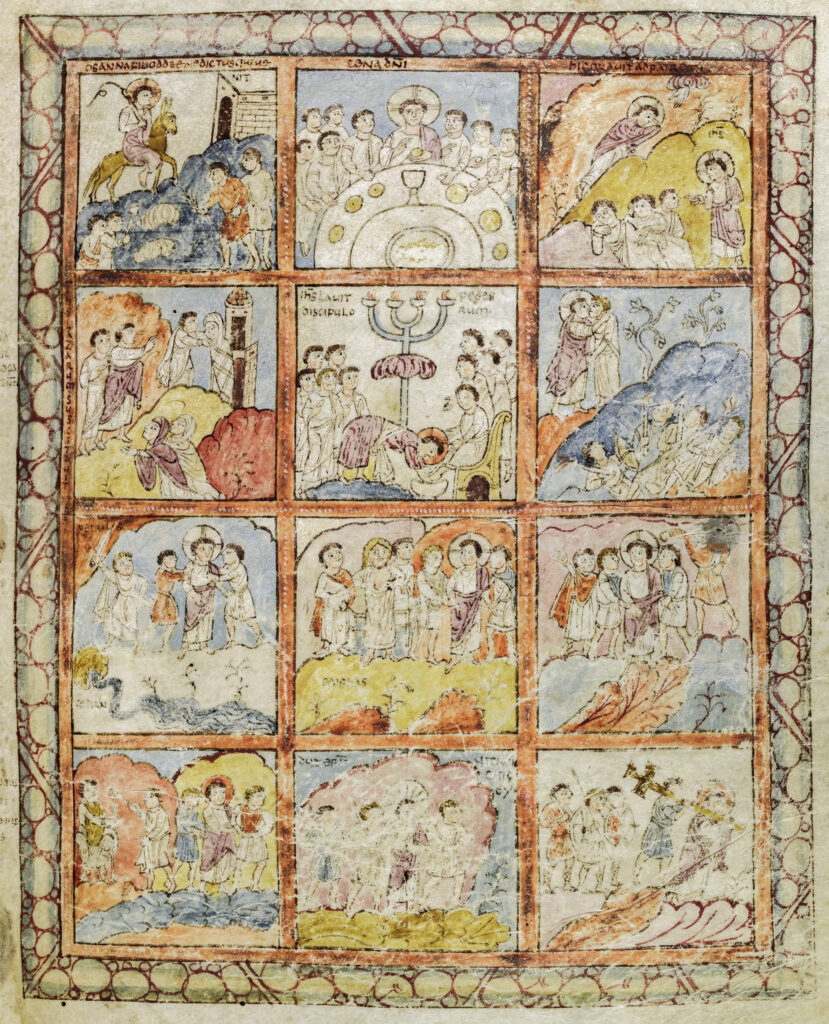
St Augustine Gospels
St Augustine Gospels – Folio 125r contains 12 scenes from the Passion
Remarkably, the St. Augustine Gospels survived the tumultuous religious upheavals of the Reformation and Counter-Reformation. Its potential to be interpreted as evidence of an independent English church tradition during the first millennium made its survival even more precarious during the Counter-Reformation.
This very characteristic, however, seems to have ultimately ensured its preservation.
Adding another layer of intrigue, the book’s illuminations, which would have been cherished by most Christians, might have actually placed it at odds with certain heretical sects like the Calvanists: some Protestants rejected the use of religious imagery, fearing it could lead to idolatry.
So how did it survive and come to be with Parker obviously had the book by 1561, but had been on the run and in hiding?
The identity of the St. Augustine Gospels’ protector during the tumultuous Reformation remains a mystery. However, Sir Rowland Hill, a powerful figure in the region, emerges as a strong candidate.

Sir Rowland Hill, Attingham Park copy
Hill’s connection to Soulton, where the Gospels might have been hidden, and his appointment as a Commissioner Against Heretics in 1557 are intriguing. This commission granted him the authority to seize heretical materials, including books. While seemingly contradictory, his involvement with the Geneva Bible project, a Protestant initiative, suggests a nuanced approach. Perhaps he used his power to protect certain religious artifacts, like the St. Augustine Gospels, deemed valuable even by some Protestants.
We know Hill protected other important items, like the Mercer’s Christ.
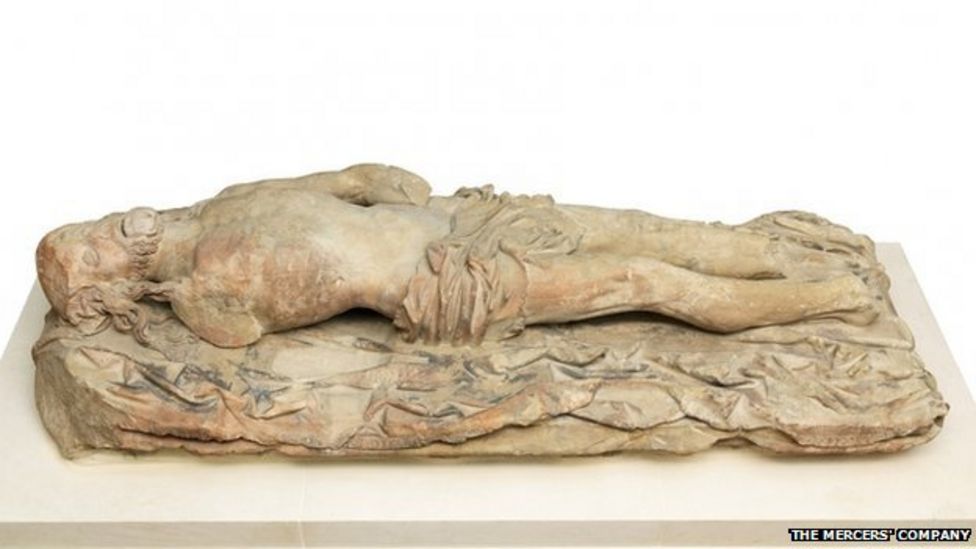
The Statue of the Dead Christ was discovered in 1954 (c) The Mercers Company
The historical record doesn’t provide definitive proof, but Hill’s position and actions during this period make him a compelling figure to investigate further.
