


The recent episode of the BBC program Hidden Treasures of the National Trust brought well-deserved national attention to the magnificent estate of Attingham Park. The program, titled The Duke, His Wife, and Their Lover, offered a captivating look at the art, architecture, and intense human dramas preserved within its walls.
It is wonderful to see Attingham celebrated on screen.

The Mansion at Attingham Park
The story of the family who built it is not confined to Attingham and the eighteenth century.
The Barons Berwick were part of the vast, interconnected saga of the Hills of Shropshire—a dynasty whose footprint has shaped our county for hundreds of years.
To understand the full scale of this Shropshire story, one must travel further back than the Georgian elegance of Attingham, and further south than their well-known seat at Hodnet.
The cradle of the dynasty lies in south Shropshire at Court of Hill, near Ludlow, an ancient estate inhabited by the family since the medieval era. It was from this original stem seat that the family branches expanded northward, carrying a legacy of leadership, intellect, and ambition across the county.
As the family grew, it produced figures of monumental national importance. By the sixteenth century, the family line included Old Sir Rowland Hill—the brilliant merchant, polymath, and first Protestant Lord Mayor of London.
Sir Rowland was a man of such immense cultural and regional impact that he is widely recognized as the real-world inspiration behind the noble character of “Old Sir Rowland” in William Shakespeare’s As You Like It.
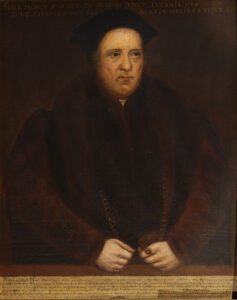
Sir Rowland Hill, Attingham Park copy
It was during this Tudor golden age that Sir Rowland expanded the family footprint to places like Hodnet and constructed the remarkable manor house at Soulton Hall in the 1550s.

Scholarly reconstruction of Soulton Hall in 1560 created Byrga Geniht Ltd
His vision was not merely architectural; he physically shaped the county infrastructure, constructing the very first stone bridge over the River Tern at Atcham—laying the physical gateway to what would later become the Attingham estate.
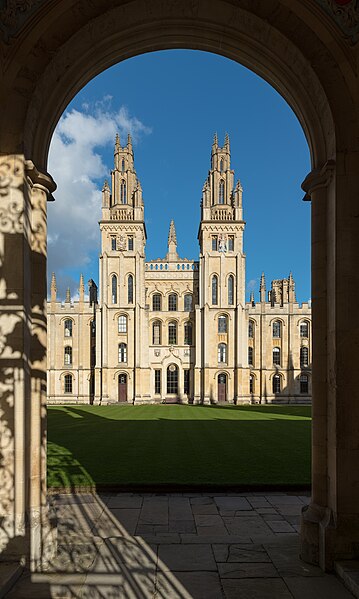
The Hill arms are in this latern looking at a clever developemnt of the buildings in Oxford linked with the Hill Family
This family tradition of intellectual pursuit and architectural patronage extended far beyond Shropshire, reaching into the grandest academic arenas of the nation. The Hill family also maintained a significant association with All Souls College, Oxford, a relationship made permanently visible in the built environment of the university: when the master architect Nicholas Hawksmoor designed the famous North Quadrangle in the early eighteenth century, the Hill family arms were prominently displayed within the magnificent stonework of the new buildings. This heraldic presence at the heart of Oxford served as an enduring statement of the family’s deep involvement in national scholarship, politics, and the patronage of great design, bridging their regional influence with the wider world of learning.
This grand scale of design and landscape mastery found its next dramatic expression at Hawkstone. As the family fortunes flourished into the seventeenth and eighteenth centuries, the senior branch of the Hills transformed Hawkstone into a seat of astonishing theatricality and power. The construction of the monumental Hawkstone Hall, combined with the creation of the famous Hawkstone Follies, turned the estate into one of the most celebrated landscapes in Britain. The cliffs, caves, and sweeping vistas of Hawkstone represented a family that was no longer just building homes, but actively sculpting the natural world to reflect their cultural ambition.

Painting of Hawkstone Hall in a cleaner phase of building
When we watch the treasures of Attingham Park unfold on the BBC, we are looking at the later, brilliant flowering of a tree that was planted centuries earlier at Court of Hill.
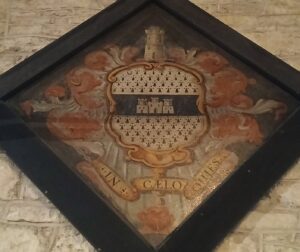
Arms of the Hill Family at Court of Hill, Nash
The Neoclassical columns of Attingham and the Tudor brickwork of Soulton are chapters of the exact same book. The National Trust has done a marvelous job bringing the stories of Attingham to life. For anyone inspired by the program to explore further, following the thread of the Hill family offers an unforgettable journey through the heart of Shropshire’s history.
This structure creates a clean, elegant reading experience that allows the historical connections to unfold naturally.
