

Happy April Fools’ Day!
It is a day often associated with lighthearted pranks.
But it is also a perfect time to reflect on a profound, if paradoxical, truth that links the classic wisdom of Socrates to the timeless genius of William Shakespeare.
It is particularly natural to think of the court jester Touchstone today.
Soulton Hall issued the “birth certificate” of As You Like It— it is the real-world wellspring for the Forest of Arden and its characters becuse the source text was written here.
Because Touchstone walks our Shropshire woods more than any other, he is our perfect springboard to think about foolishness on April Fools Day.
This year, let us use one of his most famous lines (Act 5, Scene 1) as our starting point:
“The fool doth think he is wise, but the wise man knows himself to be a fool.” — Touchstone, As You Like It

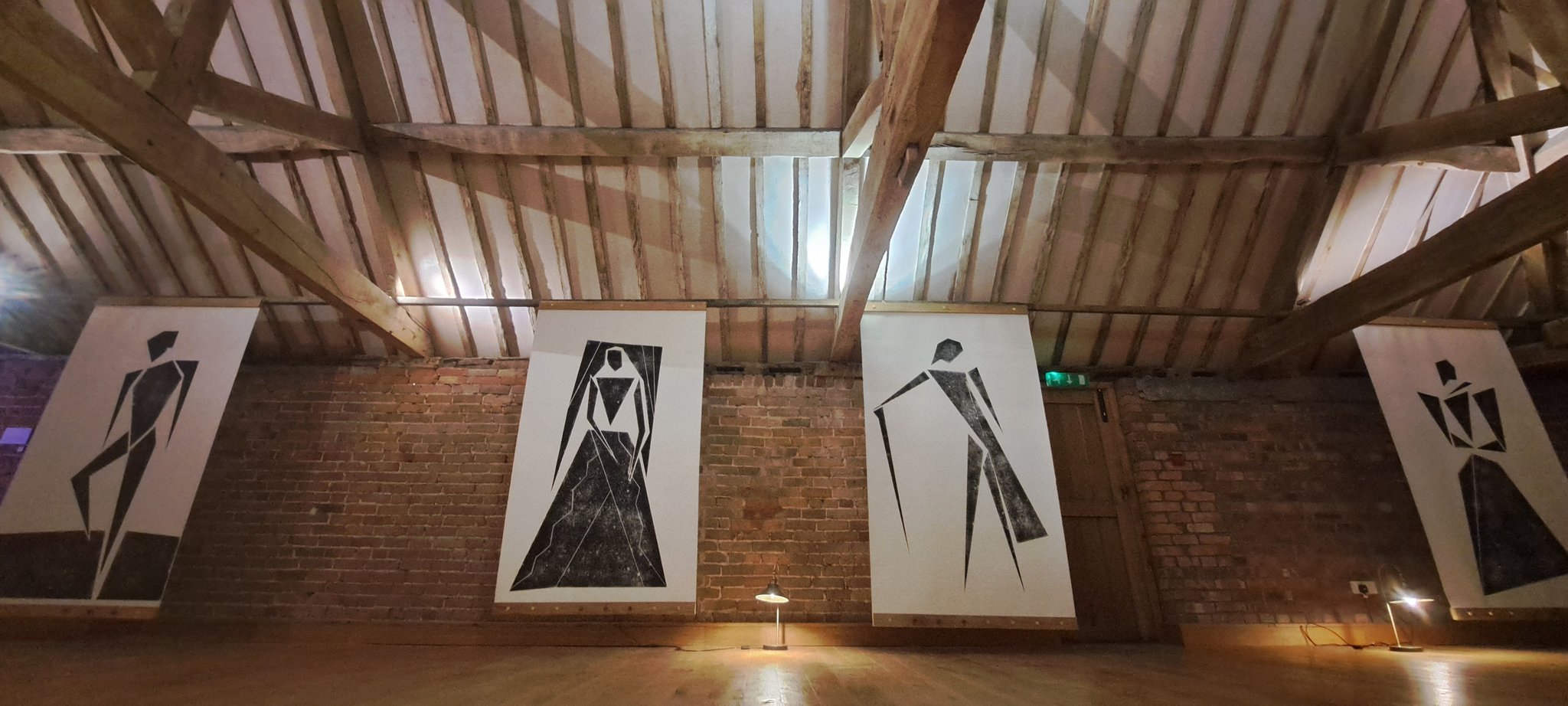
Silvius, Rosalind, Touchstone and Celia: 4 of the 8 dancers, as rendered by Jacob Chandler
This line encapsulates the core tenet of Socratic Ignorance. In his series Awakening from the Meaning Crisis, John Vervaeke highlights that Socrates was considered the wisest man in Athens not because he knew everything, but because he was the only one who knew what he did not know. Most people, Vervaeke explains, are full of “self-congratulatory” bias, trapped by their own “autobiographical ego.” They believe their personal narrative is the ultimate truth. They are, in essence, the “fools” who think they are wise.
The true “wise man” must go through the painful process of shedding these illusions.
They reach a state of aporia—a bewildering state where they realize they are stuck, stunned by the realization of their own profound ignorance. Only from this humble state of “foolishness” can true wisdom begin. Socrates famously annoyed the citizens of Athens by wandering into the marketplace and asking questions that stripped away their pretenses. He would challenge people to define their motivations, usually leading them to realize they had no idea why they were doing what they were doing.
We see this exact energy in Rosalind (disguised as Ganymede) when she corrects the shepherdess Phoebe in As You Like It (Act 3, Scene 5). She uses a gritty, market-based metaphor to puncture Phoebe’s vanity:
“Sell when you can; you are not for all markets.” — Rosalind (as Ganymede)
Rosalind is acting as a Socratic “midwife,” forcing Phoebe to see a reality that her self-love has obscured. Socrates would often perform this same “prank” on the public, asking them how much time they spent fixing their hair in the morning versus how much time they spent fixing their soul. Most of us, he noted, spend plenty of effort on the “hair” (the external appearance and status) but almost none on the “self” (the internal alignment of truth and caring).
Nowhere is this Socratic “prank” on the ego more devastating than in King Lear. Lear begins the play as the ultimate “fool who thinks he is wise.” He attempts to quantify love with a “Love Test,” a move that demonstrates how far his truth-seeking has drifted from what actually matters.
The Fool in King Lear serves as a constant reminder of the gap between the King’s perceived power and the reality of his situation. When the Fool asks, “Can you make no use of nothing, nuncle?” he is pointing to the Socratic starting point.
Vervaeke notes that Socrates realized his wisdom lay in his “nothing.” Lear, too, must be stripped of his crown, his flattery, and his ego until he is a “poor, bare, forked animal” before he can truly see. It is the ultimate April Fools’ irony: the King must become a beggar and a “fool” to finally gain self-knowledge.
Perhaps the most challenging area where we feed ourselves BS is love. We mistake the powerful internal “salience” (the “catchiness” of a feeling) for objective truth. Shakespeare captures this eternal conflict in A Midsummer Night’s Dream (Act 3, Scene 1):
“And yet, to say the truth, reason and love keep little company together nowadays” — Bottom, A Midsummer Night’s Dream
Bottom speaks a deep truth. The Socratic project is precisely to bring these two forces—reason and love—back together. True wisdom is not about being an unfeeling logic machine, but about aligning our caring with what is real.
Finally, let us look at the most misunderstood line of Shakespearean advice, spoken by the sycophant Polonius in Hamlet (Act 1, Scene 3):
“To thine own self be true…”
From a Socratic lens, being “true” to yourself is meaningless if that “self” is a mess of unchecked BS. If your internal “importance meter” is leading you false, being “true” to it will only ensure you are false to others. This April Fools’ Day, embrace the “foolishness” that allows you to admit you do not have the answers. Stop worrying about “fixing your hair” and start examining your soul. Align your heart with what is real, and prank your own arrogant, self-deceived ego.
Happy Fooling!
