

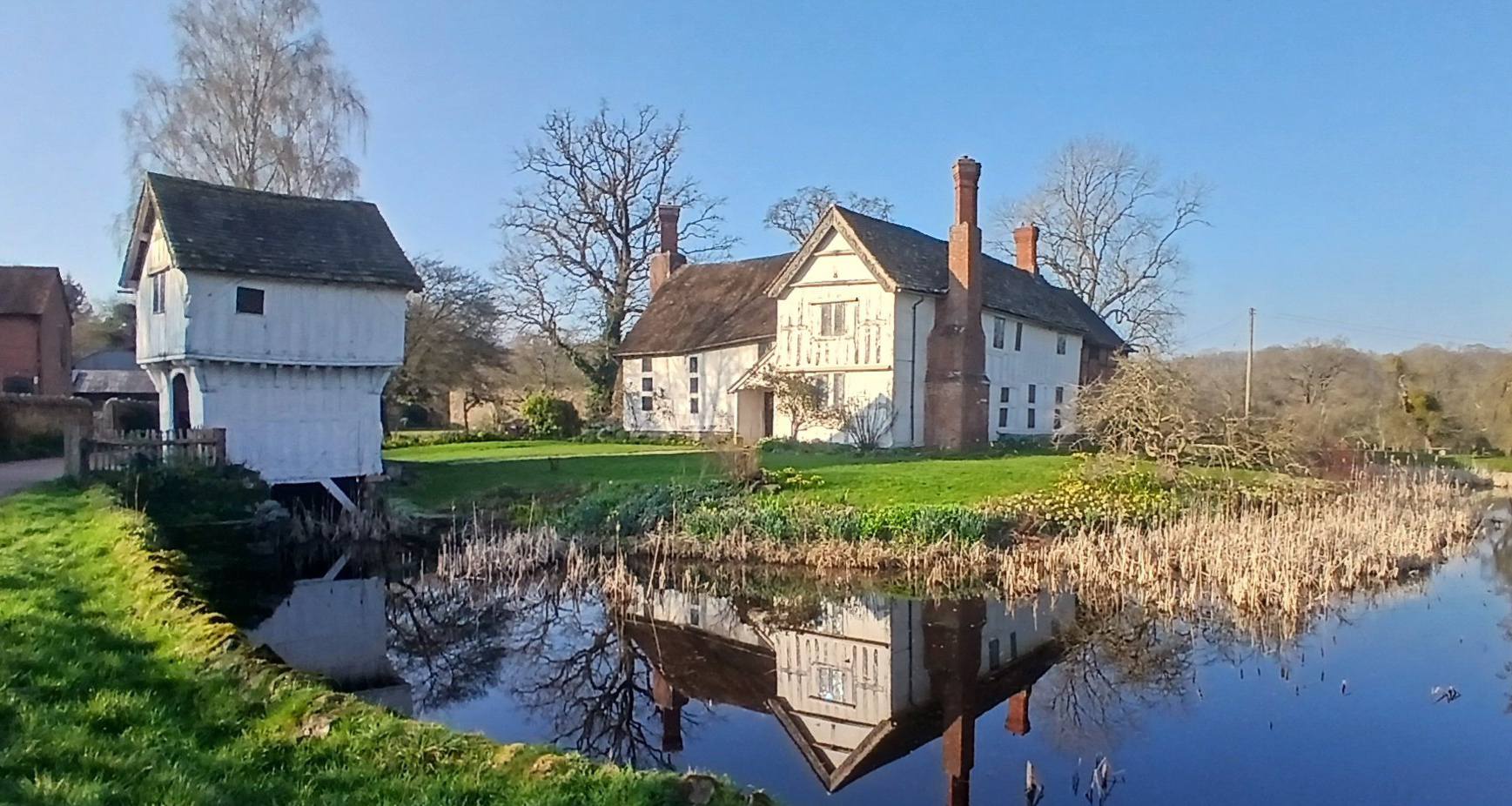
Visiting Brockhampton today offered a fascinating perspective on the shared origin story we hold here at Soulton Hall.
At first glance, the two sites are clearly kin; both began their lives as timber-framed manor houses nestled within protective moats and deeply tied to the rhythms of traditional farming.
-
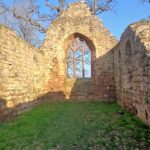
- Norman Church at Brockhampton
-
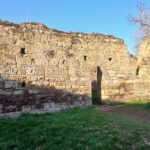
- Norman Church at Brockhampton
-

- Interior at Brockhampton
-
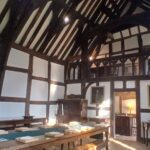
- Great Hall at Brockhampton
Walking through the one common and now rare 1530s gatehouse at Brockhampton, one can see the architectural DNA that would have been familiar to the early residents of Soulton. These were homes built from the surrounding landscape, designed for local stewardship and a life rooted in the soil of the Marches.
However, the comparison also highlights just how unique the evolution of Soulton Hall became. While Brockhampton remains a beautiful and remarkably preserved survival of that medieval world, Soulton was pulled in a much more ambitious and complex direction. By the time of Sir Rowland Hill, the site was being transformed, moving away from the traditional baseline of a manor house and toward a totally different architectural and intellectual vision. Under Hill’s influence, Soulton expanded into a larger, more structured environment that pushed the boundaries of sixteenth-century design and thought.
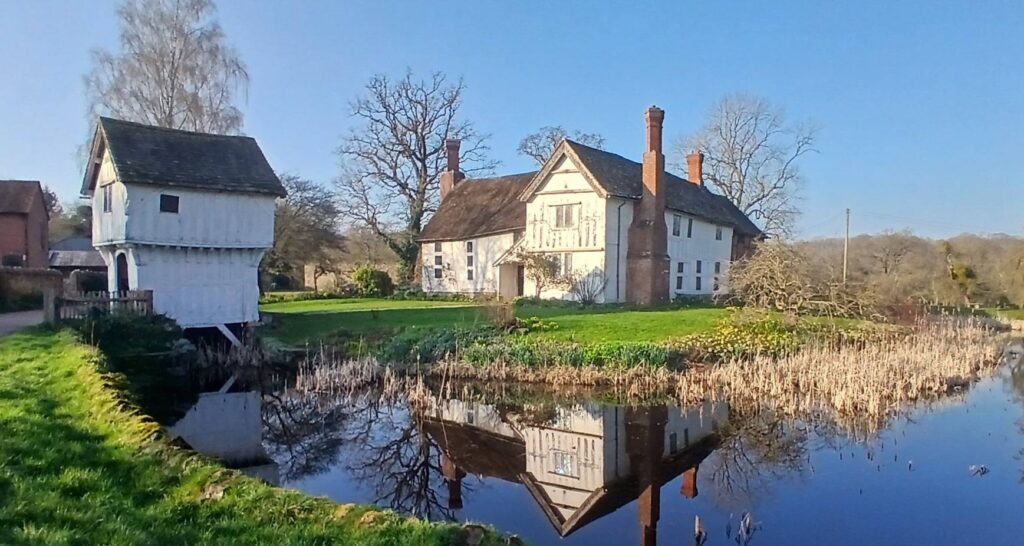
Brockhampton Manor House
It is compelling to see two places start with the same structural manual but grow into such different narratives. Brockhampton is the classic survival, providing a window into the elegance of the medieval past. In contrast, Soulton represents a leap forward—a site that took those shared roots and branched off into a complex, forward-thinking project. Visiting our neighbors in Herefordshire reminds us that while history often starts in the same soil, the vision of those who build upon it can steer a place toward a completely unique destiny.
